
Search demand for “base oil oversupply 2026” suggests a surplus story. The sources provided describe a shortage story instead. They point to a base oil supply and price shock tied to Middle East conflict, constrained refining, and shipping disruptions through the Strait of Hormuz.
ILMA states that Group II and Group III base stocks are in “serious global short supply.” It also notes three reinforcing pressures squeezing both groups: Middle East conflict, constrained Korean refining, and diesel-driven refinery economics. In this environment, blenders cannot assume that one group will reliably cushion the other.
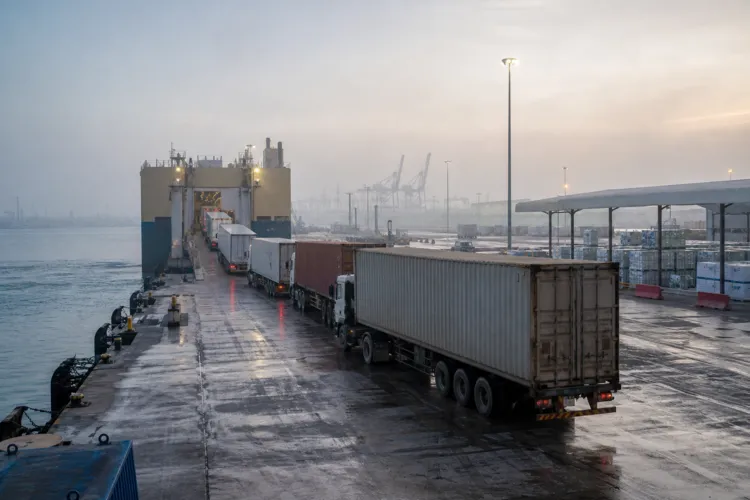
For Middle East blenders, the Strait of Hormuz is a direct operational and commercial risk. Lubes’N’Greases reports the strait’s closing halted shipping traffic shortly after Feb. 28, followed by a blockade involving mines and drone threats. The same report says three Gulf-area Group III producers account for 21% of global Group III production capacity, and exports from those facilities normally traverse the strait to global markets.
What Tight Group II/III Supply Means for Middle East Blenders
Price volatility can move quickly into finished lubricant economics. ILMA notes base oil is roughly 75%–98% of the finished product and acts as the carrier for the additives that make up the rest. Lubes’N’Greases documents sharp spot increases between late February and mid-April, including Group II 150 neutral rising from around $750/t to near $1,600/t in Asia and from $840/t to $1,880/t in Europe, while Group III 4 cSt rose from around $1,125/t to $1,900/t in Asia and from $1,600/t to $2,350/t in Europe.
Availability risk matters as much as price. Lubes’N’Greases reports spot offerings largely disappeared and some suppliers reduced volumes even to regular and contracted customers, creating an “auction dynamic” for the remaining spot barrels. Overdrive, citing an ILMA memo, adds that blenders “normally” move to Group II for many products when Group III is short, but this substitution can be constrained when Group II is also tight.
Exposure is amplified by trade flows and dependence on Hormuz transit. JobbersWorld reports that Middle East sources supplied more than 40% of total U.S. Group III supply in 2025 and that share climbed to approximately 55% of U.S. Group III inflows in January 2026, with virtually all of these volumes physically transiting the Strait of Hormuz. Axios adds ILMA’s view that refinery outages and Hormuz shipping disruptions are tightening Group III and quotes ICIS saying Group III prices climbed to more than $10/gallon, with supply expected to “deteriorate rapidly through 2026” and remain undersupplied through 2027.
Is “base oil oversupply 2026” supported by these sources?
Why does the Strait of Hormuz matter so much for Group III?
How large is the Middle East share of U.S. Group III inflows in early 2026?
How do base oil price moves affect finished lubricants for blenders?
Can blenders simply switch from Group III to Group II during shortages?