
The 2026 motor oil squeeze is concentrated on Group III specifically. Modern low-viscosity oils like 0W-8 and 0W-16 require high-performance synthetic base oils heavily weighted toward Group III, which is described as the most supply-constrained category. Group III is also typically blended with other groups to enhance specific properties, which makes it central to premium synthetic blends.
In March 2026, the market stress showed up as fast tightening and volatility. JobbersWorld reported a pronounced seller’s market in Group III, with spot availability largely disappearing for many buyers and growing concerns around shortages. The same report described Group III price escalation as unstructured and less predictable, and said it was outpacing Group II increases that totaled roughly 95 cents per gallon so far in March (depending on viscosity grade).
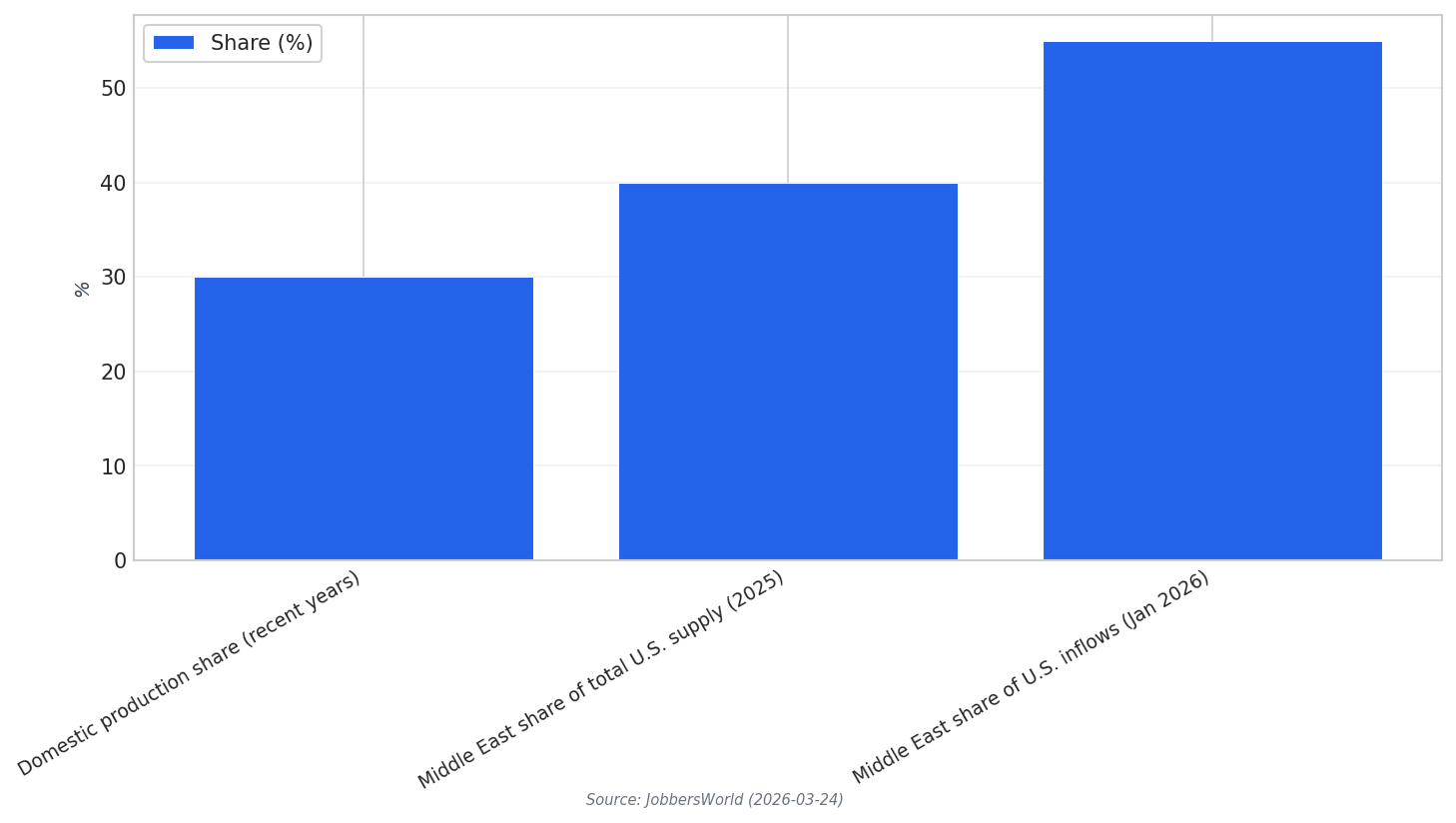
The Middle East is a key hinge point for this category. JobbersWorld noted the U.S. remains a net importer of Group III, with domestic production covering only a minority share of demand (roughly 30–50% in recent years). It also stated that Middle East sources supplied more than 40% of total U.S. Group III supply for the third straight year in 2025, and that share climbed to approximately 55% of U.S. Group III inflows in January 2026 data.
Why Premium Synthetic Blends Are Becoming the Default
The blend logic is changing because “conventional” versus “synthetic” is no longer fixed. An industry insider writing in April 2026 said even many “conventional” oils now contain some Group 3 to meet modern performance standards. The same source said full-synthetics and synthetic blends rely heavily on it, often with 70–100% of the base oil being Group 3 or higher, and that blend percentages vary drastically by manufacturer.
Supply disruption in the region has amplified the move toward security-first sourcing and formulation choices. Verified Market Research noted that a significant portion of the world’s Group III capacity is concentrated in hubs in Asia and the Middle East, and that conflict or other disruptions in these regions can cause immediate global shortages. It added that volatility has pushed many blenders to prioritize “supply security” over “cost efficiency,” shifting toward regionalized sourcing that can disrupt traditional trade flows.
At the same time, new investment is still being directed toward Group III and III+ capacity. Kline Group said the industry had an overall surplus of 5.0 million tons, more than 10% of overall supply, yet nearly 1.4 million tons of new Group III/III+ capacity is planned. It also reported Group III/III+ accounts for 16% of the total market, and that the Group III market has a weak capacity utilization factor of about 56%. In the Middle East, Cognitive Market Research highlighted that Bahrain Lube Base Oil Company is expanding its Group III production capacity to address rising global demand for premium base oils.
What does "Group III base oil Middle East" mean in today’s lubricant market?
Why are premium synthetic blends gaining ground versus older formulations?
How tight did Group III get during the 2026 squeeze?
How dependent is the U.S. on imported Group III base oil?
If the base oils market is oversupplied, why add more Group III/III+ capacity?