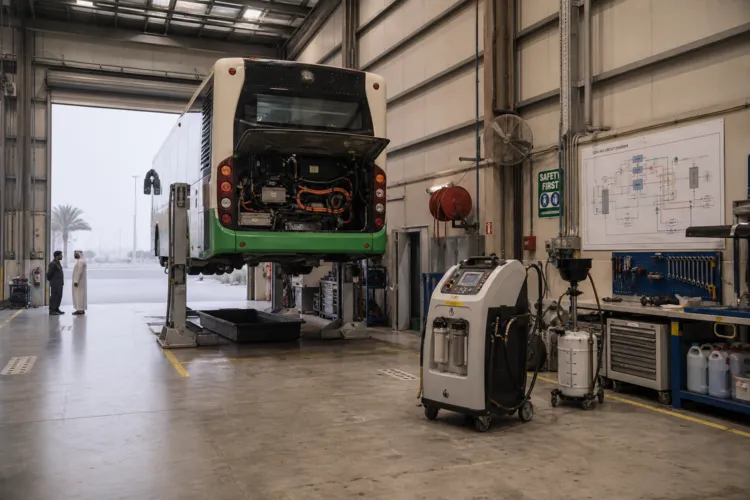

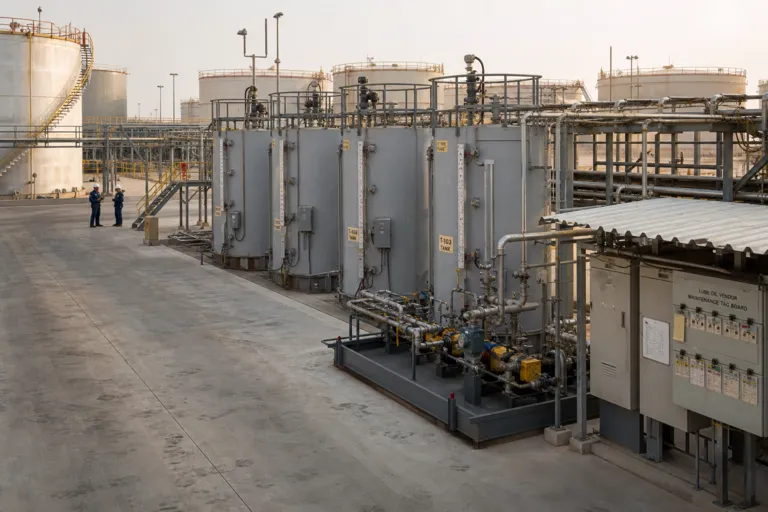
Bulk lubricant replenishment in industrial sites often breaks down for simple reasons. Level checks are manual. Data arrives late. Ordering is reactive. IoT tank telemetry changes the workflow by turning a tank level into a live dashboard reading, rather than a strap-and-tape check that depends on someone being on site. In upstream oil and gas contexts, this is described as one of the most common IoT applications because “the math is simple”: a tank level reading that would otherwise require a person gauging is now visible remotely. For GCC operations managing multiple tanks and multiple fluids, this remote visibility is the prerequisite for automating the decision of when to replenish.
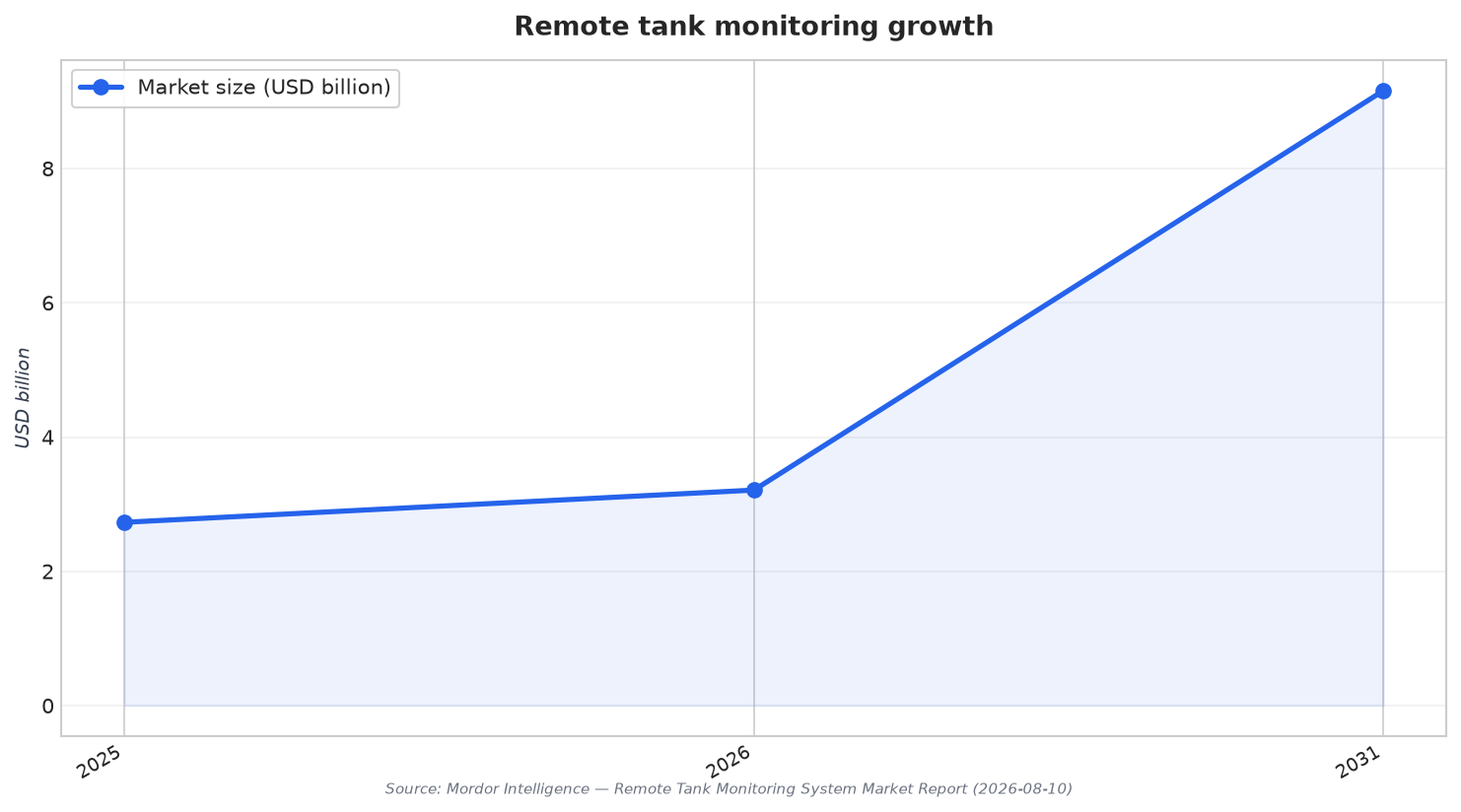
Market adoption signals that remote monitoring is moving from niche to mainstream. Mordor Intelligence projects the Remote Tank Monitoring System market to expand from USD 3.21 billion in 2026 to USD 9.16 billion by 2031, registering a 23.33% CAGR between 2026 and 2031. In that same report, cellular links accounted for 45.91% of 2025 revenue, while satellite is forecast as the fastest riser at a 24.02% CAGR to 2031. This mix matters for industrial sites that face coverage gaps, because the sensor is only useful when the telemetry layer works. As one IoT oil and gas overview notes, a “$2,000 sensor” is useless without a connectivity solution.
How Telemetry Enables Vendor-Managed Replenishment Workflows
Vendor-managed inventory (VMI) becomes practical when suppliers can trust the inventory signal and act on it. In a construction lubricants context, Mordor Intelligence notes that vendor-managed inventory programs can help a site avoid shortages and manage bulk lubricant purchases. IoT tank monitoring provides the operational inputs to make that work. In the remote tank monitoring market, continuous-level systems held 58.82% share in 2025 and are forecast to advance at a 23.46% CAGR through 2031. These continuous readings support alert thresholds and consumption tracking so that replenishment can be triggered by measured levels instead of periodic site walks, which is central to vendor-led refills.
Accuracy and leak awareness also shape replenishment decisions, especially when a sudden level drop is not true consumption. IndustryResearch.biz reports that industrial applications of automatic tank gauge (ATG) systems can achieve level measurement accuracy of ±2 millimeters and leak detection sensitivity of 0.8 liters per hour, and notes that modern sensors in 50 percent of systems can detect leaks as small as 0.5 liters per hour. The same source adds that 42% of new installations now feature remote monitoring and predictive maintenance. In practice, this combination supports better inventory management and timely replenishment while also adding a check against abnormal losses that could distort vendor-managed ordering.
Digitized tank data also fits into broader service models that suppliers can use to differentiate. Mordor Intelligence describes “digital lubrication-as-a-service” as linking certified lubricants to telematics, condition monitoring, inventory management, and predictive maintenance support, making the supplier harder to replace once products and operating data are integrated. Examples of connected fluid management include Castrol receiving the Internet of Things (IoT) Emerging Technology Award in July 2025 for SmartOil and SmartMonitor, described as tools for tracking oil condition and viscosity changes in real time, and launching SmartCoolant in September 2025 to monitor coolant concentration and pH. For the GCC, the operational takeaway is clear: combining telemetry with vendor ownership of replenishment decisions turns bulk lubricants from a manual buying process into a managed, data-led program.
How does vendor-managed inventory for bulk lubricants work in GCC industrial operations?
What market growth signals rising adoption of remote tank monitoring?
Which connectivity options dominate tank telemetry today?
How accurate are automatic tank gauge systems in industrial applications?
Why do continuous-level sensors matter for automated replenishment?