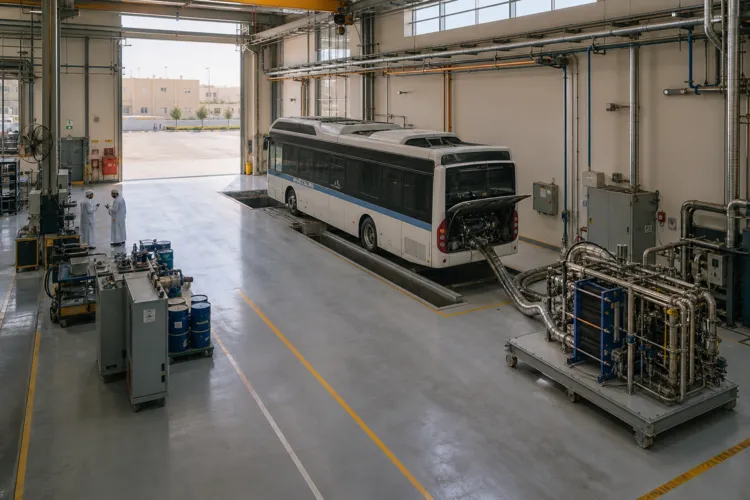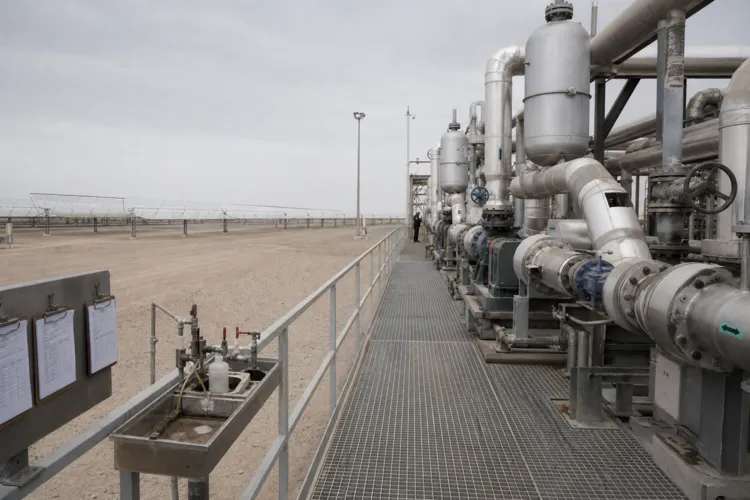

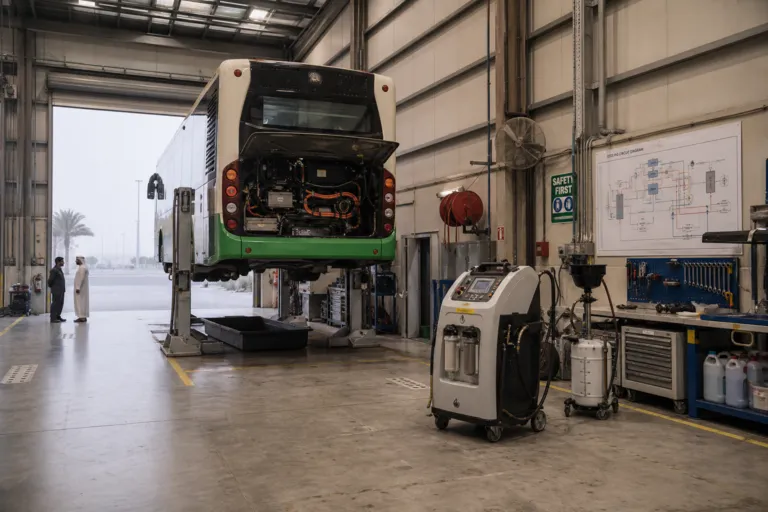
Electrifying public transport changes what “fleet readiness” means. For Gulf operators planning new electric bus and truck deployments, the biggest operational shift is not only charging. It is the move from combustion-engine maintenance routines to thermal-fluid systems that protect batteries, power electronics, and e-drivelines. Global reports frame the same transition: electric buses are promoted to reduce air pollution, greenhouse gas emissions, and reliance on finite fossil fuels, while policy tools such as incentives, subsidies, tax credits, and grants are used to speed adoption and charging infrastructure buildout. That policy push creates immediate engineering questions for depots in hot climates: how to keep thermal systems stable during stop-start duty cycles and overnight depot charging, and how to specify lubricants and coolants for components that run differently than diesel powertrains.
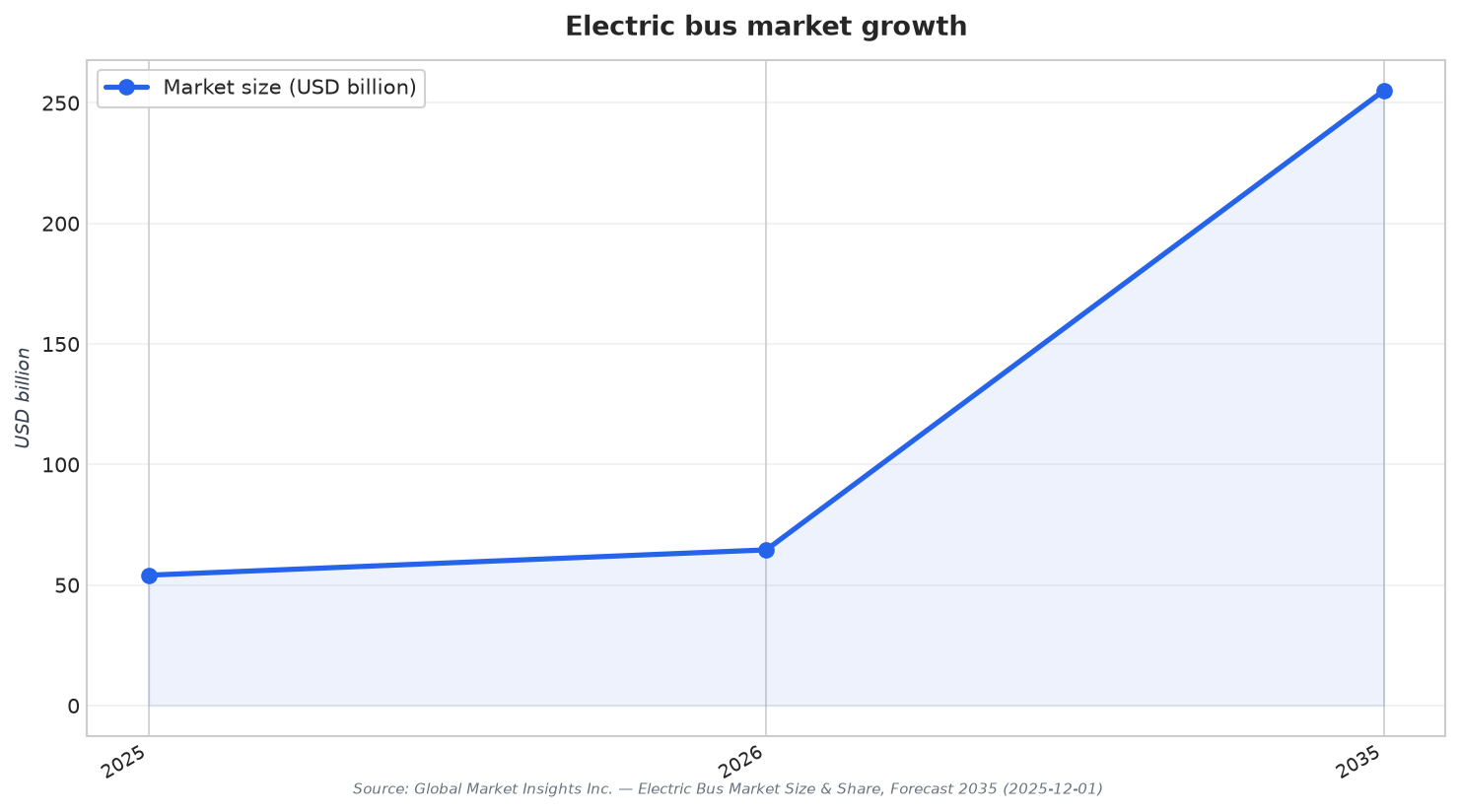
Globally, the economic and procurement backdrop is expanding fast, and it influences how fleets standardize fluids and service intervals. Global Market Insights estimates the electric bus market at USD 54.1 billion in 2025, and projects growth from USD 64.6 billion in 2026 to USD 255.1 billion in 2035, at a CAGR of 16.5%. Those rollouts often pair with smart depots, real-time energy management systems, and predictive maintenance technologies to optimize fleet performance and extend vehicle lifespans. In parallel, the wider global bus market was valued at USD 102.9 billion in 2025 and is projected by Global Market Insights to rise from USD 114.3 billion in 2026 to USD 210.7 billion in 2035 at a 7% CAGR, with electrification of public transport fleets highlighted as a driver. For Gulf projects, this matters because modular platforms and faster procurements can narrow the window to qualify thermal fluids and driveline lubricants before deliveries scale.
What Electrification Changes: Cooling Loops, Battery Packs, and E-Driveline Fluids
Thermal management becomes a front-line reliability lever. A 2026 industry brief notes that the “up to 400 kWh” battery segment is supported by cost-effective sizing for urban operations, reduced vehicle weight improving efficiency, compatibility with standard depot charging infrastructure, and easier thermal management, among other factors. The same source ties intracity duty cycles to predictable schedules and centralized depots for overnight charging, which concentrate heat loads into defined windows. Battery chemistry choices also connect to heat and safety. The lithium-iron-phosphate segment is described as supported by longer cycle life for intensive daily operations and enhanced thermal stability improving safety, with strong resistance to overheating presented as important for large fleets operating continuously in dense urban environments. In Gulf conditions, these global design priorities translate into practical specifications for coolants, heat-transfer fluids, and component-level thermal interfaces that can handle repeated charging and high utilization.
Lubrication needs also move from engine-centric to e-axle and reduction-gear durability, plus auxiliary systems that must stay efficient. Mordor Intelligence highlights modular vehicle design led by Chinese manufacturers, using shared components such as motors, battery packs, and chassis across multiple vehicle sizes. That modularization can simplify parts inventories and maintenance, but it also raises the importance of standardized fluid performance across platforms that may share e-drive components while operating on different routes. The same report notes that in megacities, zero-emission rules can compress fleet renewal timelines to as little as five years, and that agencies can face depot redesign and driver retraining costs that inflate budgets by 15–20%. In a Gulf rollout, those pressures can make it tempting to focus only on vehicle procurement and chargers. Yet driveline lubricants and thermal fluids are part of the operating budget and uptime plan, especially when fleets aim for predictable service with depot-based charging and centralized maintenance workflows.
Global case studies show how policy and fleet targets drive standardization. Sustainable Bus reports that in the Netherlands, public transport authorities agreed that from 2025, newly bought buses for public transport can only be emission free, and that in early 2020, 10% of the Dutch fleet was already electrified. The same source notes that MAN shared market uptake figures for the Lion’s City E, with 700 units ordered as of mid 2022. For Gulf planners, these examples are not local statistics, but they illustrate how quickly platforms can scale once a mandate or procurement approach hardens. That is the moment when “electric bus fleet lubricants Middle East” becomes a procurement category: not for engine oil, but for e-driveline gear lubrication and for cooling and heat-transfer fluids that support batteries, inverters, and motors through intensive stop-and-go routes and overnight charging cycles.
How do thermal-fluid needs change when a city shifts from diesel buses to electric buses?
What battery size segment is described as fitting urban electric bus operations?
Which battery chemistry is described as having enhanced thermal stability and resistance to overheating?
What do global reports say about costs tied to fast fleet electrification timelines?
In the Middle East, what does the shift to electric bus fleet lubricants typically mean in practice?