When lubricant prices move, workshops and fleets feel it immediately because it hits every service ticket, quote, and contract renewal. In 2026, fleets queried by Commercial Carrier Journal said engine oil prices had jumped on the shop-floor level between 8% and just more than 10% that year, with higher increases where work was mostly handled by dealers and lower increases among larger fleets that performed wet service in-house. At the same time, US Producer Price Index data cited in the same report shows lubricating oil base stocks jumped 126% between January and July 2026, while the Producer Price Index for finished lubricants climbed 16% over the same six-month span. That gap is a communication issue as much as a pricing issue, because customers see the finished product line-item first while the underlying input shock remains invisible.
Timing and transparency matter because the pricing cycle itself has tightened. JobbersWorld notes that for most of the past decade the industry standard for communicating changes hovered around 30 days, giving distributors time to inform customers, adjust quotes, and build a modest buffer. It also states the 2026 pricing cycle departed sharply from that historical pattern, based on analysis of publicly announced broad-based lubricant price increases reported between March 12 and May 29, 2026. For GCC-facing lubricant brands, the takeaway is not to copy North American tactics, but to recognize that compressed cycles make it easier for workshops to perceive changes as sudden or arbitrary. Permanent Equity’s communications best practices reinforce what to do in relationship-driven B2B: give a plain-language heads-up, state that prices are rising, explain why in terms of inputs or protected value, keep it short, and give customers time to adjust, rather than hiding the increase in fine print or marketing fluff.
A GCC Workshop-and-fleet Playbook: From Cost Shock to Repeatable Bay Scripts
In the GCC, price-change communication works best when it fits the way technicians and fleet decision-makers already talk. MiddleEastLubricantsConsulting frames the region’s broader context: the Middle East chemicals sector has historically been dominated by high-volume, standardized, price-driven commodity chemicals, but is diversifying into specialty chemicals, often through close collaboration with customers. The same source states the chemical industry contributes 33% of total GCC manufacturing GDP and 4% of total GCC GDP, which helps position lubricants inside a larger industrial ecosystem that increasingly values innovation and sustainability. A practical workshop playbook should therefore link the increase to what the customer wants to protect: fewer comebacks, smooth transitions between grades, and a service routine that feels dependable under pressure. The brand message must be teachable, because the workshop advisor needs a short script they can repeat in a fast-turn bay.
Build the message around specific, operationally relevant language that helps workshops defend the change without overpromising. MiddleEastLubricantsConsulting gives an example of how product positioning can reduce switching friction: Chevron’s Clarity AW is described as a mineral-based, ashless formulation engineered for mobile and stationary hydraulic systems, positioned around extended oil life and wear protection while maintaining high filterability and compatibility, easing transitions from traditional zinc-based products. That is not a price claim, but it is a communication template for “what stays safe” when costs rise. Pair it with the Permanent Equity structure: say the increase directly, connect it to inputs or protected value, and keep it short. If the customer asks “why now,” acknowledge that compressed cycles exist (as JobbersWorld describes) and focus on how the workshop will implement the change in quotes and approvals with clear effective dates.
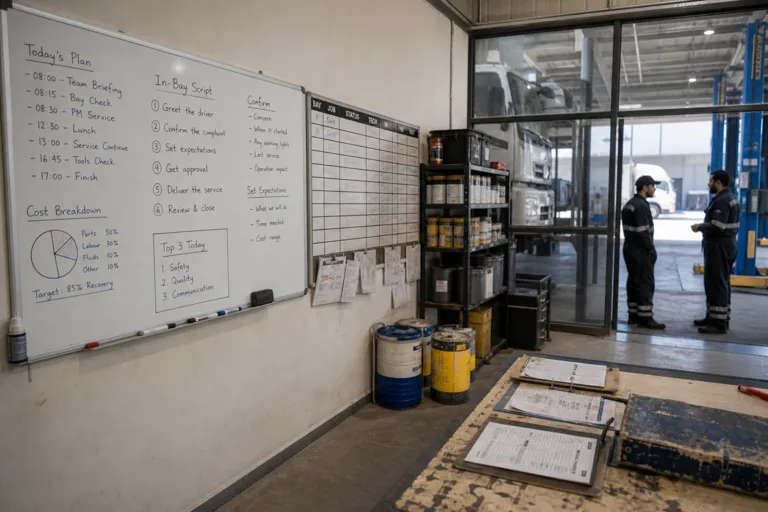
Finally, align channels so the story remains consistent as buyers split between workshop purchasing and digital reorders. Bain & Company is cited by MiddleEastLubricantsConsulting as describing MENA growth being shaped by channel evolution and rising expectations on convenience, and noting that in markets like the UAE, e-commerce is already meaningful and still expanding. That raises the standard for clarity: a fleet manager might see one price online while a workshop sees another in a trade account, and mismatches trigger distrust. A disciplined approach to lubricant price increase communication workshops should include: one-page notices for key accounts, an in-bay script for service advisors, and updated online product education that explains what the customer is paying for in operational terms. This is how a brand moves the conversation from “a sudden hike” to “a managed change with a serviceable rationale.”
What lubricant price changes did fleets report in 2026?
What do Producer Price Index figures suggest about lubricant input costs versus finished products?
How much notice has historically been typical for lubricant price increase communications?
How should GCC teams structure lubricant price increase communication workshops with fleet accounts?
Which GCC economic context can help frame a shift from commodity talk to value talk?