Sanctions relief is changing the operating backdrop for the Syria lubricants market, mainly by making payments and counterparties less opaque than during years of broad isolation. One market-entry briefing notes measures that include dealings with 28 previously blocked entities, spanning Syria’s central bank, commercial banks, petroleum companies, and key infrastructure operators. It also points to EU and UK moves that suspended sanctions on energy and transport sectors and enabled banking relationships for humanitarian and reconstruction purposes. At the same time, the same source stresses constraints: hundreds of individuals and entities remain sanctioned, and relief measures are explicitly reversible, with sanctions able to be reimposed rapidly if commitments are not met.
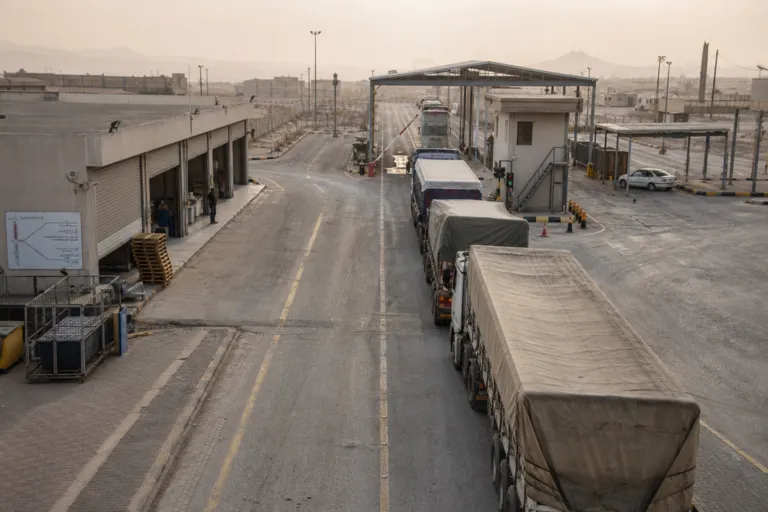
This mix of opportunity and caution matters for lubricant supply chains. The same market-entry source links practical operational change to two specific shifts: the reopening of the Nasib crossing with Jordan to enable goods movement, and Syria’s reconnection to SWIFT to enable cross-border payments that were previously impossible under comprehensive sanctions. For lubricant importers, blenders, and distributors, those steps can affect lead times, inventory planning, and the ability to settle invoices. But compliance remains central. Companies are still expected to screen counterparties against SDN lists and avoid transactions benefiting Russia, Iran, or North Korea, which are reportedly maintaining a presence in Syria.
Reconstruction and Energy Reset: Where Lubricant Demand Can Rebuild
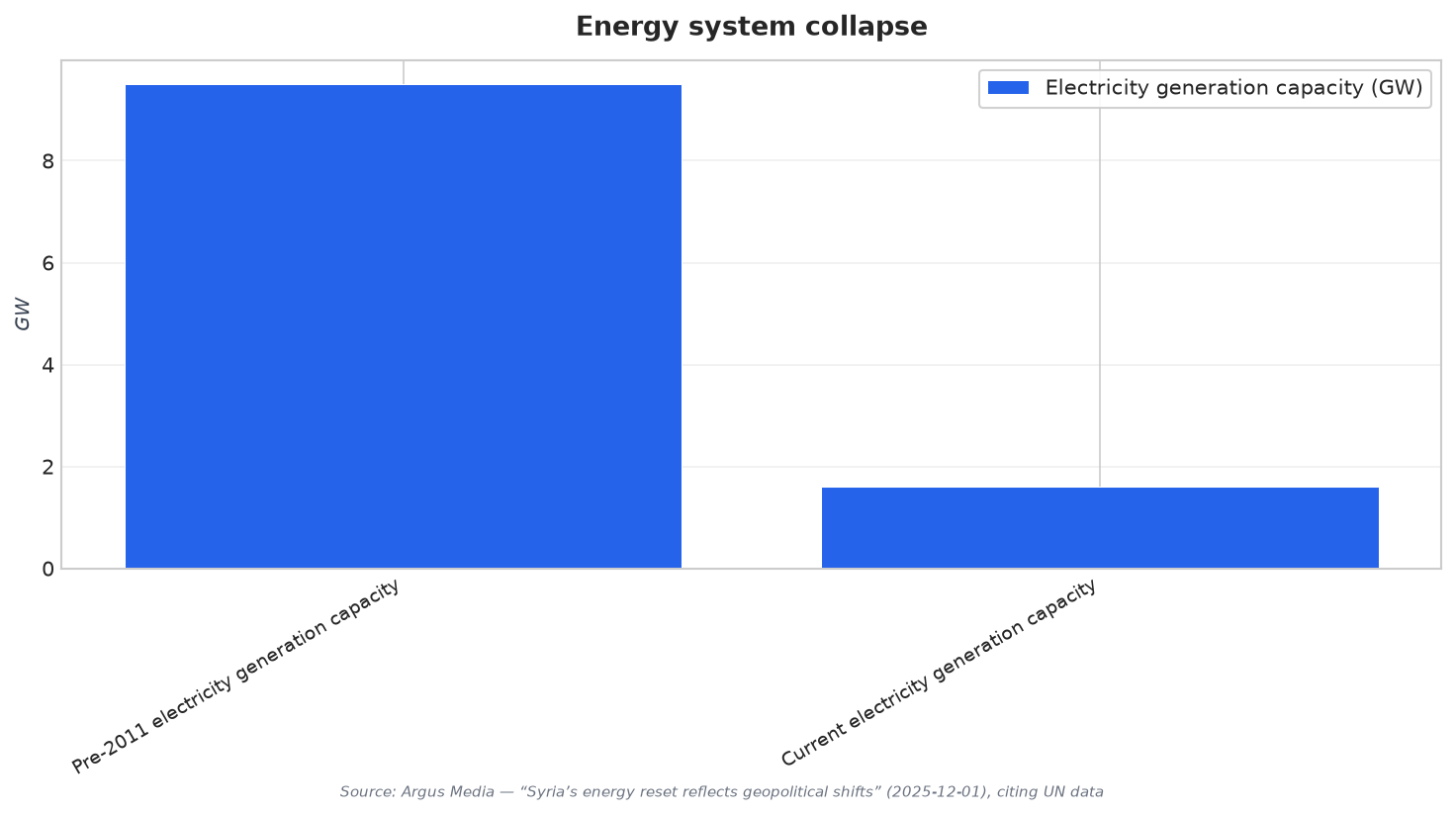
Reconstruction-linked energy activity is a direct channel for renewed lubricant consumption, from construction equipment to power generation maintenance. Argus reports that Syria’s electricity generation capacity has collapsed from around 9.5GW before the 2011 conflict to just 1.6GW today, according to UN data. It adds that over 70pc of power plants and transmission lines are severely damaged, while the grid can deliver only 2–4 hours of electricity a day in many areas. The same report says crude production is currently 90,000–120,000 b/d, down from over 400,000 b/d pre-2011, and that natural gas supply fell to around 3bn m³/yr in 2023 from 8.7bn m³/yr in 2011.
Against that baseline, new project announcements point to a construction wave that can lift demand for engine oils, hydraulic fluids, gear oils, and greases across logistics and industrial fleets. Argus says the energy ministry signed $7bn of investment and power-purchase agreements in November with a consortium led by Qatar’s UCC Holding, together with Turkey’s Kalyon GIS Energy and Cengiz Energy, and US-based Power International. The package includes 5GW of new capacity: four combined-cycle gas turbine plants—North Aleppo (1.2GW), Deir Ezzor (1GW), Zayzoun (1GW), and Mhardeh (800MW)—plus 1GW of solar PV capacity across Aleppo, Homs, and Deir Ezzor. Separately, Syrian authorities estimate the country needs over $30bn to rehabilitate oil, gas, mineral, electricity, and water sectors, including roughly $10bn urgently required for power infrastructure.
Still, market reopening is not a straight line, and the investment case for lubricant suppliers depends on durability of policy and security conditions. A Wilson Center analysis describes the US approach as gradual easing that began with a time-limited general license, arguing that temporary relief can maintain leverage but does little to boost investor confidence for long-term financing. It also cites a World Bank estimate placing the cost of Syria’s reconstruction at $216 billion, while another reconstruction-focused analysis estimates a $400 billion market and highlights the reopening of the Turkey–Syria–Jordan corridor agreed at the Amman Summit. For lubricant players, these competing timelines suggest a phased strategy: prioritize compliance-first trading routes and customers aligned with permitted reconstruction activity, while monitoring reversibility risk and ongoing sanctions designations.
What is changing in the Syria lubricants market after sanctions relief?
Which energy indicators show the scale of Syria’s rebuilding needs?
What new power investments have been announced that could lift lubricant demand?
Why do companies still face compliance risk despite easing measures?
Which reconstruction cost estimates are cited by sources, and why do they matter?