
The 2026 Iran conflict pushed force majeure from “boilerplate” to board-level priority for lubricant suppliers and industrial buyers tied to Gulf logistics. Iran’s de facto closure of the Strait of Hormuz since early March 2026 disrupted a route that ordinarily handles about 20 million barrels of oil per day (about 20% of global petroleum liquids consumption) and roughly one-fifth of global LNG trade. The International Energy Agency characterized the shock as the “largest supply disruption in the history of the global oil market,” a framing that matters in contract disputes because parties often argue over whether an event was truly extraordinary and whether it directly prevented performance. Even after a ceasefire was announced on 8 April, ship traffic through the strait remained far below pre-war levels, keeping delivery uncertainty front and center in supply negotiations.
For lubricants, the contract stress test was not only crude volatility but also the knock-on effects hitting additives, freight, and packaging. Industry tracking cited at least 17 to 22 separate price increase announcements from major lubricant suppliers between March and May 2026, with individual increases ranging from 12% up to 35%, and some flat-rate jumps of $5.00 per gallon or more on synthetics. The same market commentary tied part of the surge to fuel costs, reporting diesel up $1.50 to 2.00 per gallon, alongside higher insurance costs, rerouted shipping, and longer transit times that pushed up freight rates. Against this backdrop, buyers began to scrutinize whether suppliers’ cost pass-through claims were “delay” events, “excuse” events, or events that trigger renegotiation and allocation clauses.
How Gulf Parties Are Rewriting Force Majeure Language
Legal guidance published during the conflict emphasized that the real fight is usually clause wording and causation, not the headline. Under New York law, a party typically must show the triggering event falls within the clause and directly prevented performance, and supplier failure may not qualify unless the clause expressly covers inability to procure materials or supplier failure. Under English law, there is no implied doctrine of force majeure, so outcomes turn on the text, including “reasonable endeavors” requirements and whether alternatives existed without rewriting the bargain. In practice, Gulf-linked lubricant supply contracts are being tightened to spell out what evidence is needed, what mitigation steps are required, and how multi-tier disruptions are treated when a producer’s notice triggers downstream production stoppages that do not automatically “domino” into valid claims.
Risk allocation is also being rewritten around logistics and insurance realities exposed in early 2026. One analysis reported Brent crude surging past $126 per barrel during the disruption, while Gulf-bound hull war premiums quadrupled to about 1% of vessel value for seven days’ cover, and air traffic flows between Europe and the Middle East dropped 66% on 28 February and 1 March 2026 versus the same period in 2025. The same source estimated the landed cost of imported construction materials in Saudi Arabia rose 25–40% since late February 2026, illustrating how quickly “delivered” costs can move when ports congest and routes reroute. Lubricant buyers and sellers are borrowing that lesson by clarifying who pays for war-risk premiums, what happens when ports like Dammam, Jubail, or Jebel Ali back up, and whether delivery terms allow substitution, partial shipments, or allocation during constraints.
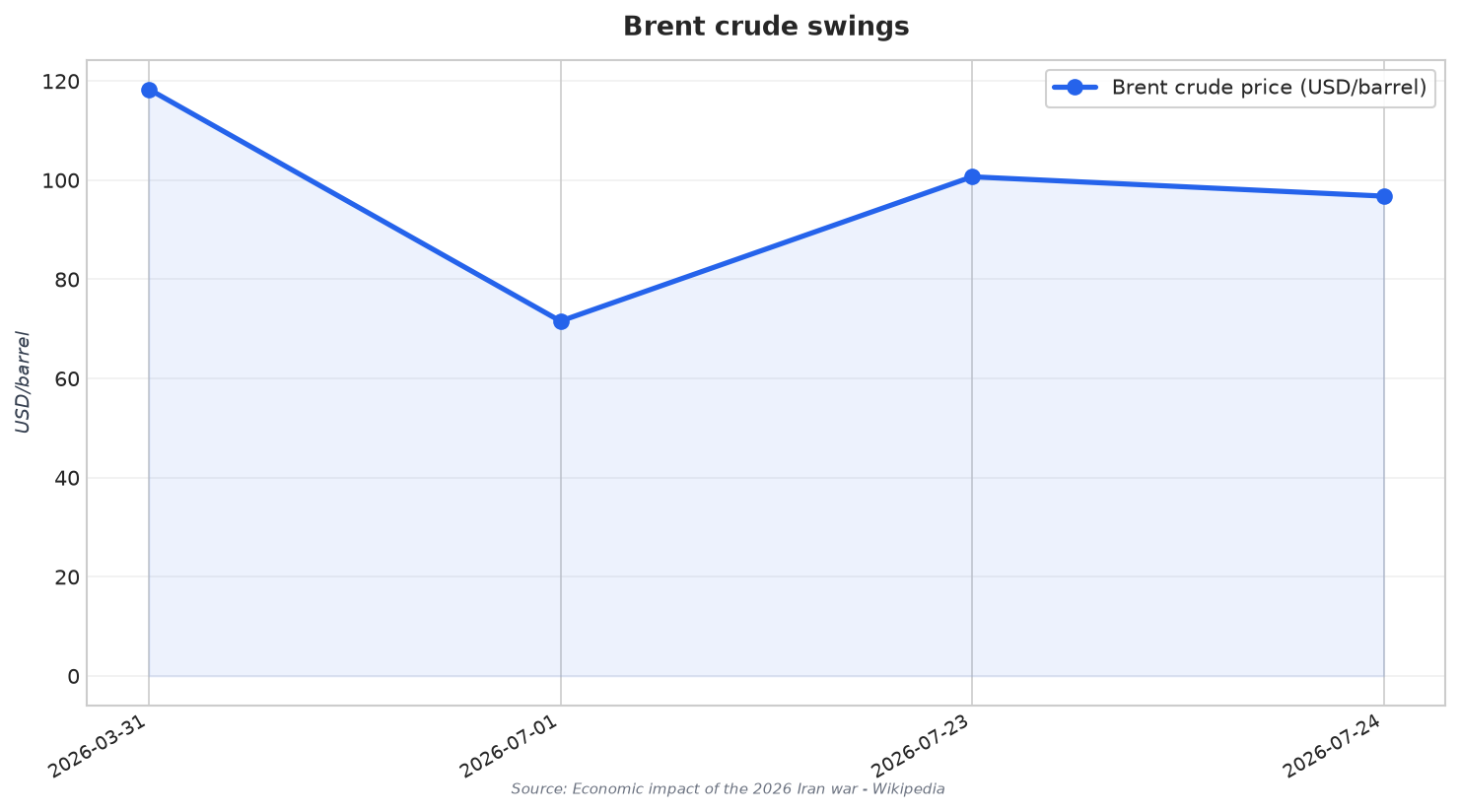
The market’s price whiplash reinforced why contracts now separate short spikes from sustained change. As tension eased, Brent prices fell from $118.35 on 31 March 2026 to $71.57 by 1 July 2026, then rose to $100.69 on 23 July and closed at $96.78 on 24 July. By early September 2026, another surge was reported up to $109 amid renewed attacks on shipping and energy infrastructure. For lubricant force majeure supply contracts in the Gulf, the response is not to assume one “war clause” fixes everything. Parties are layering hardship and disruption tools, defining when performance is “prevented” versus merely more expensive, and building clearer price-reset timing to match how additive contract cycles and stacked supplier increases can lag even when crude appears to stabilize.
Why did force majeure become a bigger issue for Gulf-linked lubricant supply deals in 2026?
What price pressures pushed lubricant buyers to renegotiate contract terms?
How do New York and English law approaches change force majeure outcomes?
What shipping and insurance facts are influencing new risk-allocation clauses?
What does the keyword topic—lubricant force majeure supply contracts in the Gulf—mean in practice for buyers and suppliers?