
Engine damage claims often start as a technical complaint and escalate into a legal dispute when a customer alleges a lubricant caused property damage. In practice, that dispute can involve multiple parties in the supply chain, not only the brand owner, because product-liability concepts commonly focus on responsibility across the manufacturer, distributor, supplier, and retailer roles. Sources describing product liability emphasize that claims can arise when a product is alleged to be defective or dangerous and causes bodily injury or property damage, and they commonly categorize defects as design, manufacturing, or warning (failure-to-warn) issues. For GCC businesses, that framework is useful even when the specific consumer protection rules differ, because it helps structure investigations, communications, and evidence in a way that reduces uncertainty and supports a consistent response strategy.
Warranty positioning matters because customers may frame their dispute as either a product-liability case or a warranty issue, depending on what is easier to prove and what remedy they want. US-focused sources explain that warranty theories are one of three primary routes of liability alongside strict liability and negligence, and that warranty claims are contractual and commonly based on express warranties, implied warranties, and fitness for a specific purpose under UCC Article 2 as adopted by each state. Another source adds that breach of warranty can be especially relevant when a defect is unique to a particular unit, while broader product safety issues can implicate larger product-safety actions. Even though those details are US-specific, they highlight a practical GCC lesson: warranty wording and claims-handling steps should anticipate how customers will characterize engine damage and what proof they will be asked to provide.
Build a Defensible File: Defect Theory, Evidence, and Warnings
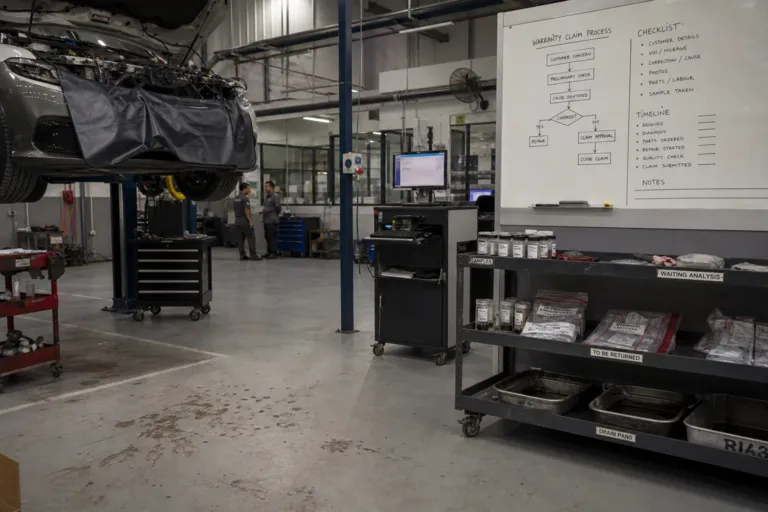
To control risk, treat each allegation like it could become a formal claim and build a defensible record from day one. The sources on claim elements stress comprehensive documentation, including proof of purchase and photographs of the defective product and the injury, and they also mention design schematics, testing materials, manufacturing documents, expert analysis, and any recall notices or consumer warnings as potentially pivotal. This maps well onto lubricant disputes where sample retention, batch identification, and a clear chronology of storage, handling, and use can decide whether the issue is framed as a manufacturing deviation, a design or formulation critique, or a warning/instructions dispute. If you must explain denial or partial coverage under a warranty, it is far easier when the file shows consistent documentation and a clear technical narrative that addresses each alleged defect category.
Product-liability risk also changes over time, so program discipline matters. One source on strengthening product-liability programs states that product-liability risk is dynamic, regulatory standards evolve, product complexity increases, and global supply chains introduce new vulnerabilities; it recommends regular review so the program evolves with operations instead of reacting after a loss. For lubricant sellers operating across the GCC, that approach supports periodic review of labeling, instructions, and warranty terms, along with tighter controls over product documentation and quality control. It also aligns with the reality that claims may target multiple entities that “make products available to the public,” which is how sources describe potential defendants. Clear internal roles—who investigates, who communicates, and who authorizes goodwill or warranty outcomes—reduce inconsistent messaging that can worsen liability exposure.
Recalls and warnings are another lever for managing exposure when you identify a pattern or a credible safety issue. A source explaining recalls describes a recall as a request to return a product, usually after the discovery of a defect or other safety issue, and notes that companies may issue a recall voluntarily based on their own or a government investigation as a means of avoiding liability for injuries caused by the product. Even when an issue does not reach recall level, the same logic supports swift corrective labeling, clearer instructions, and tightened distribution controls. In this context, the keyword topic—lubricant product liability warranty claims GCC—should be treated as an operational discipline: align warranty promises with technical limits, maintain evidence-quality documentation, and treat warning adequacy as a core risk-control tool that can reduce claim frequency and severity.
What defect theories typically show up in lubricant-related engine damage disputes?
What documentation should a company gather when an engine damage claim is filed?
How do warranty claims differ from product-liability claims in the sources?
Why should GCC lubricant businesses review product-liability programs regularly?
How should GCC teams approach lubricant product liability and warranty claims without overpromising?