
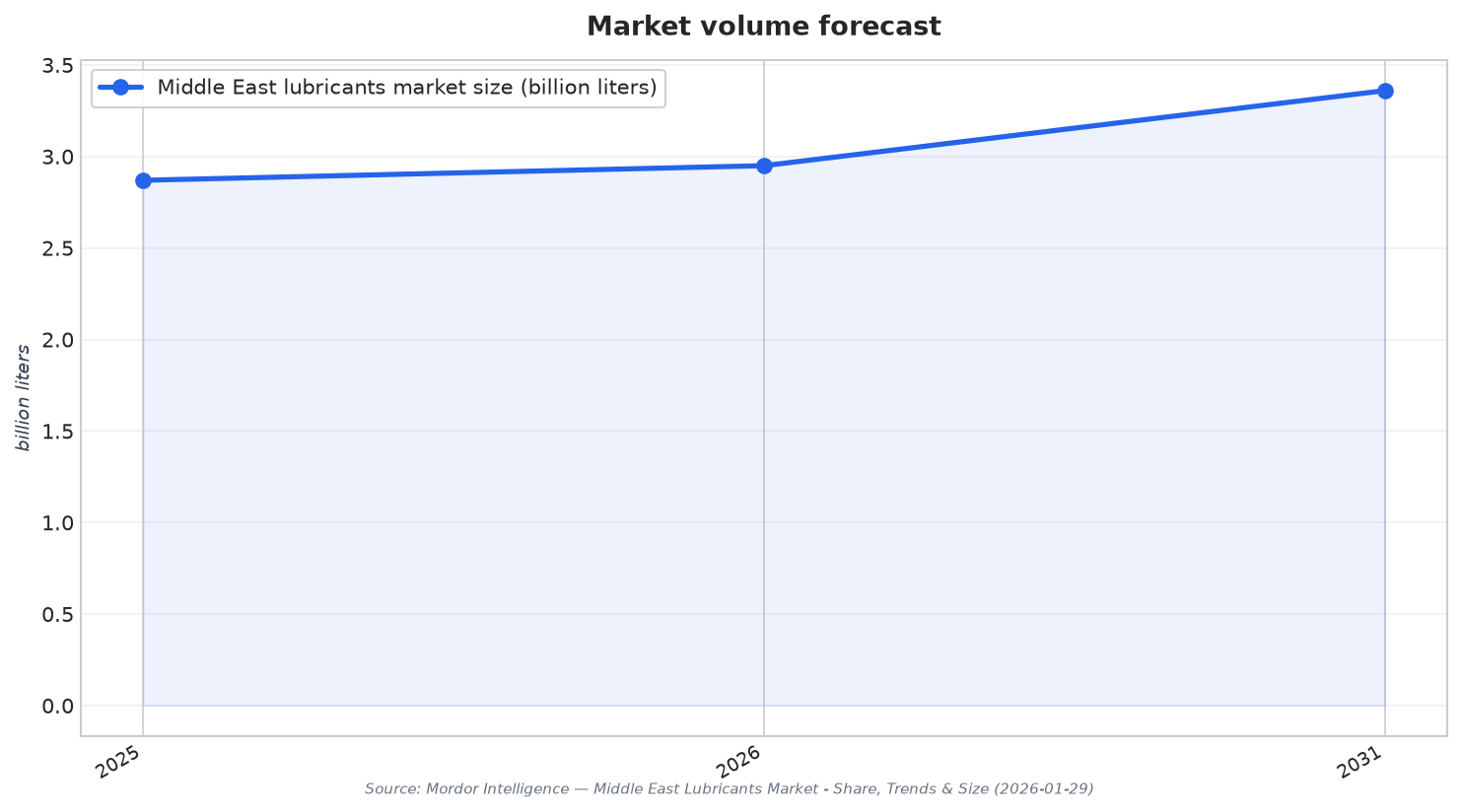
The Middle East lubricants market was valued at 2.87 billion liters in 2025, with Mordor Intelligence estimating growth from 2.95 billion liters in 2026 to 3.36 billion liters by 2031 at a 2.66% CAGR. In that setting, the question is not only demand, but how to supply it reliably while protecting margins. This is where toll blending lubricants in the Middle East becomes a practical option. Instead of building tanks, labs, and packaging lines, brands can outsource manufacturing while concentrating on marketing, distribution, and customer relationships, as described in the toll blending overview from PG Lube.
Outsourcing can make sense when the market is pulling in multiple directions at once. Mordor notes that mineral oils held 69.58% share in 2025, while bio-based lubricants are forecast to grow at a 3.12% CAGR to 2031. Base oil mix also matters: Group I captured 46.62% share in 2025, while Group III is projected to expand at a 2.97% CAGR through 2031. On the demand side, engine oils held 37.32% revenue share in 2025, but transmission and hydraulic fluids are advancing at a 3.01% CAGR between 2026 and 2031, and power generation is registering a 3.09% CAGR. If your portfolio needs to change faster than your plant can, outsourced blending offers a way to adapt product types and specifications without rebuilding your own production setup.
When Outsourcing Beats Ownership in the Gulf
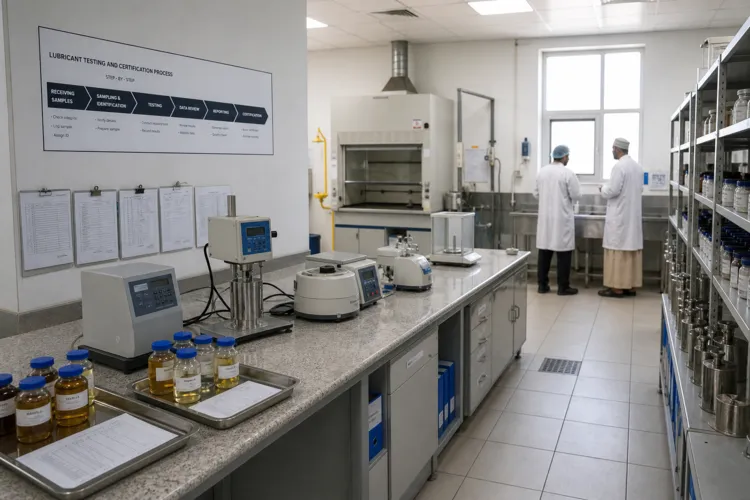
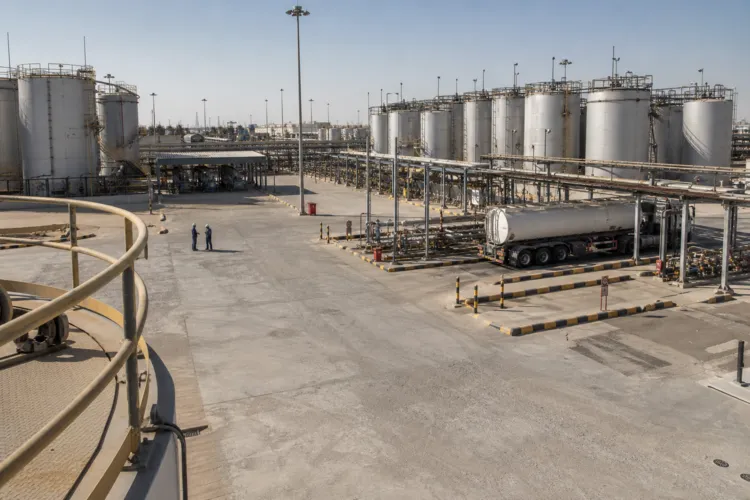
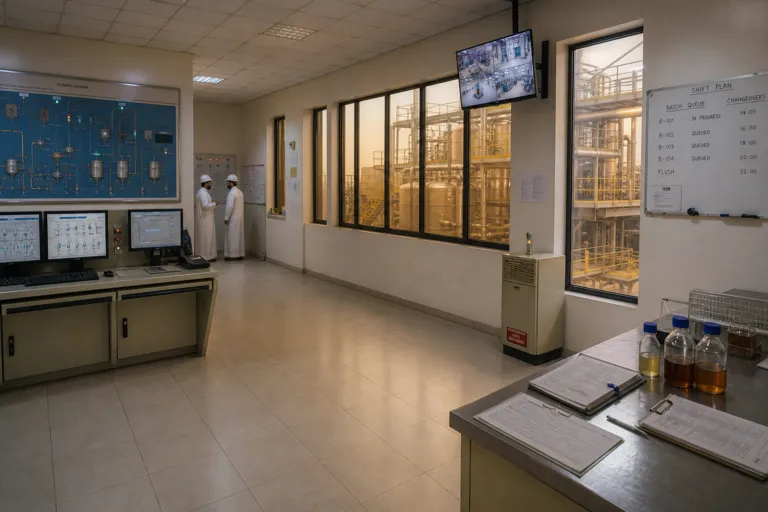
Ownership can be attractive, but it also locks you into fixed capacity and utilization risk. Gulf Pacific Lubricants frames toll blending as “you have the formulation, we have the plant,” highlighting an ISO-certified facility in the Hamriyah Free Zone that blends to specification with protected intellectual property. The practical services listed include batch testing against the customer’s specification before release, and batch documentation such as a Certificate of Analysis, Technical Data Sheet, Material Safety Data Sheet, and batch and lot traceability records. This model fits specific triggers that often make outsourcing superior: when a brand needs additional capacity without capital investment, when its own plant is offline for maintenance, when it is testing a new market before committing to its own production, or when it is rationalizing lower-volume lines to keep an owned plant focused on core products.
In the Middle East, policy and geography strengthen the outsourcing case. Mordor reports that suppliers that localize blending and packaging under 70% iktva content rules enjoy price and lead-time advantages versus import-reliant rivals, encouraging capacity additions in locations such as Yanbu, Jebel Ali, and Sohar. At the same time, Saudi Arabia led the regional lubricants market with 37.21% share in 2025, while the UAE is the fastest-growing geography at a 3.21% CAGR through 2031. For brands using the UAE as a production and logistics bridge, Gulf Pacific emphasizes factors such as favorable duty structure for re-export production, on-site port access at Hamriyah plus Jebel Ali for global sailing frequency, and documentation experience across more than 40 destination markets.
Finally, toll blending can be a deliberate strategy for serving export corridors without overstating local demand. Gulf Pacific points to routes from the UAE into Africa, South Asia, the CIS, and the GCC. As external context, Mordor’s East Africa analysis describes how regional supply chains are increasingly centered around Oryx Energies’ 100,000-ton Dar es Salaam plant and TotalEnergies’ 15.2-kiloton Mombasa facility, which play roles in bulk procurement and toll blending for smaller distributors. For Middle East-based brands, that kind of downstream blending capacity highlights the value of flexible supply chains. If your advantage is formulation, approvals, and distribution reach, outsourcing production can be the faster path to scale while keeping control of your specification and brand.
How big is the Middle East lubricants market, and what is the growth outlook?
When does toll blending make more sense than owning a lubricant plant?
What product segments are shifting in the Middle East that may favor outsourced blending?
How do local content rules affect blending decisions in Saudi Arabia?
How can toll blending support lubricant exports from the UAE?