
Maaden sits at the center of Saudi Arabia’s Vision 2030 drive to diversify the economy, and its project pipeline is expanding. Reuters, via Zawya Projects, reported Maaden’s 2026 capital expenditure guidance at 15.5 billion Saudi riyals ($4.13 billion), including SAR 12.6 billion ($3.4 billion) for growth projects. That same update linked spending to completion and commissioning of Phase 1 of the Phosphate 3 project, progress at Ar Rjum, and an aluminum recycling center. For maintenance teams, this pace of build-out raises a practical question: how do you specify gear and hydraulic oils that protect uptime as new mills, conveyors, and hydraulics ramp toward production?
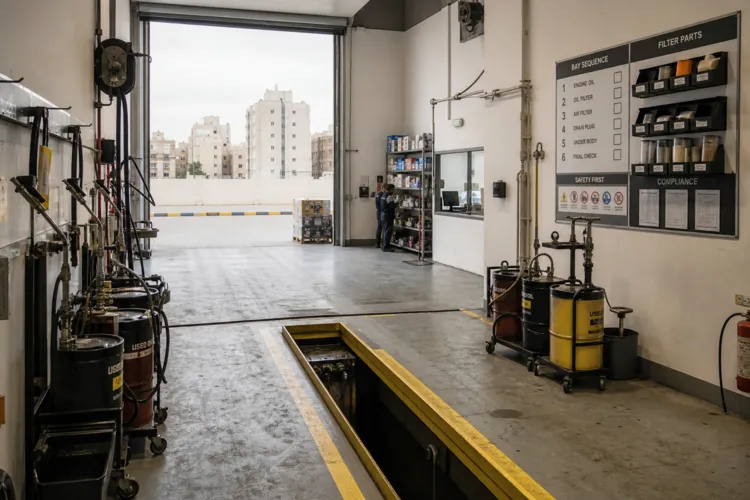
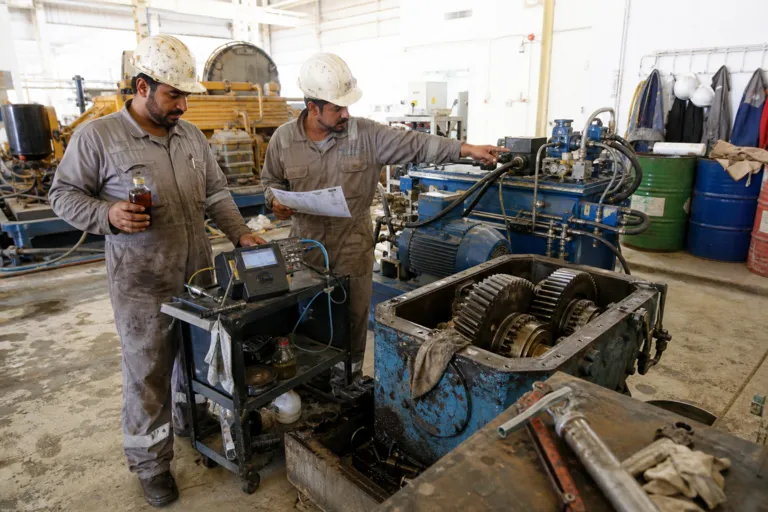
The lubricant conversation is not theoretical. Shell’s mining guidance highlights that lubricants need properties “essential for maintaining safety and productivity” in underground environments, and that lubricant-related work can be time consuming, leading to more unplanned downtime and lost productivity. For a company commissioning new assets, the spec needs to emphasize long oil life, wear protection, and system efficiency where applicable. Shell cites Shell Tellus hydraulic fluids as formulated to provide enhanced wear protection, long oil life, and high system efficiency, while Shell Omala gear oils are positioned to extend gearbox life and drive system efficiency even in challenging conditions. Those performance themes map directly to the mechanical reality of mining systems with gearboxes, pumps, and high-load drives.
How to Specify Gear and Hydraulic Oils for Maaden-Scale Projects
Start with the operating window and the application, then work backward into viscosity selection. Mobil’s field engineering perspective, shared by Chief Engineer Manu Bhargava, explains that engineers run calculations to determine what viscosities are required based on the temperature band and application use, and then determine what products require a high viscosity index. He also points to peak-summer conditions where traditional mineral lubricants may not offer required protection because both machine temperature and ambient temperature rise. For Saudi operations, that guidance supports writing specs that explicitly reference temperature bands, expected duty cycles, and the need for products that can maintain protection when heat increases across the system.
Next, align lubricant requirements to the equipment scope Maaden is actively installing and operating. Metso’s Ar Rjum delivery, described as an end-to-end gold processing line from ore to doré, includes a crushing station and conveying systems, a grinding circuit including SAG and ball mills, and thickening and gravity separation circuits, plus field instrumentation and automation. Each of these areas typically concentrates mechanical risk in different places: conveyors and mills stress gearboxes and drives, while plant hydraulics depend on fluid cleanliness, wear protection, and efficiency. That is where a clear “gear oil” vs “hydraulic fluid” boundary in procurement specs prevents substitutions that can quietly increase wear or energy losses.
Finally, link lubrication strategy to Maaden’s commissioning schedule and growth cadence. Zawya Projects reported Phase 1 of the Phosphate 3 mega-complex is expected to be completed by the end of 2026, with production starting in 2027, and that the plant will add 1.5 million tonnes annual capacity by the end of 2026. With that kind of ramp, lubricant specs should be written for steady operations, but also for the early-life period when loads, temperatures, and maintenance practices are still stabilizing. In practical terms for mining lubricants Maaden Middle East, specify products by performance outcomes cited in sources—wear protection, long oil life, and system efficiency—then validate the viscosity approach through temperature-band calculations and proactive troubleshooting methods described by Mobil.
In parallel, Maaden’s broader expansion posture reinforces why lubricant governance matters. SL Guardian reported Maaden intends to spend around $2.5 billion annually over the next five years to expand its domestic portfolio, and that it reported a 73% rise in first-half net profit to SR3.47 billion ($920 million), driven largely by phosphate mining. More projects and more operating hours mean lubrication decisions compound in impact. The strongest specs are simple and enforceable: identify the application, define the temperature band, and require documented properties tied to wear protection, oil life, and efficiency. That approach supports safer operations and reduces the downtime risk Shell flags as costly and productivity-draining.
What does “mining lubricants Maaden Middle East” mean in practice for specifications?
Which lubricant property themes are explicitly highlighted for mining?
Why should temperature bands be stated in oil specifications?
What new Maaden equipment scope makes gear and hydraulic oil selection important?
What published milestones show Maaden’s near-term ramp where lubricant reliability matters?