
Defense-grade lubricant selection in the GCC starts with mission risk, not unit price. Military lubricants are formulated to withstand extreme conditions, including high temperatures, heavy loads, and corrosive environments, and they directly support operational efficiency and equipment longevity across platforms that range from firearms and aircraft to armored vehicles and naval vessels. For aircraft, the bar is even higher because lubricants must support safe and reliable operation of engines, gearboxes, actuators, bearings, and landing systems while meeting stringent qualification requirements, compatibility constraints, and long service intervals. That combination pushes specifiers toward documented performance and disciplined fluid-management practices that reduce maintenance risk without compromising safety.
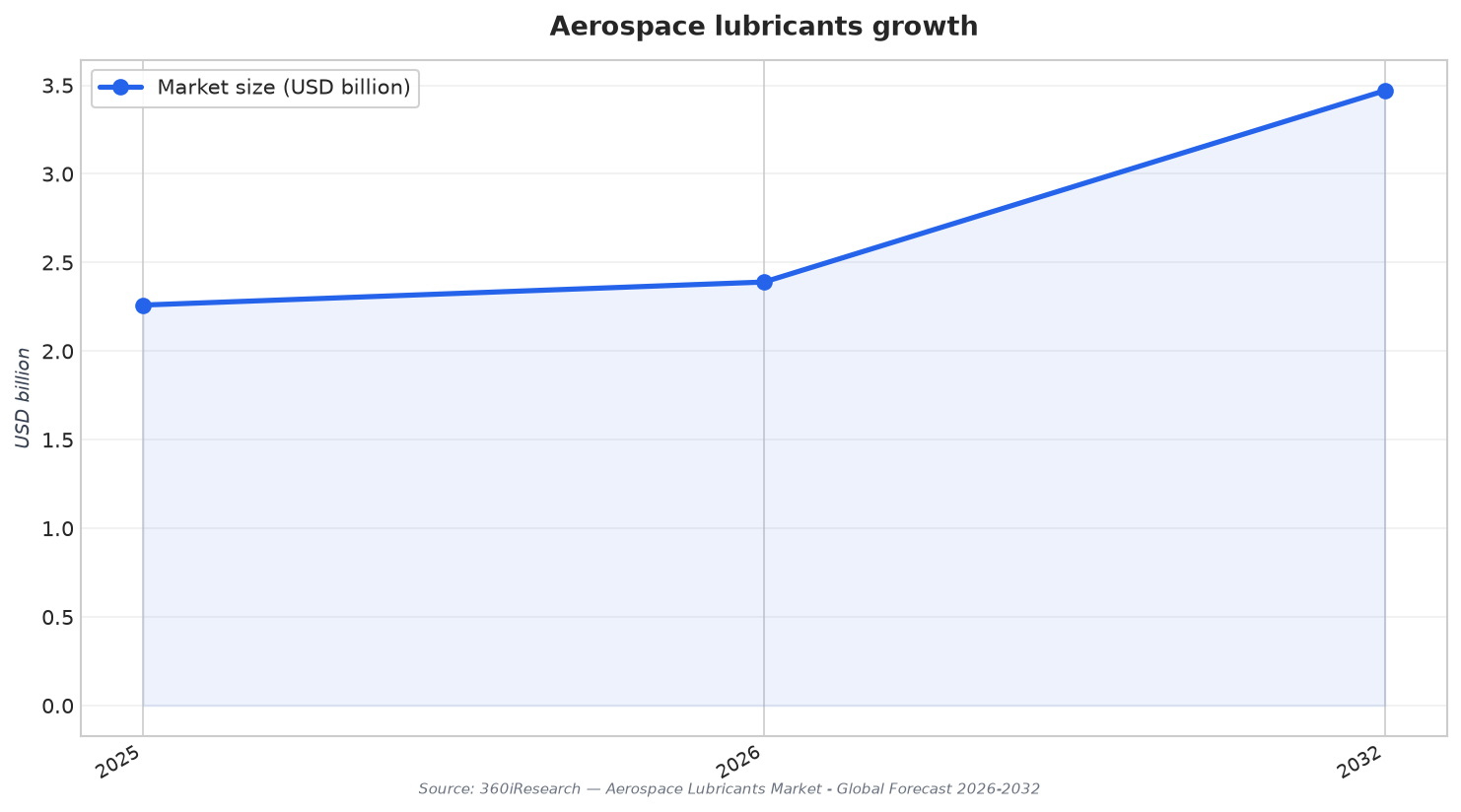
Market context also highlights why procurement teams treat approvals and continuity as strategic. One global forecast estimated the aerospace lubricants market at USD 2.26 billion in 2025 and expected USD 2.39 billion in 2026, with a path to USD 3.47 billion by 2032 at a 6.31% CAGR. A separate aviation lubricants outlook projected growth from $2666.19 million in 2026 to $4412.53 million by 2034 at a 6.5% CAGR, noting that military aviation is expected to hold the second-largest share. These are global figures, not GCC-specific. Still, they reinforce a reality GCC programs face: qualification, traceability, and supplier resilience matter because aviation lubricants sit inside a high-value segment shaped by strict certification processes and OEM performance demands.
Specifying for Aircraft and Ground Fleets: Qualifications, Thermal Range, and Service Life
For military aviation, the specification conversation is anchored in specialized performance requirements and stringent qualification standards, including MIL-PRF and NATO codes. Consumption is driven by operational tempo, training schedules, and maintenance across diverse platforms, from fighter jets to transport aircraft and helicopters. Military fleets also have longer service lives of 30–50 years, which creates sustained MRO demand and lubricant replenishment needs over decades. On the formulation side, military and advanced aerospace applications are tied to wider temperature capability; one military lubricants report described high-performance lubricants functioning across -60°C to 300°C. In practice, this means the written spec should connect the lubricant to platform constraints, service intervals, and documentation requirements, because approvals and traceability are central to airworthiness and fleet readiness.
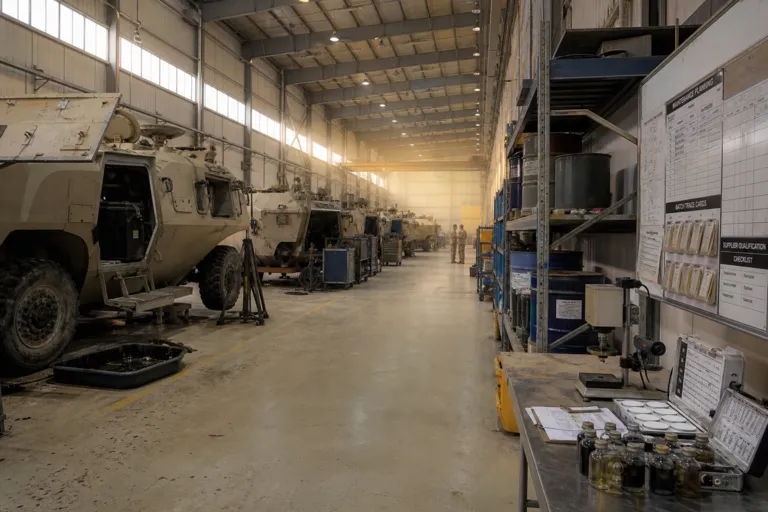
For military vehicles and multi-domain ground support, the same discipline applies, but with different failure modes. Military lubricants span mineral, synthetic, semi-synthetic, and bio-based categories, and adoption is rising for synthetic options described as offering superior thermal stability and reduced maintenance requirements. Technology development is also expanding application areas via specialized additives and nanotechnology for wear protection, corrosion resistance, and extended drain intervals. In aviation-adjacent operations, another lever is monitoring: aerospace lubricant management is increasingly supported by artificial intelligence that combines maintenance records, sensor readings, operating conditions, and laboratory analysis to identify abnormal wear and detect contamination, provided outputs are explainable and controlled. This supports condition-based maintenance, but only when validated against engineering requirements and used with human approval where airworthiness is affected.
Localization mandates and “local content” pressure change how defense programs in the GCC should structure lubricant sourcing, even when the technical requirements are written around global standards. Aerospace and aviation lubricant supply is described as highly consolidated, dominated by multinationals with the R&D and regulatory expertise to serve OEMs and MRO networks. At the same time, one industry outlook noted that the region is evolving from a pure consumption hub to a center for formulation and blending, with local companies increasingly seeking OEM certifications. Procurement cycles, high certification barriers, and a preference for domestic or allied-country suppliers shape contracting, especially for long-life fleets. For buyers, that implies a two-track approach: lock in approved products and documentation for current platforms, while building a qualification roadmap for localized blending that still preserves traceability and approval status.
What makes defense-grade lubricants different for military aircraft in the GCC?
How long do military fleets stay in service, and why does it matter for lubricant plans?
What operating temperature range is cited for high-performance military lubricants?
How can AI support lubricant decisions without compromising airworthiness?
How should buyers think about defense military lubricants in the GCC under localization mandates?