
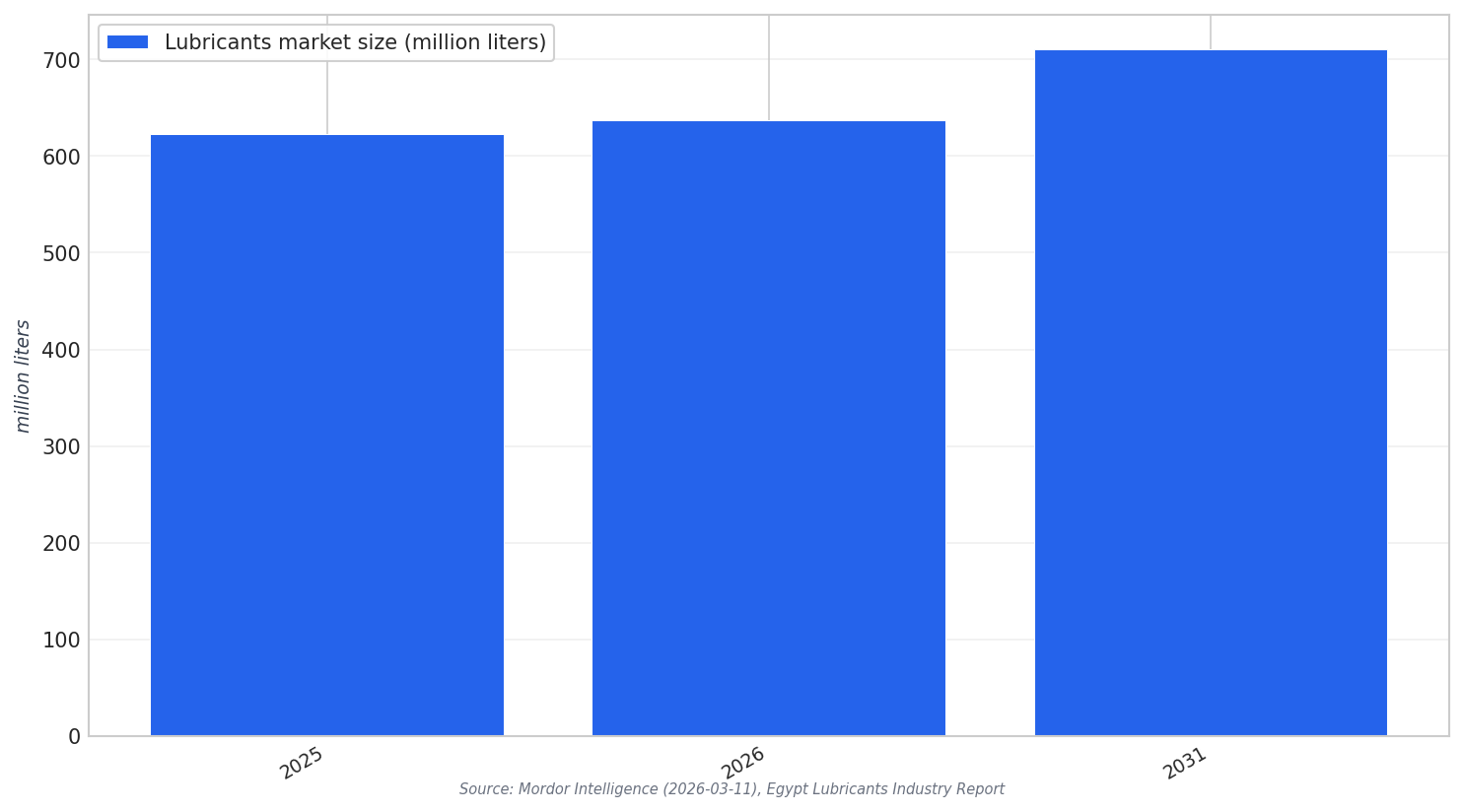
The Egypt lubricants market is a high-volume arena with clear growth signals, but it is also a price-sensitive frontier. Mordor Intelligence estimates the total market at 623.24 million liters in 2025, rising to 637.08 million liters in 2026 and reaching 711 million liters by 2031. Over 2026–2031, that implies a 2.22% CAGR. The same source flags key constraints that keep buyers value-focused, including currency depreciation, import-cost inflation, and counterfeit risk.
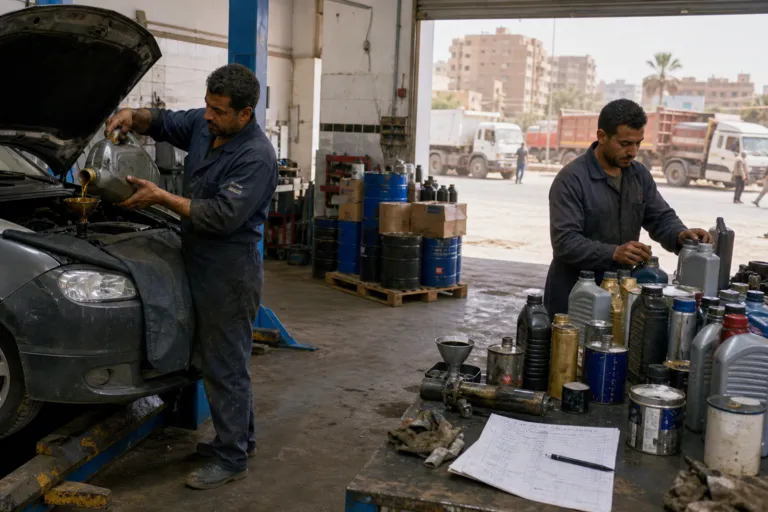
Automotive demand anchors the market. In 2025, the automotive end-user segment accounted for 61.12% of Egypt’s lubricants market size, according to Mordor Intelligence. Within products, automotive engine oil led with a 47.89% share in 2025. This aligns with Mordor’s separate automotive lubricants coverage, which notes Egypt operated more than 5 million internal-combustion vehicles in 2024 and that passenger car service intervals average 6,000 kilometers for engine oil and drivetrain fluids.
What Is Driving Growth Beyond Passenger Cars?
Infrastructure and industrial activity are also shaping product mix and supplier strategy. Mordor Intelligence points to a USD 169 billion infrastructure pipeline that is expanding heavy-equipment fleets, and it forecasts greases as the fastest-growing product at a 4.93% CAGR (2026–2031). Industrial demand is also advancing, with the industrial end-user segment projected to grow at a 3.88% CAGR over the same period. On the energy side, Mordor highlights that electricity utilities’ moves toward gas-fired and renewable capacity are raising consumption of turbine, transformer, and hydraulic oils, and it cites Siemens’ 4.8 GW combined-cycle facility as an anchor project generating recurring turbine-oil demand.
For regional suppliers, product positioning must reflect both cost pressure and specification trends. Mineral oils still hold 66.28% of the market by base stock in 2025, but Mordor expects the synthetic segment’s share to rise, with synthetics growing at a 3.12% CAGR (2026–2031). The same report links this shift to stricter OEM warranty terms for Euro 6 vehicles and the needs of combined-cycle gas turbines, where longer drain intervals can lower lifetime costs. Meanwhile, localized production remains a key hedge: Mordor notes that multinational blenders are attracted to hubs like the Suez Canal Economic Zone and the New Administrative Capital to reduce exposure to tariff and exchange-rate shocks.
Channel and compliance trends further define how brands win share in a value-driven market. Mordor’s automotive lubricants analysis highlights that digital channels, including e-commerce storefronts and app-based mechanic platforms, are opening new retail corridors, especially among tech-savvy urban consumers. It also states that enforcement by the Egyptian Organization for Standardization (EOS) is lifting baseline quality and gradually squeezing counterfeit supply. For suppliers, that combination supports a clearer premium ladder, but price competitiveness remains central as import-driven inflation pressure persists.
How big is the Egypt lubricants market in volume terms?
Why is the Egypt lubricants market described as price sensitive?
Which segment dominates demand in the Egypt lubricants market?
Which product category is forecast to grow the fastest?
What is pushing a shift toward synthetics in Egypt?