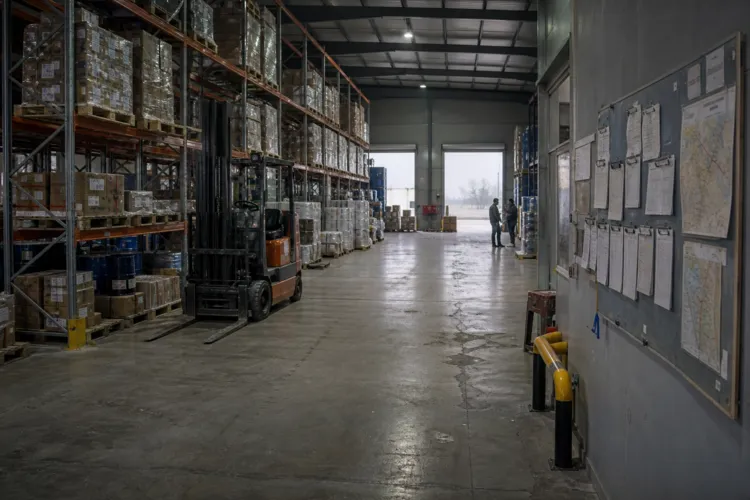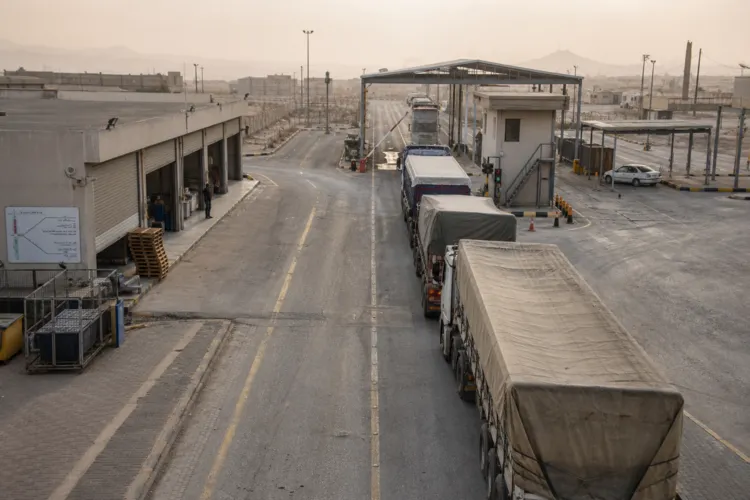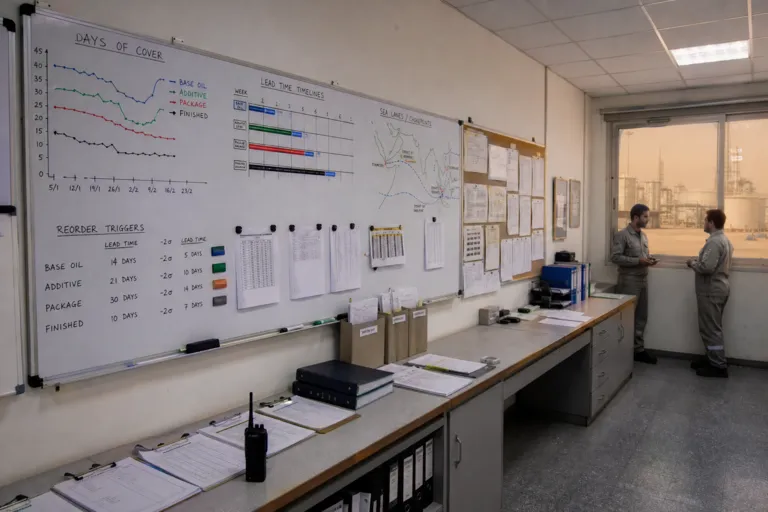
“Days of cover” sounds like a simple inventory KPI. In the Gulf, it quickly turns into a resilience decision. Strikes on Iran in February closed the Strait of Hormuz, described as a corridor carrying around 20 million barrels a day and, for lubricants, the primary export route for Gulf base oils, additives, and finished lubricants. Another source frames the chokepoint as carrying roughly one-fifth of the world’s oil shipments, with public data also putting normal transit at roughly 20% of global oil and about 20% of LNG trade. Enverus Intelligence Research separately estimates approximately 14 MMbpd of crude moves through the strait, described as about one-third of global seaborne supply, alongside roughly 20% of global LNG volumes.
That exposure is not theoretical in 2026. ICIS flags base oil markets reacting to the Middle East war with a “consistent bullish trend,” while uncertainty over feedstock availability, expensive shipping, high diesel competition, and drone attacks continue to plague conditions, with the Strait of Hormuz remaining a “key pawn.” For buyers setting lubricant safety stock days of cover in the GCC, the key is to translate these risks into decision rules: if freight access, insurance availability, or confirmed transit impairment changes, your effective lead time changes. That is when “days of cover” must move from a static target to an action plan.
From Rule of Thumb to Disruption Triggers
A clean starting point is a basic rule of thumb: NetSuite states that safety stock should be the amount of inventory used per day multiplied by the lead time in days. In a stable era, a 30-day strategy could be workable. But a disruption-focused supply-chain example says that in 2020-2021, lead times “doubled overnight,” and converters with 30-day inventory ran out “within 45 days.” The same source points to 2026 conditions that included shipping insurance at 1,200% of normal rates. The operational message for lubricants is simple. When lead time becomes uncertain, days of cover must be tied to triggers, not averaged assumptions.
Disruption frequency also matters because it determines how often your buffer gets tested. A post-2020 framing describes six years and four major global disruptions, and an average time between major disruptions of 18 months and decreasing. In that same discussion, companies that survived held 3–4 months of safety stock, buying time to adjust supply options while competitors shut down production lines. This is not lubricant-specific performance data, so it should be used as context. Still, it supports a practical GCC playbook: define your lead-time exposure by product family, and then decide whether your days of cover are meant to bridge a normal delay or to survive a multi-month access constraint.
Finally, plan for a recovery that is not clean or uniform. One analysis of Asia’s base-stock market says the Gulf disruption is no longer a temporary freight problem, but a broader supply, logistics, and confidence shock. Under its assumptions, a “clean return to normal during 2027 is unlikely,” with a slower and uneven recovery stretching from 2028 to 2030. That is Asia-focused, not a direct GCC demand forecast, but it reinforces the same principle: reliability can matter as much as price. For compact Gulf-linked markets like Bahrain, a separate report emphasizes sensitivity to delivery timing and supplier reliability even when local volumes are not published. In practice, the right days of cover are the ones that match your risk triggers, validated suppliers, and the true time needed to switch routes or formulations.
How should I set lubricant safety stock days of cover in the GCC?
Why does the Strait of Hormuz matter so much for lubricants?
What disruption signals should inventory planners watch in 2026?
Is a 30-day lubricant inventory strategy still safe in disruption periods?
Should I assume supply normalizes in 2027?