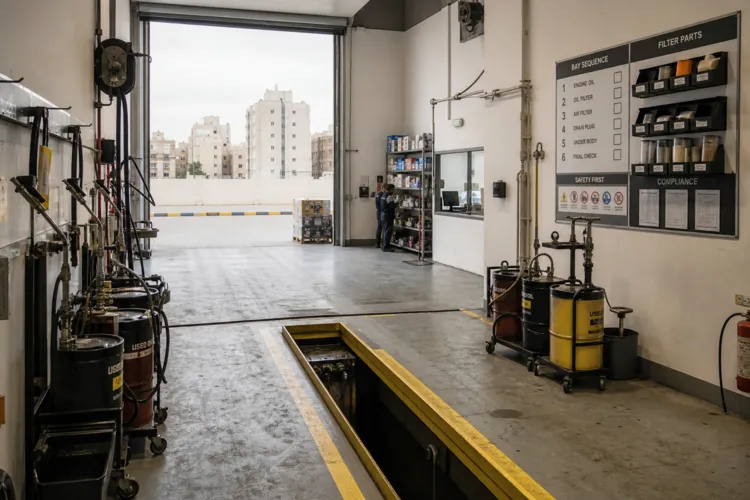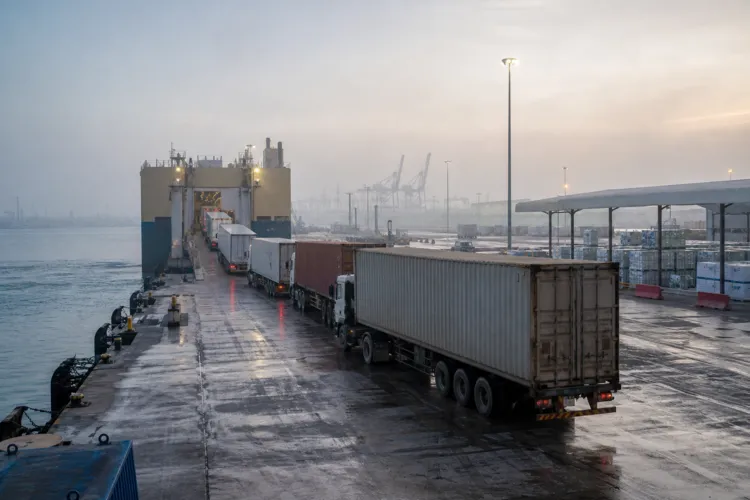


Jebel Ali has long been described as an anchor for flows between three continents. That positioning matters for any sector that depends on reliable inbound materials and fast outbound distribution. For lubricant blenders, it means packaging, additives, and base components can be staged close to port and logistics services, then moved quickly into re-export lanes. The wider UAE trade system amplifies this advantage. In 2024, the UAE recorded roughly $1.42 trillion in total trade in goods and services, underscoring how central logistics and re-export are to the country’s commercial model.
That scale is reinforced by the operators that sit behind the movement of cargo. DP World, Jebel Ali’s parent company, operates terminals, ports, and logistics facilities across more than 80 countries. It handles some 10% of world trade, which signals both network depth and the ability to route shipments around bottlenecks. DP World’s chairman, Sultan Bin Sulayem, also pointed to rising volumes not only in the Middle East but across Africa, India, Brazil, Latin America, Indonesia, and the Far East. For a blending-and-re-export business, diversified demand corridors help balance regional cycles.
Why Policy and Industrial Ecosystems Reinforce Re-Export
The UAE’s trade intensity is not only geography. It reflects a deliberate policy choice to go “all in” on trade, including upgrading its foreign trade portfolio to a full ministerial position, headed by Minister of Foreign Trade Thani bin Ahmed El Zeyoudi. Over the past four years, the UAE has signed Comprehensive Economic Partnership Agreements with more than two dozen partners, ranging from India and Indonesia to Israel and Turkey. In 2025, it launched negotiations on a free trade agreement with the European Union. For the Jebel Ali lubricant blending hub, this broader architecture can support smoother commercial reach for re-exports.
Manufacturing enablement also matters because blending is operationally intensive. Free-zone style ecosystems emphasize speed to set up and scale. One UAE industrial zone example is RAKEZ, which positions itself as more than a licensing authority, offering infrastructure, services, and facilitation so manufacturers can focus on operations and growth. It highlights dedicated industrial zones, customisable warehouses, plug-and-play factories, scalable land plots, reliable utilities, and on-site labour accommodations designed to reduce costs and speed up time-to-market. Even when not specific to Jebel Ali, this model helps explain why the country attracts production activity aligned with export orientation.
Demand fundamentals also keep attention on lubricants. MarketsandMarkets, cited by The Manila Times, projected the industrial lubricants market to be worth $74.3 billion by 2029, at 3.1%. It linked demand drivers to construction, mining, agriculture, and marine industries, while also flagging strict environmental norms and raw-material price fluctuations as constraints. These dynamics reward hubs that can import inputs efficiently, blend to specification, and re-export into multiple regions. They also raise the value of predictable procedures and clear investment conditions, which a UAE-focused legal brief described as transparent frameworks, strong protection of property rights, and relatively streamlined procedures.
Finally, recent disruptions in and around the region have highlighted how trade hubs must manage risk, not just volume. Reports described the suspension of commercial flights amid conflict, affecting more than 12,300 flights globally. Separately, Fujairah’s strategic role was framed as being outside the Strait of Hormuz, with the Abu Dhabi Crude Oil Pipeline able to carry between 1.5 million and 1.8 million barrels per day to the Gulf of Oman. Even as these examples relate to metals and fuels, they underscore why redundancy, routing options, and coordinated logistics matter. In that context, the Jebel Ali lubricant blending hub benefits from the UAE’s broader commitment to trade continuity and connectivity.
What is the Jebel Ali lubricant blending hub?
What trade scale supports re-export activity in the UAE?
How does DP World’s network matter for exporters and blenders?
Which policy moves strengthen the UAE’s trade reach?
What is a key market projection mentioned for industrial lubricants?