
The Kuwait lubricants market sits on top of an economy dominated by oil. Oil accounts for around 95% of Kuwait’s exports and approximately 90% of government revenue, according to the U.S. International Trade Administration. Kuwait also holds approximately 7% of global oil reserves, and it has a current production capacity of about 3.15 million barrels per day.
This oil structure matters for lubricants because base oils and lubricant demand move with refining, petrochemicals, and equipment activity. Ken Research values the Kuwait Base Oil Market at approximately USD 1.05 billion. The same source highlights that Group II and Group III base oils are increasingly favored due to higher purity, better performance in modern engines, and compliance with evolving environmental standards. It also notes rising demand for synthetic and re-refined base oils, linked to sustainability initiatives and the need for longer drain intervals and improved fuel efficiency.
End-use demand described by Ken Research is broad. Automotive is the largest consumer of base oils in Kuwait, supported by high vehicle density and demand for premium lubricants. Industrial demand is also substantial, with base oils used in manufacturing, heavy equipment, and power generation. Marine and aviation use is connected to logistics and transportation activity, while metalworking and power generation require specialized lubricants for operational efficiency and equipment longevity.
Refining Backbone and Local Blending: Strong Base, Split Supply Chain
Kuwait’s refining backbone is state-led. The U.S. International Trade Administration describes Kuwait Petroleum Corporation (KPC) as the state-owned company running the sector, with upstream handled primarily by Kuwait Oil Company (KOC) and downstream by Kuwait National Petroleum Company (KNPC). Britannica also notes that Kuwait has “extensive refineries,” and it describes KNPC as controlling the supply and distribution of petroleum products within the country. Together, this supports local availability of refinery streams that can underpin base-oil and lubricant activity.
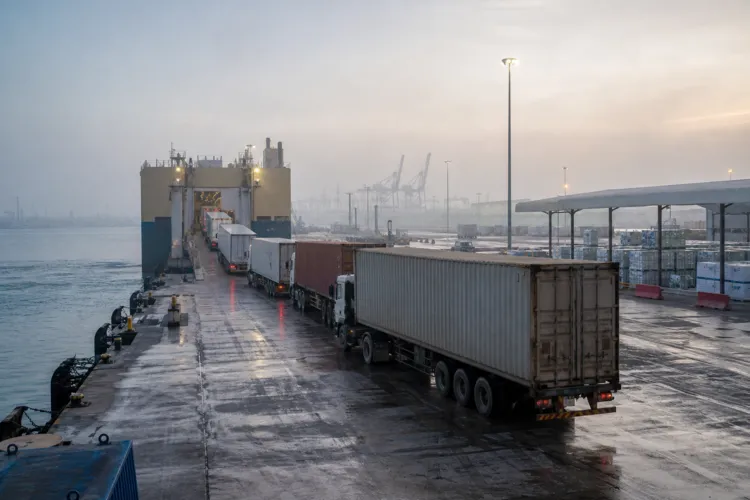
However, not every input to finished lubricants is produced locally. IndexBox describes the Middle East lubricant antioxidants segment as “structurally import-dependent,” with local production “limited to blending and formulation rather than upstream specialty chemical synthesis.” It estimates regional import volumes at 26,000–32,000 metric tons annually in 2026, representing over 90% of total consumption. IndexBox also identifies Shuwaikh (Kuwait) among the ports used in the import model for finished antioxidants and intermediates, linking Kuwait into a wider additives supply chain that relies on overseas production.
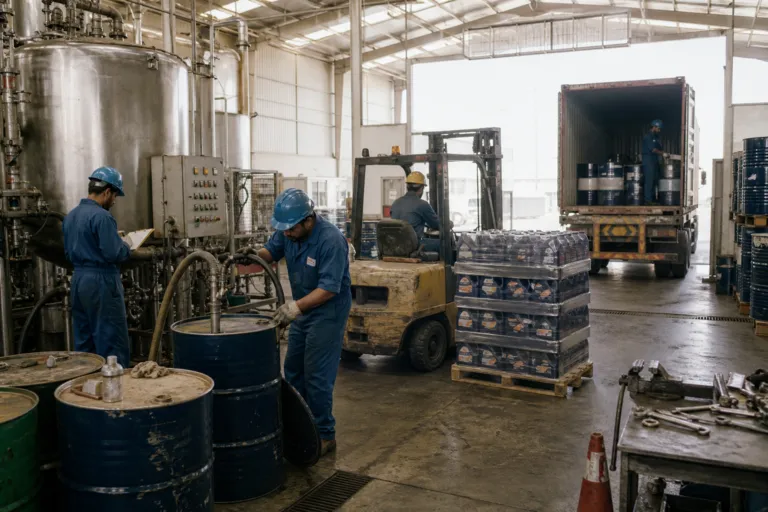
In practice, this creates a split dynamic in the Kuwait lubricants market. Refining strength supports base-oil availability and industrial demand, while blending and formulation remain critical to convert inputs into finished products aligned with modern standards. Ken Research lists a mix of regional and international participants in Kuwait’s base oil landscape, including KPC, KNPC, PIC, Gulf Oil International, TotalEnergies Kuwait, and others. Separately, the Baker Institute notes that KPC has invested in both domestic and international refining and petrochemical projects, and that KPC co-owns refineries in Europe, Vietnam, and Oman, supporting secure markets and long-term planning amid fluctuating global demand.
What is driving the Kuwait lubricants market today?
How large is Kuwait’s base oil market in value terms?
Why does import dependence matter for lubricant formulation in Kuwait?
Which state companies shape refining and downstream supply linked to lubricants?
How does Kuwait’s oil position underpin the Kuwait lubricants market?