
Demand signals for the Oman lubricants market sit inside a wider economic story. Oman’s economy is mainly centered around its oil sector, and petroleum is responsible for 64% of all export revenue, 45% of government income, and 50% of GDP. At the same time, policy direction aims to diversify away from oil under privatisation and Omanisation policies. In this setting, lubricants demand is shaped by where industrial activity expands, how goods move, and how fast downstream capacity and industrial clustering grow.
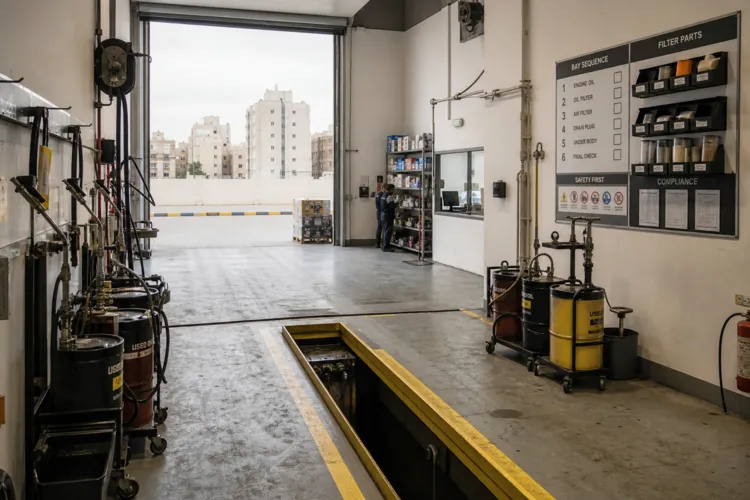
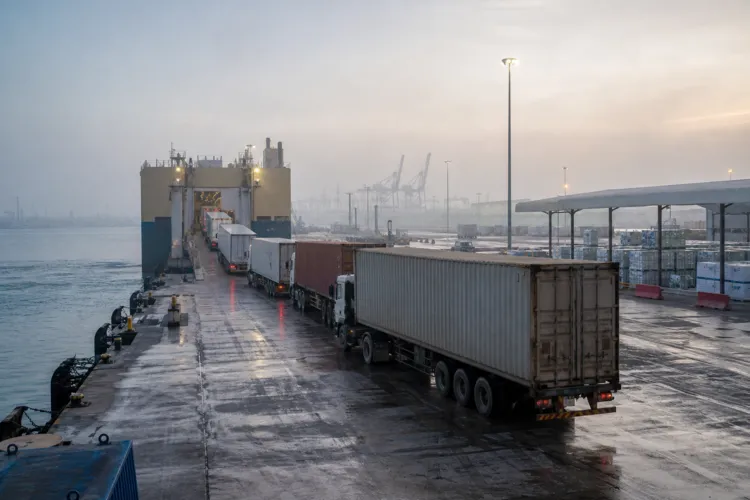
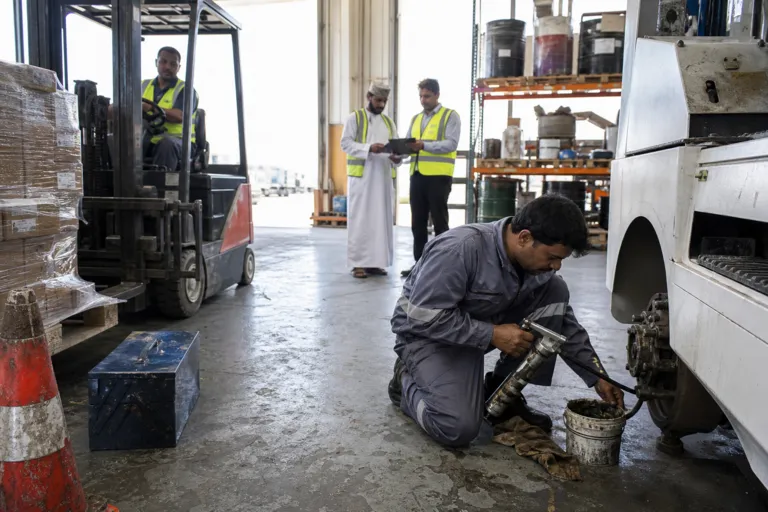
Mining and logistics stand out as direct demand drivers. A Middle East lubricant additives source links Oman’s demand to mining, logistics, and a growing automotive fleet. These end-uses typically consume engine oils and industrial lubricants across haulage, materials handling, and equipment maintenance. The same source also frames broader regional lubricant consumption patterns: passenger car motor oil (PCMO) holds the largest volume share at roughly 35–40%, followed by heavy-duty engine oils at 25–30%, and industrial lubricants at 20–25%, with greases and transmission fluids making up the remaining share.
How Downstream Expansion and Vision 2040 Feed Lubricant Pull-Through
Downstream investment can increase lubricant pull-through by expanding industrial operations and transport intensity. One downstream market overview segments products to include lubricants alongside refined petroleum products, petrochemicals, and specialty chemicals. It values the Oman oil and gas downstream market at approximately USD 4.4 billion, and describes growth drivers such as increasing domestic energy demand and investments in refining and petrochemical infrastructure, supported by government initiatives to diversify the sector. Another source connects Omani petroleum firms’ shift into downstream industries—such as refining and petrochemicals—to job creation and local value chains aligned with Oman’s Vision 2040.
Economic and free zones add a second channel for lubricant demand: new logistics corridors and industrial clustering. Oman’s special economic and free zones are described as expanding rapidly, with investments rising from RO 14.12 billion to RO 22 billion in five years. Focus areas include manufacturing, technology, renewable energy, and logistics, supported by modern infrastructure and streamlined regulations. The same coverage notes that zones such as Al Dhahirah (Ibri) and Al Rawdah (Mahadha) are expected to enhance cross-border trade, facilitate job creation, and boost logistics activities, tying this expansion to Vision 2040 objectives.
For buyers and suppliers, the practical implication is clear. As mining and logistics activity grows, lubricant consumption is pulled by fleet use and equipment uptime needs. As downstream and industrial clusters expand under Vision 2040, lubricant demand can broaden across transport, industrial maintenance, and supporting services. Oman’s oil-centered economy provides the base, while diversification pathways and zone-led logistics build the next layer of use cases for the Oman lubricants market.
What is driving the Oman lubricants market today?
How does Vision 2040 connect to lubricants demand?
What is the size of Oman’s downstream market in the provided sources?
What do the sources say about special economic zone investment in Oman?
Which lubricant categories are largest by volume in the regional breakdown cited?