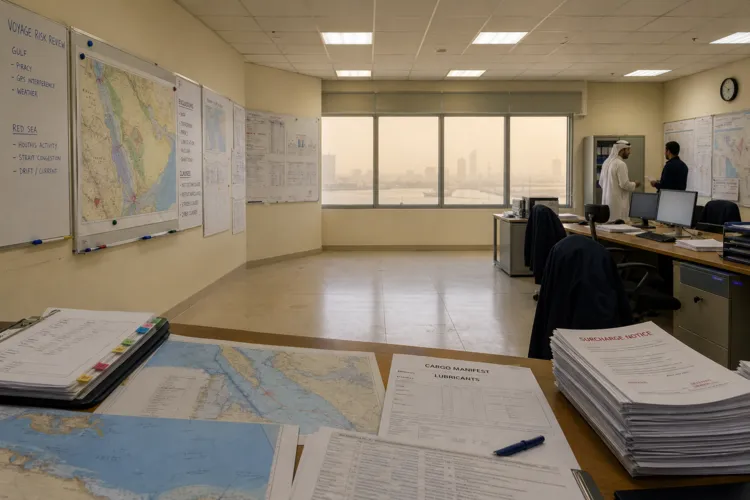

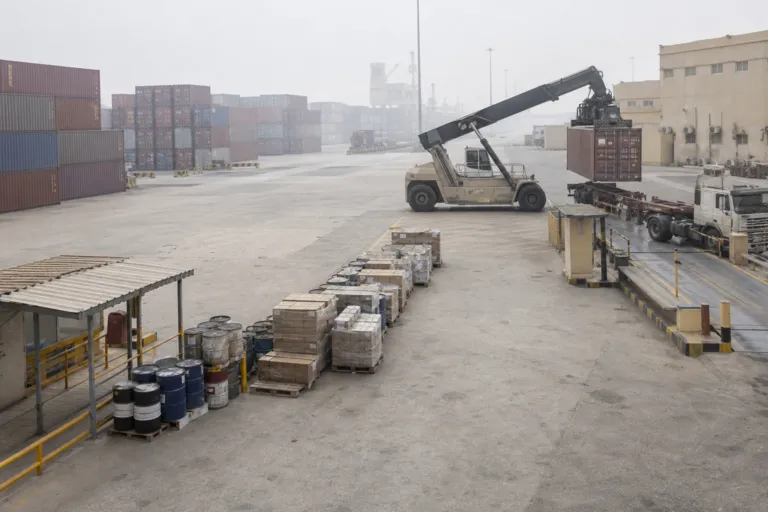
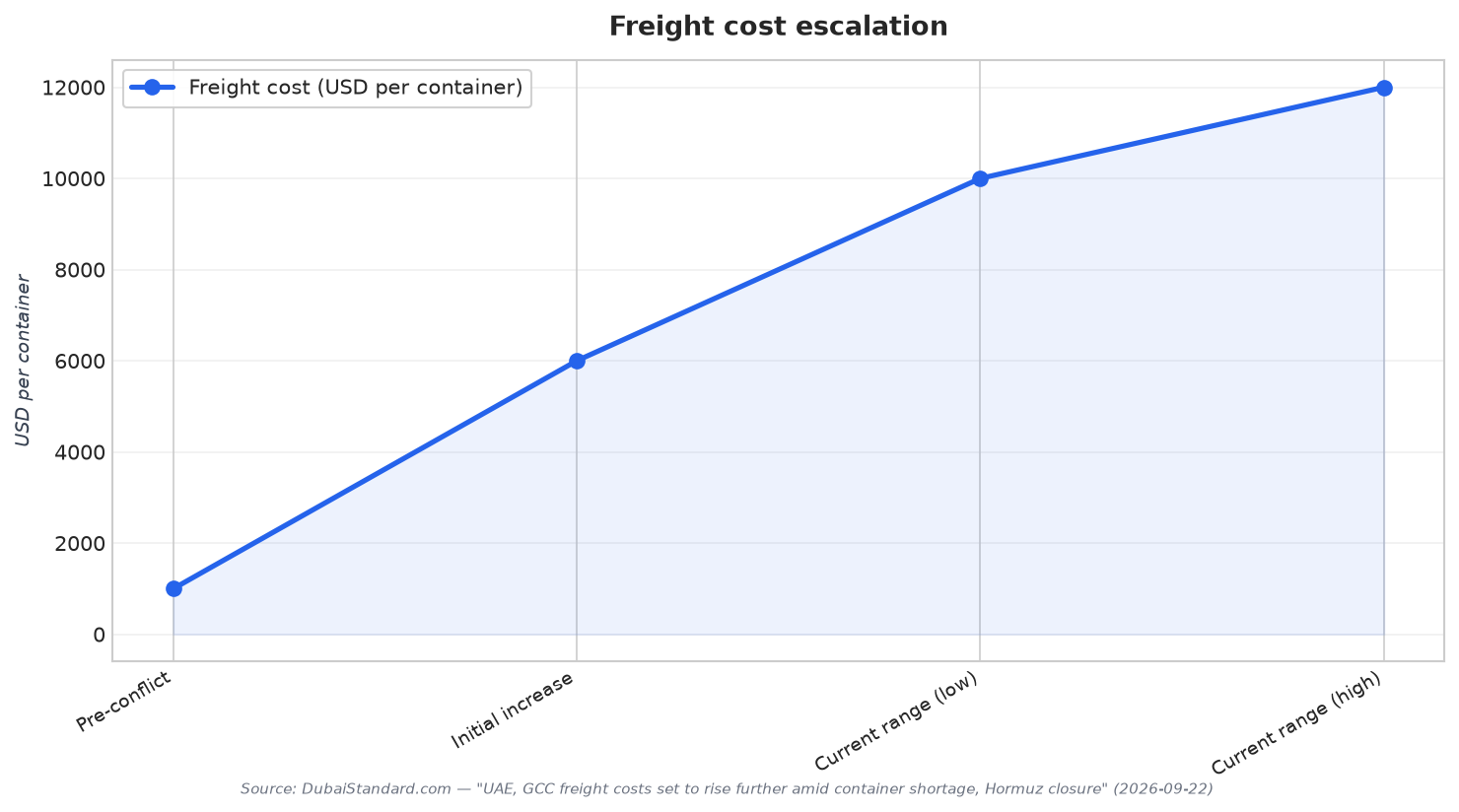
Container availability and stacked surcharges are now direct landed-cost risks for packaged lubricant imports into GCC destinations. In the UAE and wider Gulf, one importer quoted freight costs that once stood at USD 1,000–2,000, then rose to USD 6,000, and now range between USD 10,000 and 12,000, with a war surcharge added on top. The same account warned lead times have stretched from about 30 days to at least 60, and possibly 70. For packaged lubricants, this is not only a logistics issue. It is a product-availability issue that can disrupt retail and workshop replenishment cycles and force higher working-capital buffers.
The cost shock is intensified because pricing is no longer just “ocean freight.” A Gulf freight guide notes that, on China-to-GCC lanes, base ocean freight is no longer the main cost driver and that a single container can carry four surcharge layers. It also warns that two all-in quotes can differ by USD 1,500 per container purely due to how many surcharge layers were quietly included. In September 2026, the same source framed the market around constrained effective capacity, with sold-out sailings, blanked sailings, and common rollovers on popular strings. In this environment, a cheap quote that does not load can be more expensive than a firm quote that sails.
How to Defend Landed Cost: Quote Hygiene, Routing Choices, and Compliance Discipline
Start with quote hygiene. Ask for an all-in price that breaks out each surcharge layer, then compare like-for-like across forwarders and sailings. The same Gulf freight guidance flags that routing choice itself has become a cost decision, with a spread between Jebel Ali and Jeddah quotes described as up to USD 2,000 per container. Pair that with schedule realism. September 2026 conditions were described as a capacity problem more than a price problem, with rollovers common. For packaged lubricant imports, that means landed cost must include the risk cost of delay, especially when promotions, tenders, or workshop servicing schedules depend on on-time inventory.
Next, close the “preventable” leakage in customs and documentation. A GCC customs guide stresses that the biggest operational risk is the total landed-cost stack, plus delays triggered by preventable classification and documentation errors. It notes HS codes are standardized 6–10 digit classifications across more than 5,000 product categories, and warns that even a single-digit mistake can trigger audits, penalties up to four times the duty owed in the United States, or shipment delays. It also cites a logistics guide warning that unexpected import duties and customs fees can inflate landed costs by 20–30% when they are not estimated before shipment. Saudi Arabia is referenced as applying the GCC common external tariff of at least 5% on most goods imported from outside the GCC, and it requires exports into Saudi Arabia to go through the Saleem product safety program, including Saber for registration and shipping documents.
Finally, align packaging choices with what the GCC market is already buying and servicing, because freight volatility can punish inefficient pack-out. In GCC lubricant packaging, bottles are projected to hold the largest share in 2026 at 38.6%, while engine oil is projected to hold 58.4%. Plastic is projected at 48.2%, and automotive is projected at 36.7%. Saudi Arabia alone had 15.8 Mn registered vehicles in use by end-2024, up 6.9% from 2023, supporting demand for automotive lubricant packaging across the GCC. For longer-term resilience, one GCC refill systems guide states approximately 42% of industrial lubricant suppliers are exploring refillable container systems, and around 44% of packaging developers are investing in designs that support refillable distribution. Those shifts can matter when containers are scarce and surcharges remain embedded in the supply chain.
How do freight surcharges and container shortages affect landed cost on packaged lubricant imports into the GCC?
What is the practical way to compare forwarder quotes when surcharge stacking is common?
What customs mistakes can trigger delays or cost shocks for lubricant imports?
What baseline tariff rule is cited for Saudi Arabia as a GCC reference point?
How does the keyword topic relate to packaged lubricant demand and packaging choices in the GCC?