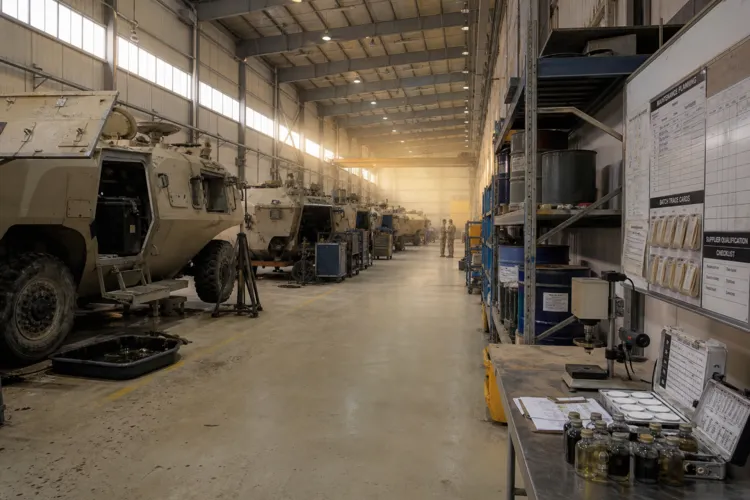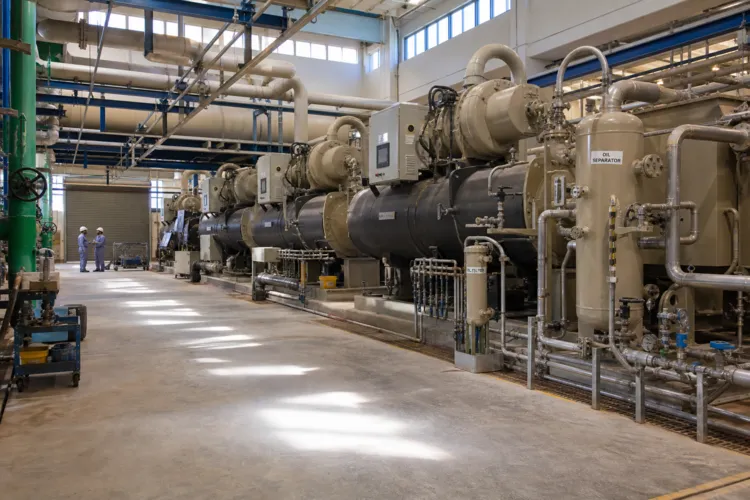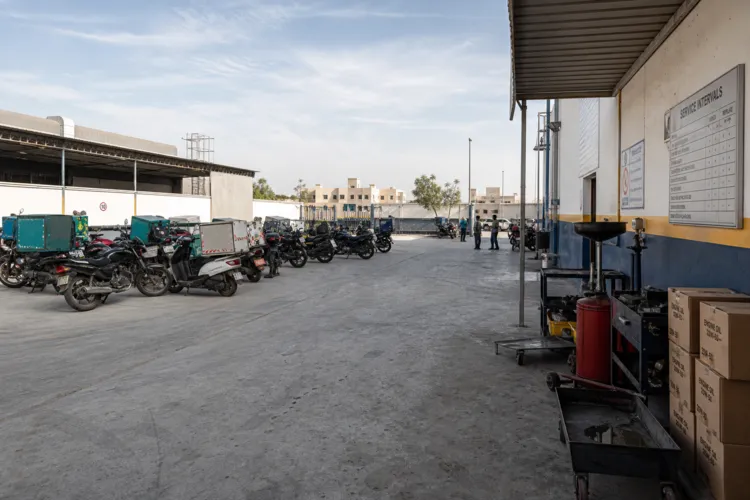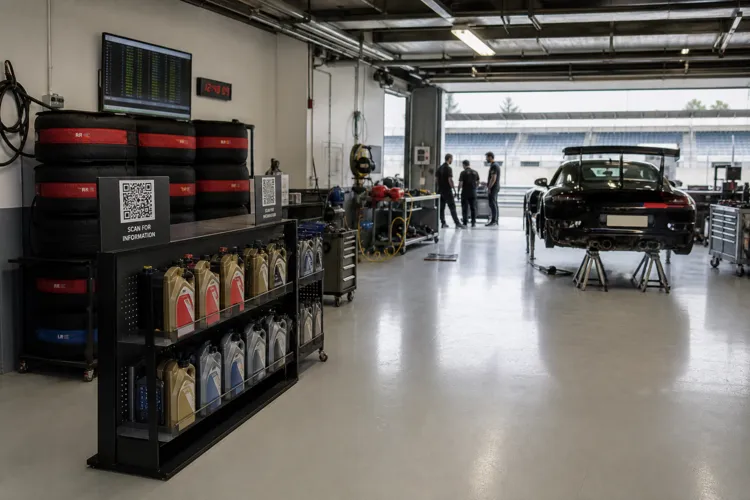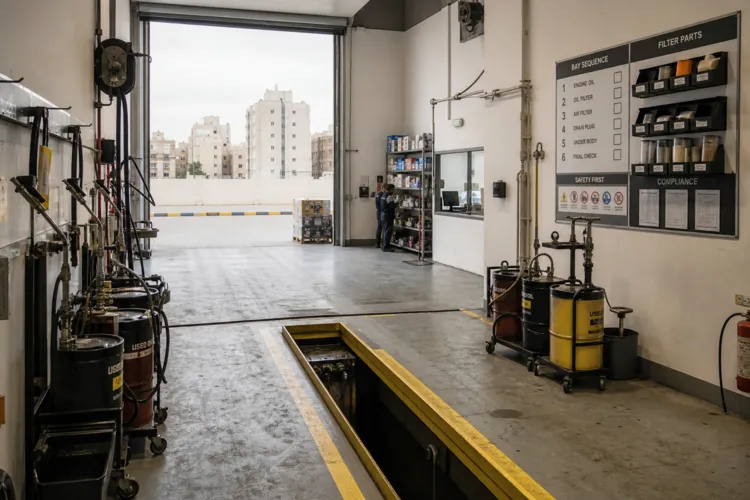

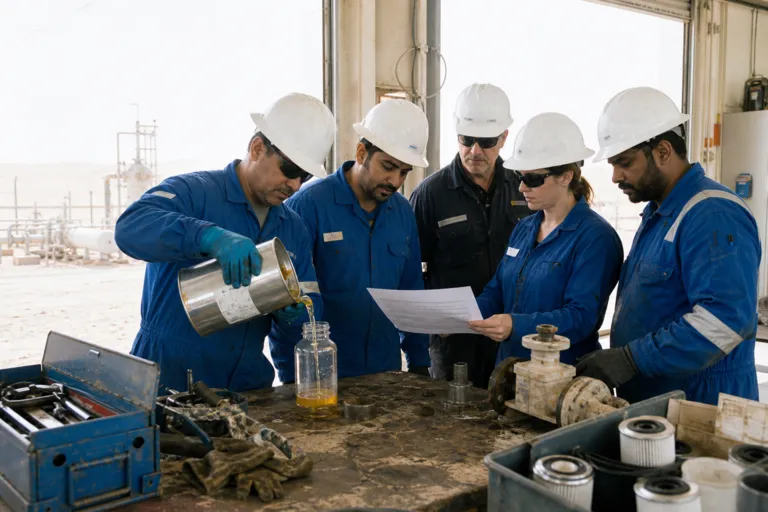
Specifying lubricants for upstream assets in the Middle East starts with the operating envelope. In the region, lubricants for fleet assets are described as needing to sustain viscosity from 10 °C dawn starts to 60 °C midday peaks, resist sand ingress, and permit 500-hour service intervals. Those same stressors shape selection for drilling support equipment, rotating machinery, and hydraulic systems across oil and gas operations.
Offshore conditions add a different set of failure modes. In the Middle East offshore lubricants market, products are segmented into mineral oil-based, synthetic, bio-based/environmentally acceptable lubricants (EALs), greases for offshore equipment, and specialty offshore fluids. The same source highlights performance characteristics that drive specification decisions, including oxidation stability, load-carrying capacity, and water resistance, alongside environmental considerations such as biodegradability and toxicity in sensitive marine areas.
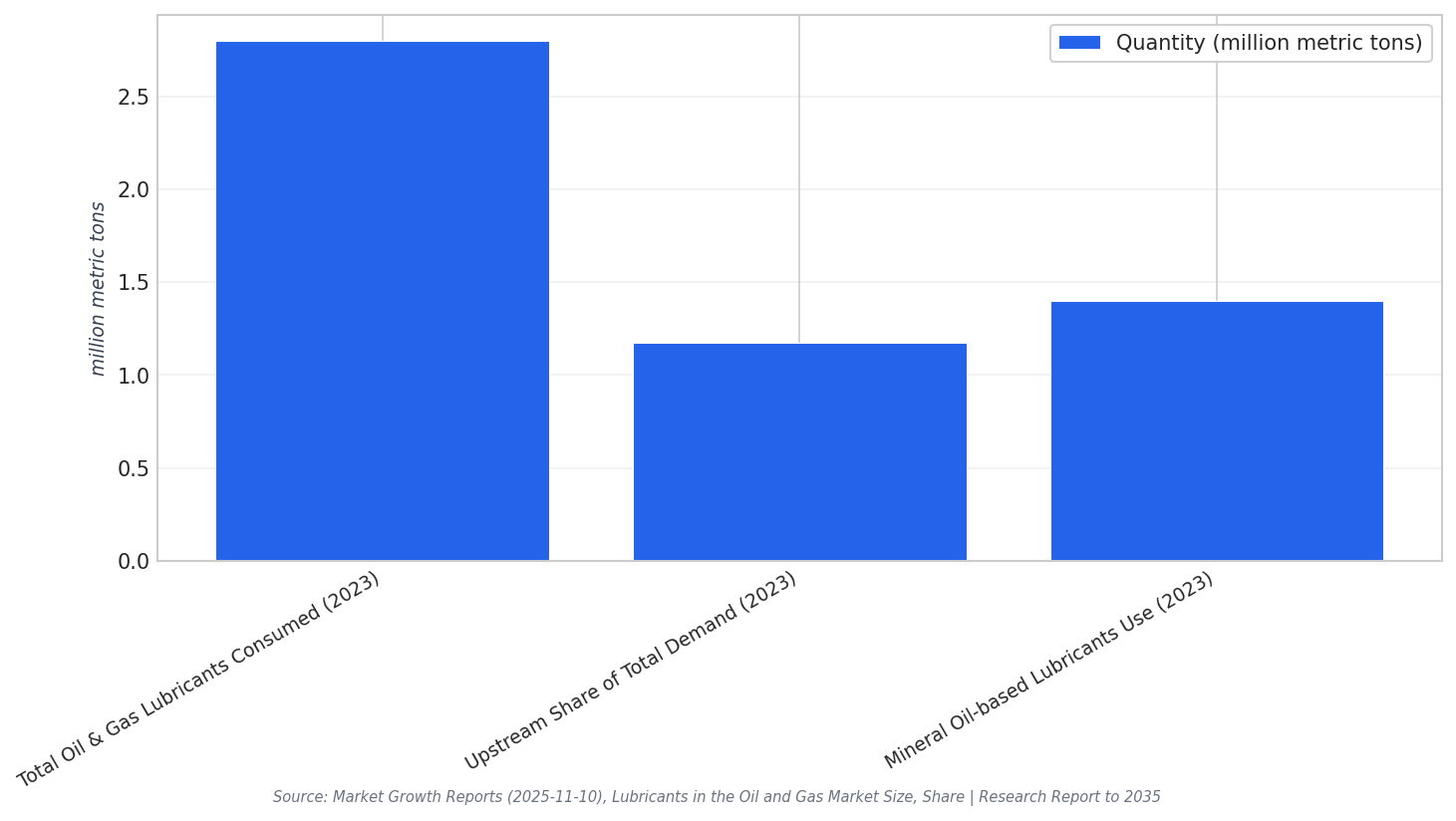
Across the global oil and gas industry, lubricant use and mix also point to where performance demands concentrate. In 2023, over 2.8 million metric tons of lubricants were consumed by the global oil and gas industry, with upstream exploration and drilling activities accounting for 42% of total demand. Synthetic lubricants are described as increasingly being adopted for extreme temperature and high-load conditions, aligning with the Middle East need to manage heat, load, and reliability.
How to Match Lubricant Type to Middle East Upstream Assets
Specification should begin with asset mapping and the lubricant families commonly required. Offshore end-user assets include offshore drilling rigs (jack-ups and semi-submersibles), offshore production platforms (fixed and floating), FPSOs, and OSVs. These applications drive demand for tailored formulations such as EP gear oils, hydraulic fluids, compressor oils, stern-tube lubricants, and corrosion-protective greases, selected around load profiles, water ingress risk, and OEM specifications.
Procurement teams also benefit from knowing the regional supply and market context without overfitting it to one country or asset. The Middle East offshore lubricants market is valued at approximately USD 1.2 billion. For base stocks, the Middle East is described as a major global base oil–producing region with total installed capacity estimated at almost 5 million metric tons per year, around 7.5% of global capacity, and a strong focus on Group II and Group III base oils; Saudi Arabia is noted as the region’s largest base oil producer with approximately 1.22 million t/y capacity.
What does “oil and gas lubricants Middle East” specification need to cover first?
Which lubricant types are commonly segmented for Middle East offshore oil and gas use?
Which offshore assets drive tailored lubricant requirements?
How big is upstream demand within global oil and gas lubricant consumption?
What supply-side facts matter for base oil availability in the region?