

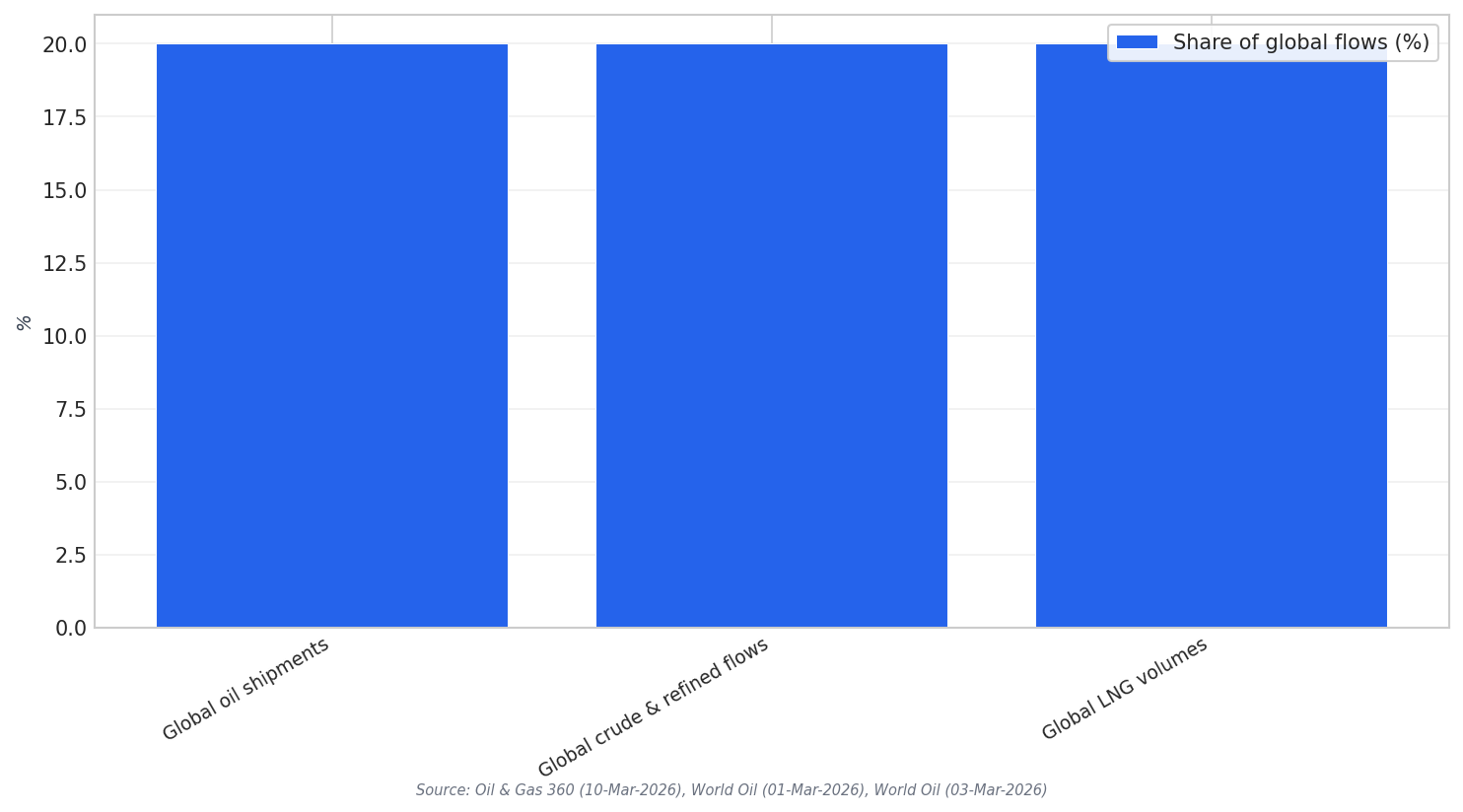
Strait of Hormuz risk has moved from a theoretical scenario to an operational constraint for energy and chemical logistics. The chokepoint carries roughly one-fifth of the world’s oil shipments, and public data cited in the sources also puts normal transit at roughly 20% of global oil and about 20% of LNG trade. Enverus Intelligence Research estimates approximately 14 MMbpd of crude moves through the strait, described as about one-third of global seaborne supply, alongside roughly 20% of global LNG volumes. For lubricant producers and distributors, these numbers matter because base oil security is tied to feedstock availability, refinery operations, and ocean freight reliability.
Base oil markets are already reacting to the Middle East war with a “consistent bullish trend,” and ICIS flags that uncertainty over feedstock availability, expensive shipping, high diesel competition, and drone attacks continue to plague conditions while the Strait of Hormuz remains a key pawn. That mix hits the core inputs and movements that lubricant supply chains rely on. Even when physical flows resume, Discovery Alert reports that underwriters may embed a persistent Hormuz risk premium into policy pricing, reflecting demonstrated rather than theoretical vulnerability. That raises the delivered cost and the risk of delayed base oil and additive movements.
Contingency Planning for Strait of Hormuz Base Oil Supply
Start with scenario planning that is used daily, not stored for emergencies. A pharma supply-chain analysis in the sources calls for clear contingency plans, trigger points for action, and better real-time visibility across the supply chain, integrated into S&OP processes for faster, coordinated responses. Translate this to lubricants by defining trigger points tied to shipping access, insurance availability, and confirmed transit impairment. Oil & Gas 360 notes that tanker operators must weigh rising war-risk premiums, the possibility of missile or drone attacks, and the need for naval protection. Those factors can become practical decision gates for rerouting, rebidding freight, or switching contract terms.
Diversify supply and logistics pathways, but stress-test the true capacity of alternatives. World Oil reports that alternative export routes exist, including Saudi Arabia’s 5-MMbpd East-West pipeline and the UAE’s 1.5-MMbpd Habshan-Fujairah line, yet they would not fully offset a sustained disruption. Oil & Gas 360 adds that bypass pipelines can move only a fraction of the volumes that normally pass through Hormuz. For lubricant buyers, this supports a two-track contingency: secure non-Gulf counterparties via term agreements, and qualify base oil slates that can be blended across different crude qualities, echoing the Southeast Asia resilience recommendations about long-term relationships and compatibility capabilities.
Build buffers and decision rules around inventory, because timing is the constraint when logistics fail. Enverus warns that even a one-month closure could draw roughly 400 million bbl from global inventories, and that Asian importers may compete for prompt supply as insurance costs rise and volatility stays elevated. Another source reports global inventories are already near five-year lows, increasing vulnerability if shipments are delayed or halted. Where strategic reserves are relevant, Oil & Gas 360 notes coordinated releases can help counter disruptions and have calmed markets during stress, but other commentary emphasizes that policy tools cannot easily offset exogenous insurance cancellations and stranded vessels. For base oil security, treat reserves and reroutes as partial cushions, not full substitutes.
What does “Strait of Hormuz base oil supply” risk mean in practice?
How much global oil and LNG normally moves through the Strait of Hormuz?
Can bypass pipelines fully replace Hormuz flows for supply security planning?
What contingency planning steps are most transferable to lubricant supply chains?