
The rise of private label lubricants GCC is tied to how lubricant demand is broadening and how channels are changing. Mobility Foresights describes the GCC lubricants market as serving industrial, automotive, marine, and energy sectors. It also lists the product range, including engine oils, industrial greases, transmission fluids, hydraulic oils, and specialty lubricants. In the GCC, lubricant consumption is propelled by a growing automotive parc, an expanding manufacturing sector, and infrastructural development.
Private label momentum is also a channel and margin story. MetaStat Insight notes a multi-tier supply and distribution structure, including manufacturers, regional distributors, and retail distributors. It adds that private-label lubricant products will increase in cost-sensitive markets, while branded products remain more popular where quality and technical competence are not subject to compromise. This framing fits GCC retail and workshop environments where buyers compare price and performance side-by-side.
Workshops and distributors are increasingly part of the brand landscape. Palco states that shelves still carry established lubricant brands, but now also show newer names, regional brands, export-focused brands, and even brands owned by workshops and distributors themselves. Palco also describes a shift in business thinking: rather than only distributing existing brands, companies can build their own brand without setting up a factory, using private label, white-label, contract manufacturing, or toll-blending approaches.
Why Packaging, Labeling, and Assortment Now Matter More
As private labels grow, packaging becomes part of how products compete on shelf and in workshop storage. IndexBox’s lubricant packaging outlook describes a market shaped by high-volume, cost-sensitive demand and pressure from sustainability mandates and evolving end-user requirements. It highlights a shift toward lightweight plastics, recyclable composites, and refillable systems, linked to sustainability goals and regulatory pressure in some regions. It also notes the automotive aftermarket as a volume anchor.
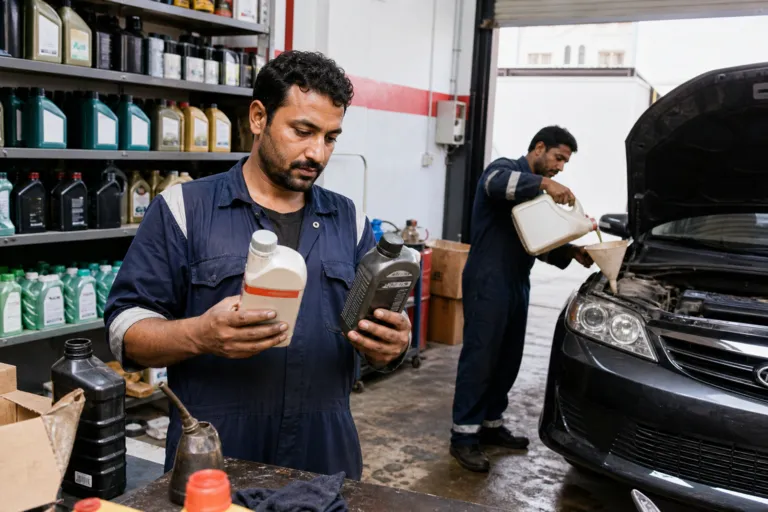
For car lube containers, IndexBox lists major trends that affect both branded and private label lines. These include a shift from standard jugs to ergonomic, handled bottles with integrated spouts. It also flags growth of synthetic oil packaging, requiring clear technical communication on labels, and increased use of post-consumer recycled (PCR) plastic to meet sustainability goals. It further points to SKU consolidation by retailers, favoring versatile container designs, and describes growth pockets in GCC countries alongside reliance on imports of both lubricants and containers.
Product strategy is also shifting toward higher performance. Mobility Foresights notes rising demand for high-performance and synthetic lubricants, with enhanced thermal stability, oxidation resistance, and extended oil change intervals, especially in automotive and aerospace. It also cites a trend toward eco-friendly and bio-based lubricants as environmental regulations become more stringent and sustainability gains traction. Together, these forces raise the bar for private labels in GCC retail and workshop channels: compete on cost, but win trust through clear specifications, labeling discipline, and fit-for-application product ranges.
What is driving private label lubricants GCC growth in retail and workshops?
Which lubricant types are relevant to GCC retail and workshop assortments?
How do synthetic and high-performance trends affect private label strategies?
What packaging trends influence lubricant sales in aftermarket channels?
Are private labels only a retail-shelf strategy in the GCC?