
The Middle East is described as a significant hub for the production and distribution of counterfeit goods. These goods range from everyday items to high-end branded products, and the trade undermines legitimate businesses and poses risks to health and safety. In lubricants, the threat is similar: counterfeit lubricants are unauthorized imitations, typically inferior, and sold to deceive buyers.
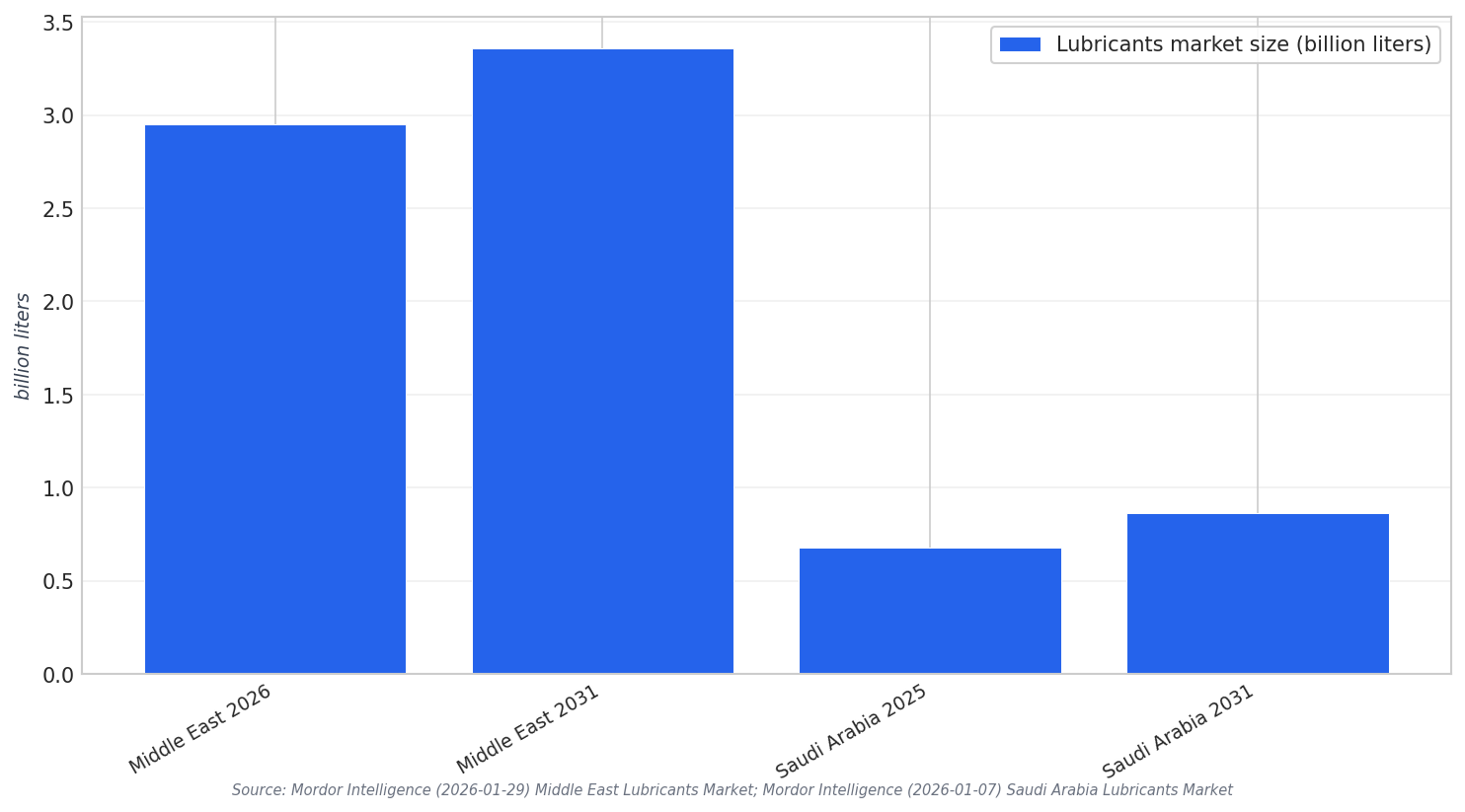
The risk sits inside a large, expanding market. Mordor Intelligence estimates the Middle East lubricants market at 2.95 billion liters in 2026, growing to 3.36 billion liters by 2031 at a 2.66% CAGR. Saudi Arabia’s lubricants market alone was valued at 677.67 million liters in 2025 and is estimated at 705.86 million liters in 2026, reaching 865.41 million liters by 2031 at a 4.16% CAGR. More volume and more channels can mean more opportunities for fake products to slip in.
Hidden Costs to Brands: Reputation, Claims, and Downtime
The hidden cost of counterfeit lubricants Middle East problems starts with brand trust. Ferguson Menzies notes that counterfeit lubricants can be inferior formulations or substandard oil repackaged and sold as a high-grade product, and that buying and using them damages the reputation of manufacturers and suppliers. RS Clare also warns that counterfeit products undermine brand integrity and often fail to meet stringent quality standards, increasing the risk of equipment failure, higher maintenance costs, and costly downtime.
Brands also face a detection challenge because many common protections can be copied. Quantum Base states that existing measures such as holograms or QR codes are at risk of being copied or faked, and that counterfeiters may use genuine packaging as part of their scams. That turns a packaging-first approach into a weak filter, especially when distribution is complex and buyers are under time pressure.
Fighting back means tightening checks and upgrading authentication. RS Clare recommends checking supporting technical documents, watching for unusual packaging, and spotting inconsistent labelling like typos or incorrect logos. Industry support can also help: Ferguson Menzies explains that the Verification of Lubrication Specifications (VLS) is an independent, member-funded body, and that the VLS have carried out dozens of investigations into suspect lubricants’ performance claims and technical specifications, escalating findings to Trading Standards when counterfeit lubricants are identified. For stronger product-level proof, Quantum Base describes invisible, unclonable quantum signatures via Q-ID® Optical tags that can be authenticated in real time using a standard smartphone camera, with Optical tags that cannot be copied, cloned, or faked and that offer 100% protection against imitation products.
Why are counterfeit lubricants a serious issue in the Middle East?
What are the hidden costs of counterfeit lubricants for brands?
How can buyers spot counterfeit lubricants?
What can brands do to fight counterfeit lubricants Middle East supply risks?
Is there an industry body that investigates suspect lubricants?