
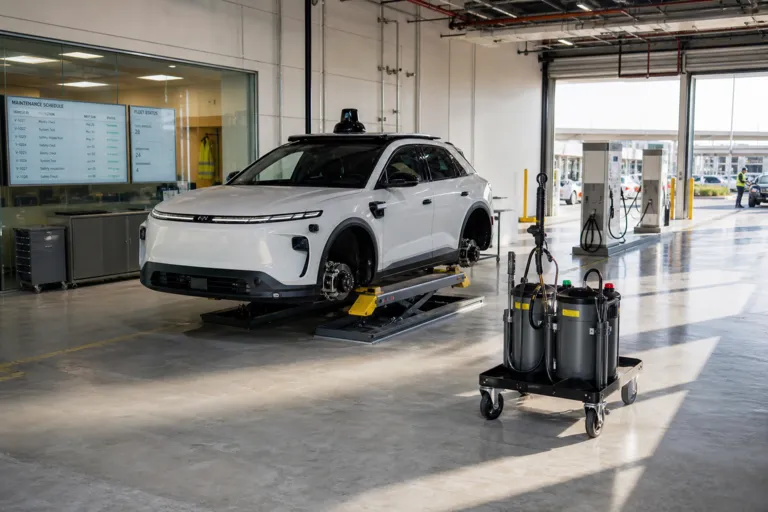
Dubai is positioning robotaxis as a practical part of everyday mobility, and the operational record already creates new expectations for fleet reliability. The Dubai Media Office reported the robotaxi service recorded more than 4 million kilometres travelled and 7,613 passenger trips since launch. It also cited a fleet of 144 vehicles, including 48 in active operation, completing around 50 trips daily, with a 97% customer satisfaction rate. Those figures matter for maintenance teams because repeatable uptime is what keeps daily trip targets achievable. As service areas expand, disciplined servicing routines—including the routine checks that sit under autonomous EV fleet upkeep—become a core operational requirement.
The rollout is structured as a phased program focused on safety, reliability, and operational readiness. Dubai described carefully defined operational zones used to test and validate the technology under real-world conditions, supporting the shift from safety-driver trials to fully driverless public transportation. As kilometres accumulate, the operational base grows for evaluating autonomous driving performance and refining customer experience. In parallel, autonomous fleets are typically managed as centralised operations that can be monitored, analysed, and improved through software updates, as the IEA notes for robotaxis operating within a geolocalised domain. But software does not replace hands-on servicing. Vehicle availability depends on rigorous inspections and predictable shop capacity.
Where Control Centres and Workshop Discipline Meet Daily Uptime
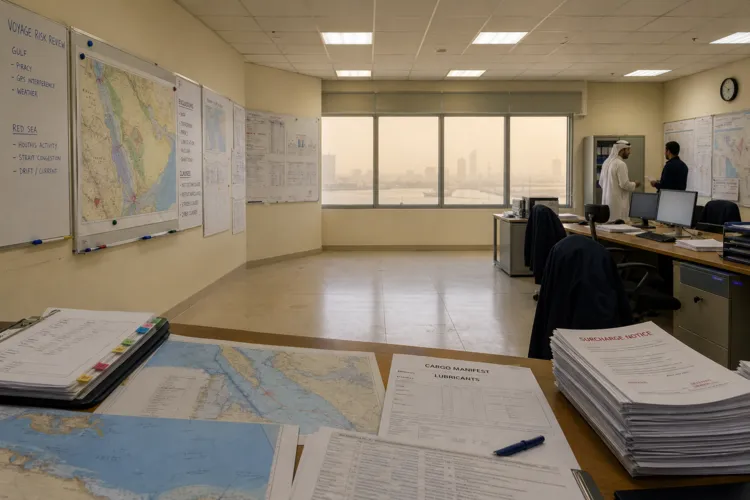
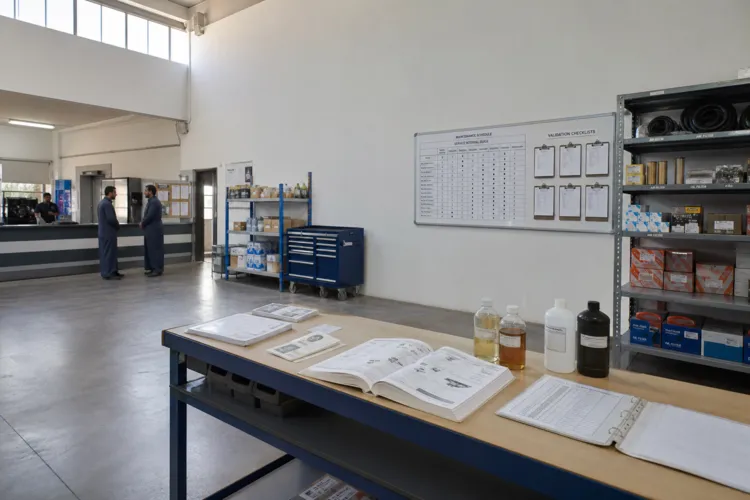
AviNews highlighted that the Baidu Apollo Go Autonomous Vehicles Operations and Control Centre opened in Dubai and spans 2,000 square metres. It houses fleet management, maintenance, charging, software updates, safety testing, simulation, and training facilities. This kind of setup is where the practical side of robotaxi autonomous fleet fluids in Dubai fits into a broader uptime system: maintenance workflows, inspection checklists, and consistent turnaround all sit beside charging and software updates. The IEA also points out robotaxis require increased maintenance and vehicle control centres compared with standard taxi services, even as costs have declined with fewer sensors and falling costs for electric cars, batteries, and sensors. In practice, scale comes from repeatable processes across both digital and physical maintenance.
Electrification adds its own operating realities. The IEA notes that power draw for onboard computation and sensors needs to be very stable and can be substantial, with estimates spanning from several hundred watts to over 1 kW. That power demand reinforces why charging operations and maintenance readiness must be coordinated, because vehicles are not just driving—they are also running compute loads. At the national level, AviNews reported the UAE’s charging infrastructure expanded to approximately 2,800 charging points, including around 1,250 direct-current charging points and 350 high-power charging units. For fleet operators, these figures frame the wider ecosystem that supports scheduling, depot design, and maintenance planning around charging windows.
Dubai’s robotaxi program also sits inside a global and regional growth story, which increases pressure to professionalise service operations. The IEA reported robotaxi deployment more than doubled to reach 8,000 vehicles across around 20 cities globally in 2025, with commercial services concentrated in China and the United States, while noting Dubai and Abu Dhabi also have commercial robotaxis on the road. Grand View Research estimated the global robotaxi market was USD 612.4 million in 2025 and projected USD 1,187.4 million in 2026, while noting North America held a 90.0% revenue share in 2025. For Dubai, the local lesson is less about importing foreign numbers and more about matching global expectations: as fleets scale, maintenance control centres, charging readiness, and routine service basics like consistent fluid checks must keep pace with customer trust.
What performance milestones has Dubai’s robotaxi service reported so far?
How does Dubai support robotaxi maintenance and operations at scale?
Why do robotaxis need strong maintenance planning even with software updates?
How do compute and sensor loads affect autonomous EV fleet operations?
How should operators think about robotaxi autonomous fleet fluids in Dubai as fleets expand?