
The phrase EV fluids Middle East is gaining weight because EVs still need fluids, even as they move away from internal combustion engines. EVs use specialized liquids such as thermal management fluids, coolants, lubricants, and transmission fluids. These support battery cooling, power electronics efficiency, component protection, and overall vehicle performance, safety, durability, and operational efficiency. Shell notes that fluids are “largely unnoticeable,” but crucial for cooling the powertrain and transmission system while stabilising the temperature of the battery and power electronics. It also stresses that fluids developed for ICE vehicles generally fall short of the performance requirements of hybrids and EVs.
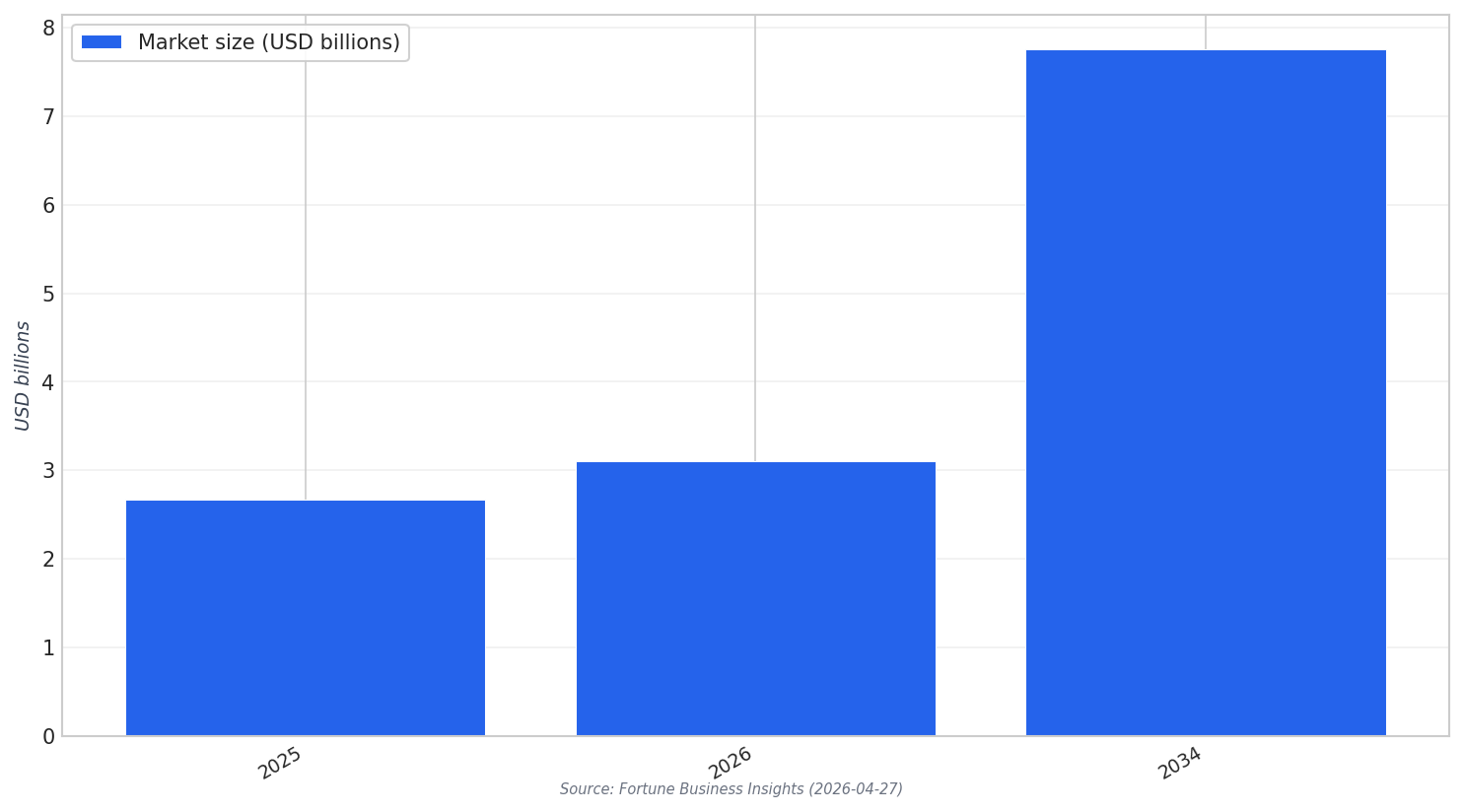
Globally, multiple forecasts point to a fast-expanding category. Fortune Business Insights values the global electric vehicle fluids market at USD 2.67 billion in 2025, projecting USD 3.10 billion in 2026 and USD 7.76 billion by 2034 with a 12.1% CAGR. Precedence Research cites USD 1.24 billion in 2025, rising from USD 1.59 billion in 2026 to USD 14.18 billion by 2035, with a 27.59% CAGR. OGN adds that the EV fluid market is anticipated to grow at a CAGR of more than 25% in value terms in the next five years. These figures vary by methodology, but they consistently describe a new growth lane for lubricants.
Why E-Drive and Battery Coolants Are Redefining “Lubricants”
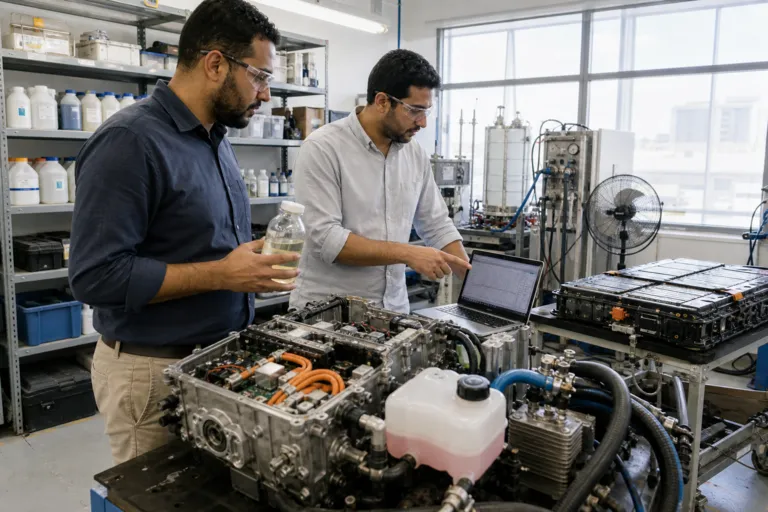
EVs elevate thermal management and electrical compatibility into core fluid requirements. Fortune Business Insights highlights a shift toward dielectric and immersion cooling fluids. It describes immersion cooling as direct contact between fluids and battery cells or electronic components, offering superior heat transfer and improved safety as conventional methods reach limits. This shift is driving fluid chemistry innovation focused on low conductivity, chemical stability, and recyclability. Sci-Tech Today also frames BEV needs around battery coolants, e-axle lubricants, and dielectric fluids to maintain battery efficiency, control operating temperatures, and ensure smooth power transmission.
The Middle East angle is strongly tied to heat and validation. Sci-Tech Today reports that TotalEnergies, supported by over 40,000 charging points globally, validates its fluid performance in demanding environments, “especially in high-temperature regions such as Asia and the Middle East.” That detail matters because temperature control is a central reason EV coolants are expanding as a product category. In 2024, Sci-Tech Today says the coolant segment was the leading product category, accounting for over 41.6% of the EV fluids market, driven by thermal management needs in battery packs, electric motors, and inverters.
Commercial strategy is also changing because EV fluids can be long-life and OEM-led. BIS Research states the OEMs channel is anticipated to dominate because most of the fluids have a very low replacement rate and can last for the entire EV’s lifetime without being flushed. That pushes fluid development closer to EV OEM design targets. Fortune Business Insights notes that key players focus on advanced thermal and dielectric fluid innovation, strategic partnerships, and EV OEM alignment, and lists companies such as Shell, ExxonMobil, Castrol (BP), TotalEnergies, FUCHS, Valvoline, and BASF.
What does “EV fluids Middle East” refer to in practice?
Why are battery coolants leading EV fluids growth?
What is the shift toward dielectric and immersion cooling fluids?
How does the Middle East influence EV fluid validation?
Will EV fluids be sold more through OEMs or aftermarket channels?