
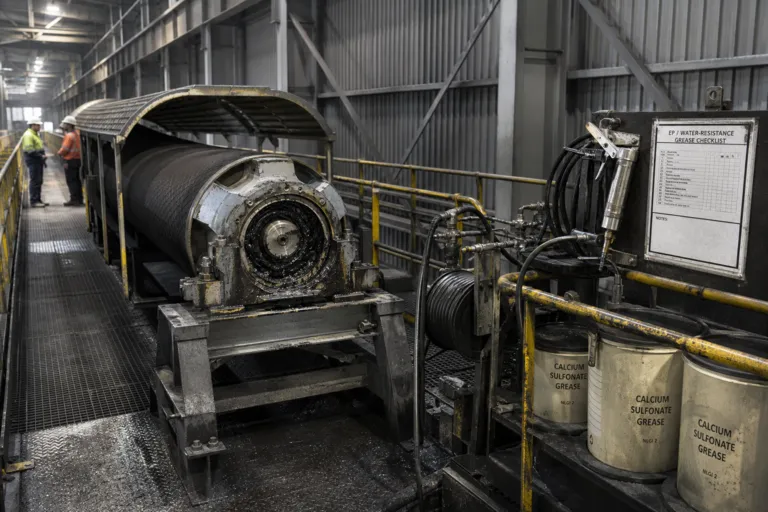
For GCC maintenance teams, the current conversation is no longer just about grease performance. It is also about supply continuity and price swings tied to lithium inputs. Across the global grease market, lithium-based thickeners still dominated with a 66.89% share in 2025, according to Mordor Intelligence, but buyers are increasingly looking for ways to reduce exposure to lithium-carbonate price volatility. Multiple industry sources describe a structural shift away from traditional lithium soaps toward alternatives like calcium sulfonate and polyurea. This is the context behind today’s talk of a lithium grease thickener shortage in the GCC: not a single local statistic, but a global pattern of pressure that procurement teams must translate into risk planning.
Production and pricing signals underline why the thickener question keeps resurfacing. Lubes’N’Greases reports that global production declined by 0.8% for lithium greases and by 3.8% for lithium complex greases, while calcium sulfonate greases recorded global growth of 7.7%, with strong contributions from North America, China, and Europe. A separate market report links the shift to lithium supply-chain volatility and states that lithium grease production contracted by approximately 3.8% due to resource competition from the electric vehicle battery sector, while calcium sulfonate-based alternatives rose 7.7% year-over-year. It also notes lithium hydroxide prices spiked over 80% between 2021 and 2023, pushing industrial users to shift 15% of volume to calcium sulfonate alternatives.
Why Calcium Sulfonate Wins Under Pressure (and Water)
Calcium sulfonate positioning is not only about supply risk. It is also about operating conditions that punish conventional soap structures. A technical guide describes lithium greases as soap-fiber thickened systems that can lose structural integrity when water infiltrates, leading to oil bleed and washout. The same guide contrasts this with calcium sulfonate grease, which is described as non-soap and built around colloidal calcium carbonate (calcite) particles that repel water and can become more adhesive when wet, a behavior it calls positive thixotropy. For extreme environments, another report highlights inherent extreme pressure (EP) protection and corrosion resistance, plus a dropping point often exceeding 300°C (572°F), compared with conventional lithium-12-hydroxy stearate greases that typically degrade around 180°C.
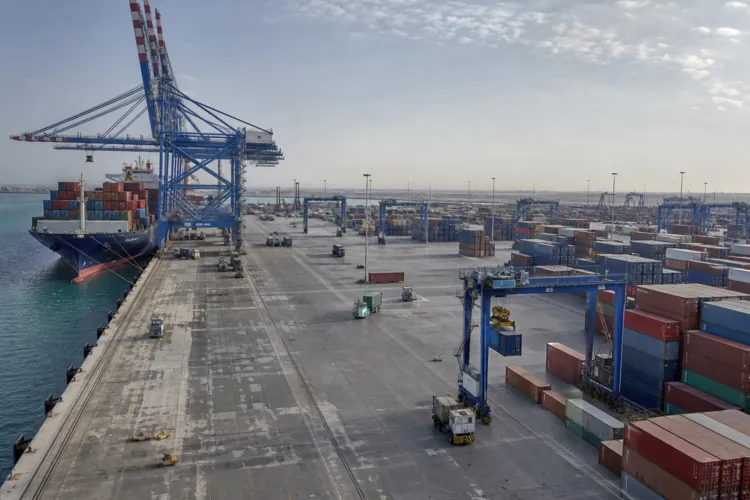
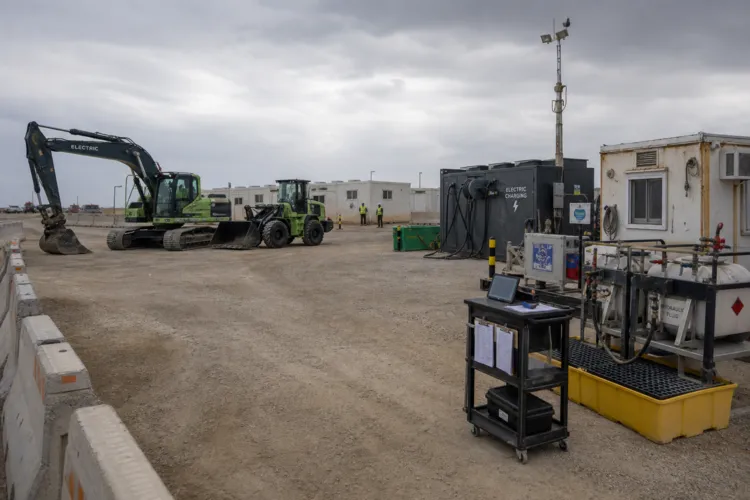
Standardized test references in the sources also connect the technology to maintenance outcomes. One market report states that overbased calcium sulfonate greases typically show water washout rates of less than 2% when tested under ASTM D1264, and that this intrinsic hydrophobicity helped drive a 15% increase in deployment within marine applications over the last three years. For heavy mobile equipment, it adds that high-alkalinity variants are used to neutralize acidic by-products and can extend component lifecycles by an estimated 20–30% compared to conventional lubricants. The same source cautions that higher initial procurement costs, often 20–30% above simple lithium greases, can slow adoption in cost-sensitive, low-severity use cases.
Market trajectory suggests these trade-offs are being accepted more often where downtime and reliability dominate the economics. One report frames the global overbased calcium sulfonate grease market as growing from USD 655.339404 million in 2026 to USD 734.11 million in 2027, reaching USD 1820.2305404352 million by 2035, at a CAGR of 12.02%. It also notes that, in critical rolling mill or paper production operations, the cost of downtime can exceed USD 20,000 per hour, which changes how buyers evaluate the upfront premium. For GCC users assessing lithium-thickener exposure, a practical takeaway is to map applications by water, load, and heat severity, then prioritize calcium sulfonate where EP and washout resistance are the main failure modes.
What is driving concern about a lithium grease thickener shortage for GCC users?
How are lithium and calcium sulfonate greases trending in global production?
Why do calcium sulfonate greases fit wet, high-load environments?
What high-temperature advantage is cited for calcium sulfonate technology?
What is the typical cost trade-off when switching away from simple lithium greases?