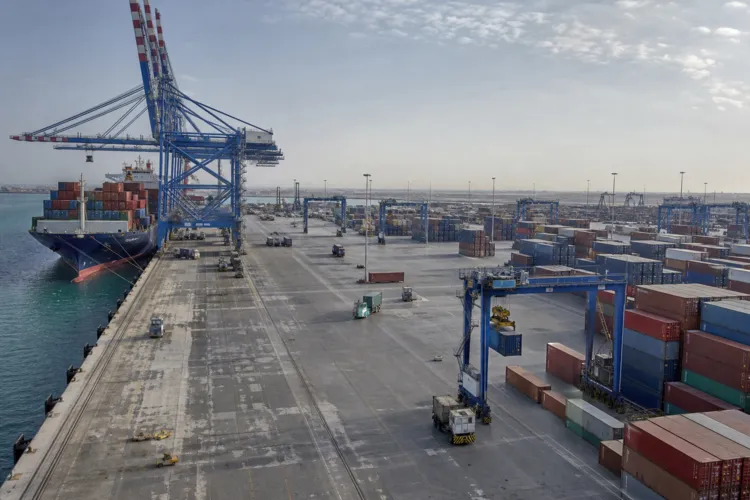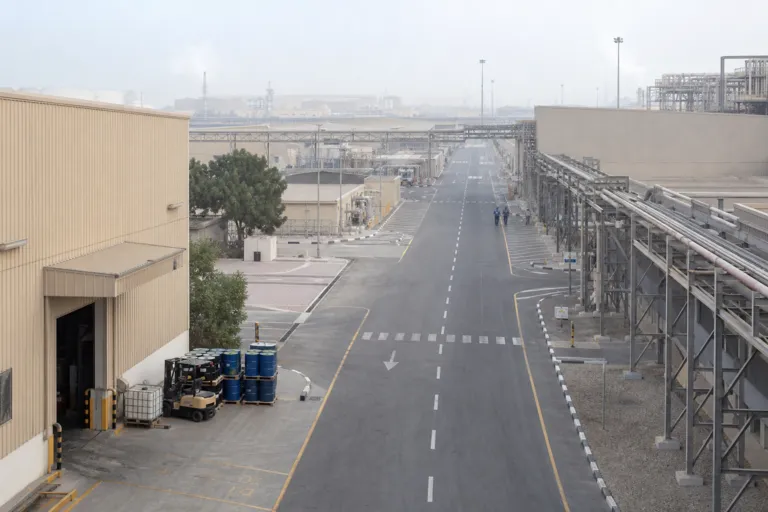
Industrial lubricant demand in the UAE is not only a Dubai story. Abu Dhabi’s zone-led industrial build-out creates distinct buying patterns tied to logistics access, local blending capacity, and tighter product standards. KEZAD Group describes itself as the UAE’s largest operator of fully integrated economic zones, with 12 economic zones located across Abu Dhabi, Al Ain, and the Al Dhafra Region. Through its Josoor programme, KEZAD highlights a network where more than 1,750 companies operate inside its ecosystem. For lubricant suppliers, that concentration matters because the most consistent industrial volumes typically sit where manufacturing, logistics, and fleet operations cluster together.
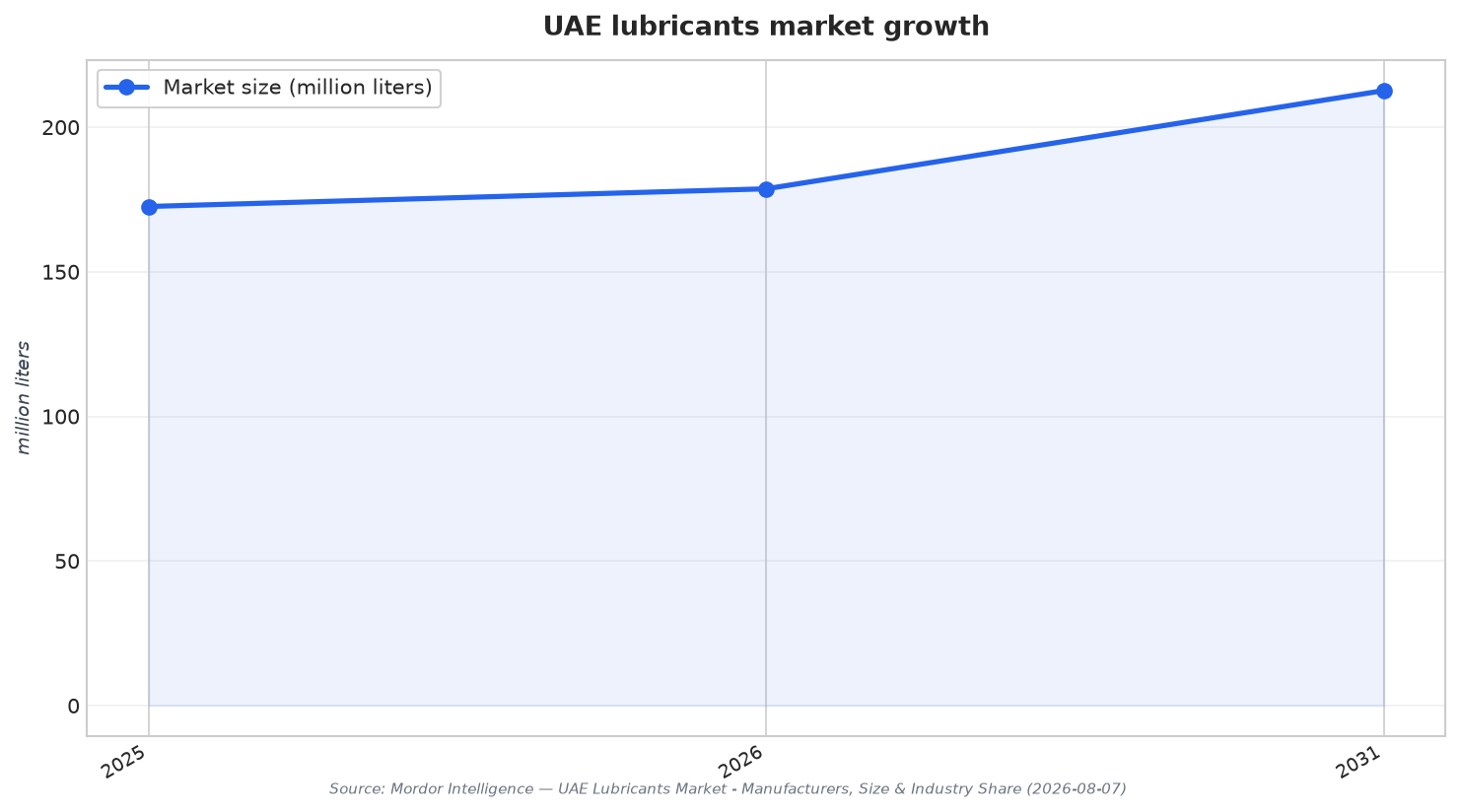
At the national level, the UAE lubricants market is measured in large volumes with both automotive and industrial pull. Mordor Intelligence expects the UAE lubricants market size to increase from 172.58 million liters in 2025 to 178.69 million liters in 2026, and to reach 212.64 million liters by 2031, at a 3.54% CAGR over 2026–2031. In 2025, automotive accounted for 53.12% of market size, while automotive engine oil led product share at 33.35%. Industrial demand still expands, with the industrial segment projected to grow at a 3.55% CAGR through 2031, alongside industrial engine oil forecast at a 3.65% CAGR to 2031. This is the backdrop for mapping Abu Dhabi’s industrial-zone buying beyond Dubai’s retail-heavy channels.
Why KEZAD and Ruwais Link Supply, Standards, and Industrial Buying
Cost, availability, and compliance increasingly travel together in Abu Dhabi’s industrial corridors. Mordor Intelligence notes that robust refinery integration at Ruwais is lowering feedstock costs, and that Euro-5 regulations that took effect in 2026 are accelerating adoption of low-SAPS synthetics. It also describes an ADNOC expansion at Ruwais, including a 420,000 bbl/d crude-capacity expansion, and says proximity to KIZAD and the Ruwais petrochemical cluster cuts logistics costs by USD 15–20 per tonne. In parallel, it cites a 600,000-ton-per-year Group III project with Neste, and notes localization can trim blending costs by up to 12% versus imports. Those kinds of time-and-cost advantages can reshape industrial procurement when uptime and steady supply are as important as price.
Capacity signals also point to how supply may serve Abu Dhabi’s zones rather than funneling through Dubai by default. Ken Research states that five companies control approximately 70% of the UAE lubricant market, naming ENOC and ADNOC as the largest players, followed by TotalEnergies, Exxon, Shell, and OQ. It reports ENOC operates 300,000 metric tonnes of annual capacity, TotalEnergies runs 225,000 metric tonnes at Jebel Ali, and ADNOC operates 100,000–200,000 metric tonnes at Kizad while sourcing base oils from ADNOC Refining’s 600,000 tonnes annual Ruwais production. MarkWide Research adds that MOHAP oversees product registration and safety standards for lubricants distributed domestically, and that ESMA enforces UAE-specific quality benchmarks aligned with API and ACEA performance categories. Together, these details help explain why industrial buyers inside Abu Dhabi’s zones often prioritize certified, locally supported formulations and predictable delivery terms.
The demand map is also being influenced by what KEZAD highlights as emerging industrial layers. KEZAD Group announced it will host Touchdown Middle East 2026 in Abu Dhabi on 18–19 November 2026, and said the event is expected to attract more than 1,500 visitors, over 400 companies, 70 speakers, and participants from more than 30 countries. It also points to Abu Dhabi’s Digital Strategy 2025 to 2027 committing AED 13 billion to digital transformation. This matters to Abu Dhabi KEZAD industrial lubricants planning because data centres and advanced industrial facilities bring new maintenance regimes and procurement discipline. Separately, a Zawya report notes SCAD’s cooperation with KEZAD to exchange and integrate industrial and economic data across manufacturing, logistics, commercial, and free zone activities, which supports sharper sectoral understanding. For suppliers, better visibility can mean more targeted product portfolios and service models across Abu Dhabi’s industrial zones.
How does KEZAD help map lubricant demand beyond Dubai?
What is the UAE lubricants market volume outlook cited in the sources?
Which figures in the sources point to Abu Dhabi-linked supply advantages?
How concentrated is the UAE lubricant market according to the sources?
What standards bodies are mentioned for lubricant compliance in the UAE?