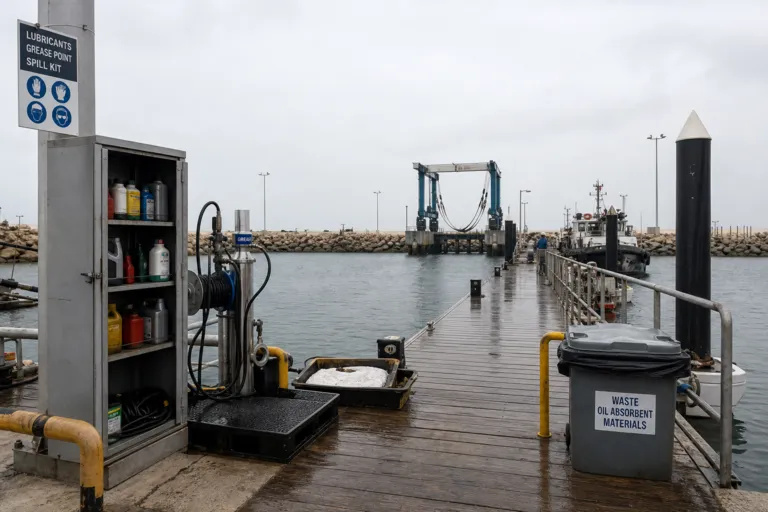
In marine infrastructure and offshore operations, lubrication is not a footnote. It is a routine input across vessels, equipment, and saltwater-exposed components. That is why the conversation around biodegradable grease for Red Sea giga-projects matters, especially where ambitious development meets fragile marine habitats. Public sustainability messaging around Saudi Arabia’s large new initiatives has highlighted green technology, regenerative tourism, smart cities, and a circular economy focus, with projects such as NEOM and Red Sea Global often cited as examples. Aligning operational choices with that direction can include the lubricants selected for marine and coastal work.
Global market context also points to a shift in priorities. One industry overview valued the global marine grease market at approximately USD 450 million in 2025, with a projection to reach USD 620 million by 2032, expanding at a CAGR of 4.7%. In the same overview, leading trends included a shift toward biodegradable and non-toxic marine lubricants, alongside digitized lubrication monitoring. It also notes practical constraints, including volatility in raw material and base oil prices and high costs associated with bio-based grease formulations. Those trade-offs are relevant to any project trying to balance procurement, performance, and environmental commitments.
Why Cleaner Lubrication Links to Ecosystem Protection
The environmental case for biodegradable alternatives connects to broader concerns about marine pollution and ecosystem resilience. A review in Frontiers in Marine Science discusses the urgency of addressing microplastic pollution and describes mitigation strategies such as biodegradable alternatives, circular economy approaches, and stringent regulatory measures. It also cites research documenting microplastics in the gastrointestinal tract of fishes along the Saudi Arabian Red Sea coast. In parallel, marine ecology research emphasizes the value of foundational organisms, noting that macroalgae are integral to marine ecosystems, contributing to primary production, biodiversity, nutrient cycling, and carbon capture. For coastal megaprojects, reducing avoidable pollution sources supports these core ecosystem functions.
Red Sea Global has publicly stated it is targeting a 30% net conservation gain by 2040, and has referenced actions such as planting millions of mangroves and treating wastewater through constructed wetlands. Those types of goals increase scrutiny on operational inputs that could affect water quality near construction sites, marinas, and service corridors. Even when lubricants are only one element of an environmental footprint, they are used frequently and close to the waterline. That makes product choice, handling discipline, and maintenance routines part of credibility when conservation commitments are communicated externally.
Procurement teams also need to connect lubricant selection to real-world end uses and compliance pressures. The marine grease market overview highlights environmental regulatory compliance as a driver and points to Vessel General Permits and other international mandates that require the use of biodegradable greases. It also frames offshore energy as a driver for specialized greases that can withstand extreme saltwater exposure and high mechanical loads in remote environments. In practice, operators should match thickener types and formulations to asset conditions, while tracking cost and availability risks that come with bio-based products. This is where biodegradable grease Red Sea giga-projects planning becomes a concrete operations topic, not just a branding claim.
How does biodegradable grease fit into Red Sea giga-projects planning?
What conservation goal has Red Sea Global publicly stated?
What does research say about microplastics near the Saudi Arabian Red Sea coast?
What is the recent global marine grease market outlook cited in the sources?