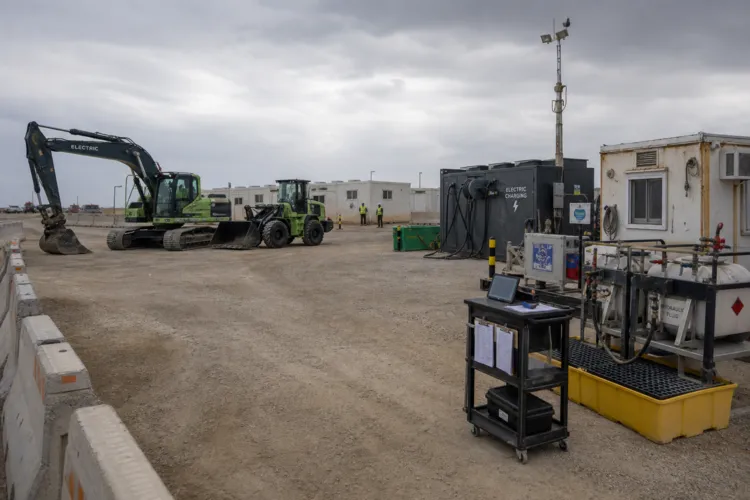

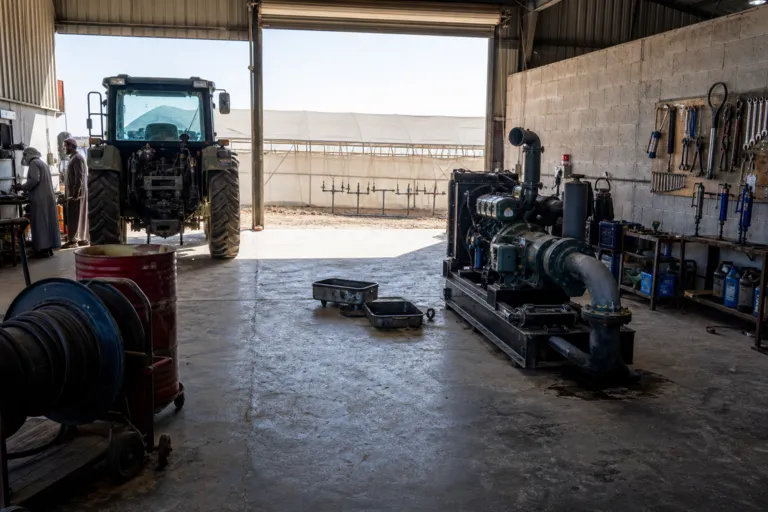
Lubricant demand in Middle East agriculture is tightly connected to how much equipment is operating, and how hard it runs. In the Middle East & Africa region, one market report ties agricultural lubricant demand to an installed base of about 420,000 tractors and 160,000 harvesters working across 210 million hectares of farmland. The same source frames global context: more than 5.6 million tractors and 2.1 million combine harvesters operate globally, with each machine consuming between 18 and 60 liters of lubricants annually depending on equipment size. Even without assuming one-to-one transfer to any single country, those operating ranges explain why maintenance and fluid selection are core procurement topics wherever mechanization is rising.
Irrigation systems are a direct driver for hydraulic oils, and several sources quantify the scale and per-unit needs. One report includes an irrigation infrastructure analysis covering 3.4 million mechanized pump systems, stating these pumps consume 12 to 18 liters of hydraulic oil annually, and also notes hydraulics can run at 12 to 28 liters per unit annually across irrigation pumps and tractors. It adds that hydraulic oils represent 27% of total agricultural lubricant volume, exceeding 1.05 million metric tons annually, and that ISO VG 46 and ISO VG 68 dominate with 71% share. Operationally, the same report states hydraulic system failures account for 24% of equipment downtime, which supports the case for tighter fluid cleanliness targets, including particle contamination levels below ISO 16/14/11.
What’s Shaping Product Choice: Engine Oils, Hydraulics and UTTO
Across agricultural lubricant product types, multiple sources converge on the role of tractors in pulling volume. One report breaks the market into engine oil, UTTO (Universal Tractor Transmission Oil), coolant, and grease, and states engine oil holds the largest share due to high consumption in tractors and heavy-duty equipment. It also highlights UTTO demand because it supports both hydraulic and transmission systems in modern machinery. Another report provides a regional benchmark: in Asia-Pacific, engine oils represent 44% of regional demand, followed by hydraulic oils at 25%, with annual lubricant consumption exceeding 1.48 million metric tons. For Middle East buyers benchmarking “agricultural machinery lubricants Middle East” requirements, these splits are useful context for planning inventory around engines, hydraulics, and combined transmission-hydraulic systems.
Precision farming and controlled-environment agriculture can change not only what lubricants are used, but also how often they are changed. A global data point cited in one report says precision agriculture adoption now exceeds 290,000 GPS-enabled tractors operating for 1,600 to 1,900 hours annually, increasing replacement cycles to 4 to 6 changes per year. Separately, another source explicitly links the Middle East to these shifts, stating Middle Eastern countries invest in precision agriculture and greenhouse farming, increasing demand for equipment lubricants. In practice, that combination points to rising attention on OEM specifications and performance claims, especially as one market report references over 46 engine oil standards and 32 hydraulic fluid specifications across 14 major OEM platforms and more than 1,200 equipment models.
At the market level, published regional forecasts provide a structured view of where spending could head, while still leaving room for local variation by country and crop. One report estimates the Middle East & Africa agricultural lubricant market at USD 201 million in 2025, representing 9.1% of global share, and projects growth to USD 305 million by 2034 at a 3.9% CAGR, citing irrigation projects, agribusiness expansion, and increasing mechanization. Another source describes the Middle East and Africa as presenting both opportunities and challenges for market players, while emphasizing that specialized lubricants support tractors, harvesters, and irrigation systems operating in challenging environments. Together, these points reinforce that equipment uptime, hydraulics reliability, and adherence to evolving specifications are central to lubricant demand in the region.
What equipment types are most tied to lubricant demand in Middle East agriculture?
How much hydraulic oil can mechanized irrigation pumps require each year?
Why do hydraulic lubricants matter so much for uptime?
How can precision farming affect lubricant change frequency?
What is the outlook for agricultural machinery lubricants in the Middle East context?