
Managing additive continuity is becoming a defining issue for lubricant producers, especially where import exposure is high and vendor changes take time. In global terms, the viscosity index improver market is sizable and still growing. One global analysis estimates the viscosity index improver market at USD 4.2 billion in 2025 and projects USD 5.6 billion by 2035, implying a 2.9% CAGR over the period. Another global forecast predicts growth from US$ 3023 million in 2025 to US$ 3837 million in 2031 at a 4.1% CAGR. For Middle East blenders, these figures are context, not local demand. But they matter because regional supply often depends on global production and allocation choices.
Supply risk also increases when the supplier base is structurally tight. A global IndexBox view of viscosity index modifier concentrates describes a moderately concentrated market in which the top five suppliers control a majority of global production capacity, which creates meaningful entry barriers. That same report points to long qualification cycles and supply chain concentration as persistent challenges. Separately, a global market breakdown identifies ethylene propylene copolymer (OCP) as the leading product type, projected at 30.4% of viscosity index improver market revenue in 2025. This matters for procurement strategy because dependence on a leading chemistry can translate into fewer interchangeable options when a blender needs fast substitution under strain.
Where Middle East Blending Risk Concentrates
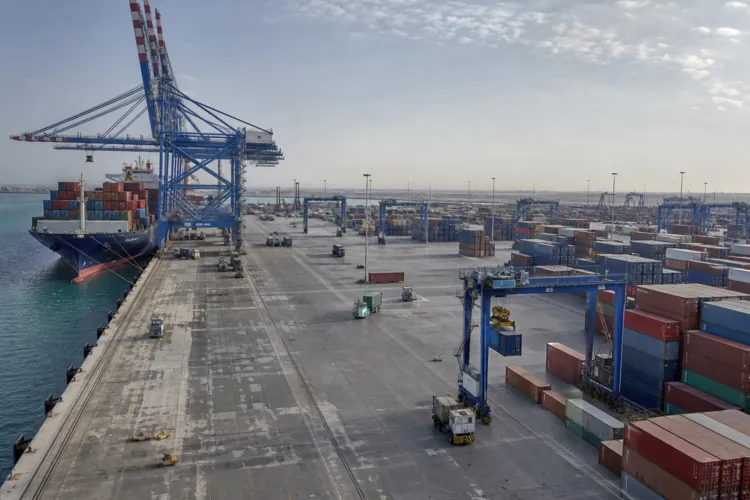
Regional polymer supply signals help explain why Middle East blending operations can feel the impact of disruptions quickly, even when the disruption originates elsewhere. An IndexBox report on the Middle East viscosity-controlling polymers market states that import dependence remains high, with 70–80% of regional polymer supply sourced from Europe, North America, and Asia, while domestic capacity for high-purity and specialty grades remains limited to a few facilities in Saudi Arabia and the United Arab Emirates. The same source notes that logistics disruptions in Red Sea and Gulf shipping lanes can periodically constrain inventory availability and raise landed costs by 10–15% above baseline. While these polymers are not framed as lubricant VI improvers, they provide a region-specific indicator of import reliance and logistics sensitivity that procurement teams can use as a risk proxy.
Qualification timing can become a hidden driver of supply risk because it slows down any switch to alternative sources. The same Middle East polymer report cites supplier qualification and documentation bottlenecks, with certification to ISO 13485 and pharmacopoeial standards (USP, EP) adding 6–12 months to procurement cycles for new vendors entering drug-delivery supply chains. Lubricant additive qualification requirements differ, but the operational lesson carries over: build optionality before a disruption. In parallel, global concentrates demand is projected to rise at 3–5% CAGR from 2026 to 2035, with a baseline scenario of approximately 3.8% CAGR and a market index rising from 100 in 2025 to around 145 by 2035. Faster growth in premium and high-purity concentrate grades (roughly 1.5 to 2 times standard grades) can further tighten availability of the exact grades needed for modern formulations.
Action plans for viscosity index improver supply Middle East teams should start with procurement discipline and formulation flexibility. First, segment demand by grade criticality and align contracts to the most constrained inputs, given that the top five suppliers control a majority of global capacity in concentrates. Second, qualify secondary sources early to avoid being trapped by long changeover timelines when shipping disruptions raise landed costs by 10–15% above baseline. Third, plan for chemistry-specific exposure: if OCP is a leading product type at 30.4% of global revenue in 2025, map what portion of your portfolio depends on OCP versus alternative chemistries. Finally, track global demand drivers such as the shift toward SAE 0W-16 and 0W-20 oils, because these formulations require advanced concentrates with superior shear stability, which can change allocation and lead times even if your local sales mix is different.
How can Middle East blenders reduce viscosity index improver supply risk?
How concentrated is the global supply base for viscosity index modifier concentrates?
What global growth signals could tighten availability of certain VI improver grades?
What does the Middle East import picture suggest about exposure to disruptions?