
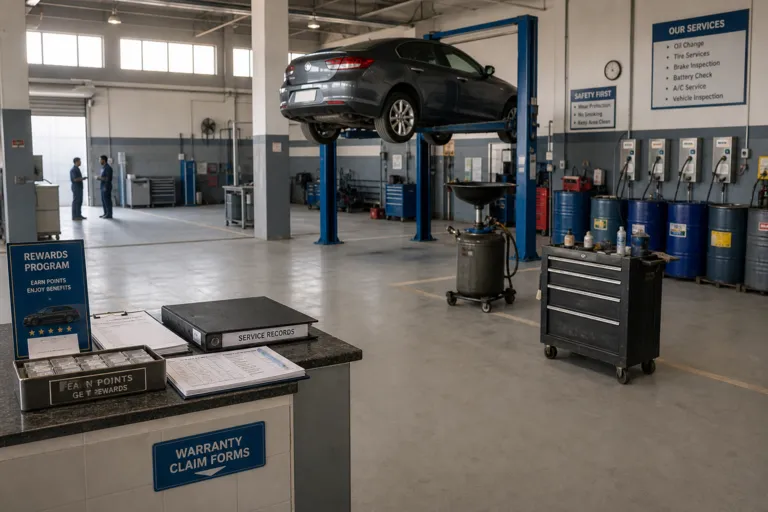
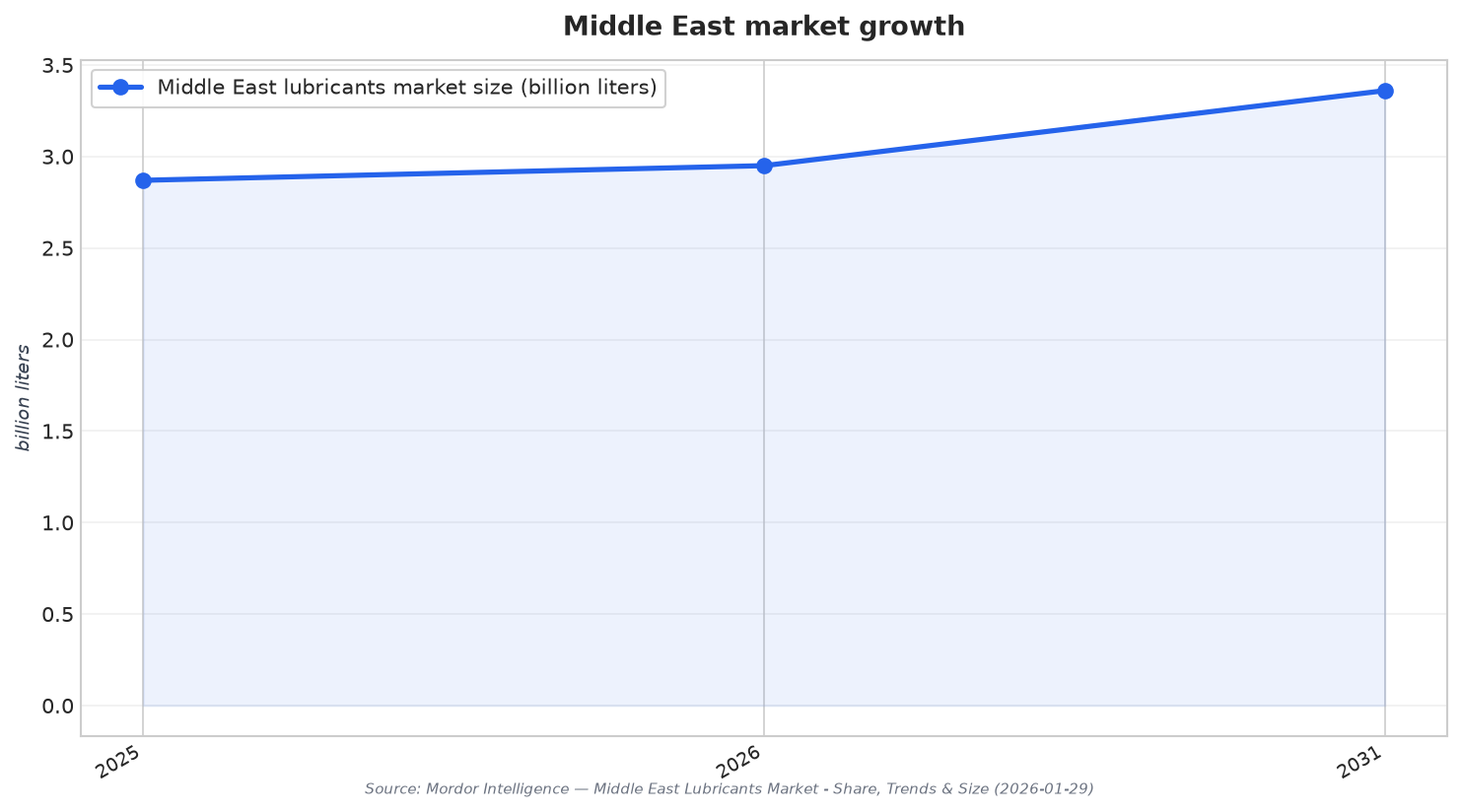
Brand loyalty in Middle East lubricants sits inside a market that is still growing, but also getting more competitive and more premium. Mordor Intelligence values the Middle East lubricants market at 2.87 billion liters in 2025 and estimates growth from 2.95 billion liters in 2026 to 3.36 billion liters by 2031, a 2.66% CAGR for 2026–2031. Saudi Arabia led with 37.21% market share in 2025, while the UAE is forecast as the fastest-growing country at a 3.21% CAGR through 2031. This is the commercial backdrop for loyalty design, because rewards and warranty messaging must scale across different GCC buying behaviors and different routes to market.
To build lubricant brand loyalty Middle East programs should target where volume and influence concentrate. Automotive and other transportation held 45.02% of the region’s lubricant market in 2025, and engine oils had 37.32% revenue share. At the same time, Mordor Intelligence notes transmission and hydraulic fluids are advancing at a 3.01% CAGR during 2026–2031, and power generation is registering the fastest 3.09% CAGR to 2031. Loyalty mechanics should therefore not be limited to passenger-car oil changes. A practical approach is a tiered rewards catalog that credits workshops for a broader “basket” that includes transmission, hydraulic, and selected specialty turbine or industrial lubricants, so the program follows the region’s changing mix instead of fighting it.
Design Rewards and Warranties Around Channels and Compliance
Distribution realities should shape both rewards and warranty terms. A Middle East distribution guide describes fragmented routes to market and cites two outlooks: one projecting growth from 2.94 billion liters in 2025 to 3.31 billion liters by 2030 at a 2.43% CAGR, and another matching the 2.87 billion liters in 2025 rising to 3.36 billion liters by 2031 at 2.66% CAGR. MarkWide Research adds that price-sensitive independent workshops in Saudi Arabia’s secondary cities continue specifying mineral fills for older vehicle parc, while “OEM warranties enforce synthetic requirements” in other cases. That combination argues for a dual-track loyalty plan: rewards that keep value options credible for older vehicles, plus warranty-aligned bundles that make it easy for workshops to choose compliant synthetic or semi-synthetic fills when the job requires it.
Workshop incentive design should also reflect localization and procurement shifts. Mordor Intelligence states that suppliers that localize blending and packaging under 70% iktva content rules can gain price and lead-time advantages versus import-reliant rivals. MarkWide notes that Saudi transport cooperatives and UAE construction conglomerates increasingly bypass intermediary garages, consolidating procurement through approved vendor lists with technical service bundling. That points to two incentive layers: (1) a workshop-facing points system tied to repeat purchasing and correct product application; and (2) a fleet-facing “service bundle” that combines supply, technical support, and documented product use to reinforce repeat contracts. The workshop layer builds day-to-day preference, while the fleet layer reduces churn through standardized approvals.
Finally, loyalty needs a product strategy that matches a market moving toward higher performance. Mordor Intelligence reports that the Middle East market remained Group I-heavy at 46.62% share in 2025, yet Group III is projected to expand at a 2.97% CAGR through 2031; mineral oils held 69.58% share in 2025, while bio-based lubricants are forecast to grow at a 3.12% CAGR to 2031. At the global level, the IEA data cited by Grand View Research says electric car sales surpassed 10 million units annually in recent years, signaling a longer-term shift that can reduce lubricant intensity per vehicle. In this environment, the most durable loyalty programs reward not only volume, but also correct upgrades, training completion, and documented adherence to OEM-aligned selections.
What market growth context should loyalty programs use in the Middle East?
Which segments should workshop rewards prioritize in the region?
How can warranties and rewards work together to build lubricant brand loyalty in the Middle East?
How do localization rules affect incentive design?