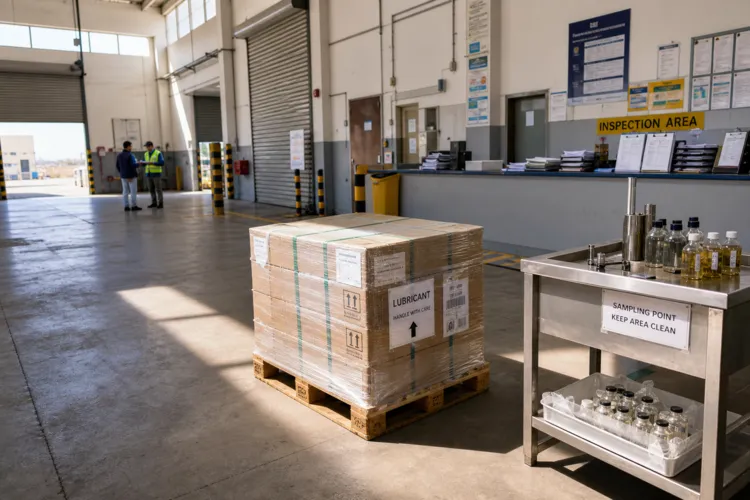

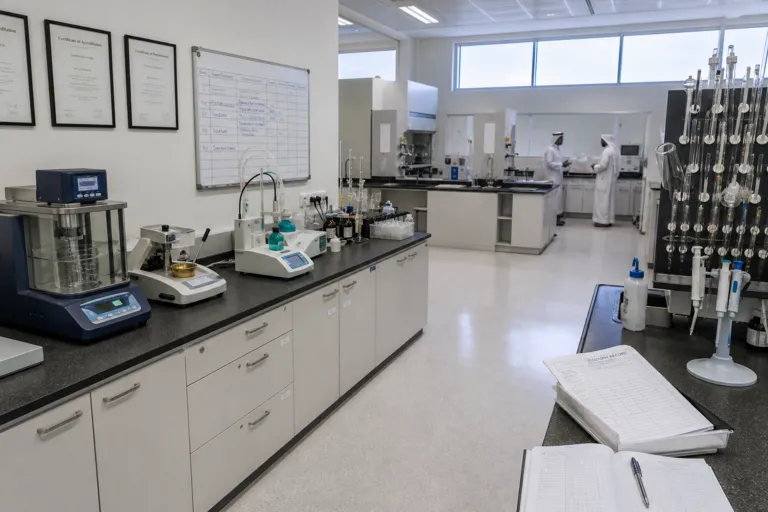
For blenders in the GCC, OEM approvals and ASTM-aligned validation work are not just a quality checkbox. They affect launch timing, supplier approval, compliance confidence, and customer trust. A generalized or low-cost lab may be able to run a test, but if it cannot support the right standard, maintain accredited quality systems, interpret OEM requirements correctly, or communicate clearly throughout the process, it can create rework, missed deadlines, budget overruns, and reputational damage. That is why in-region testing capacity matters: it supports repeatable procedures, accurate documentation, and the day-to-day communication needed to keep approval packages moving.
The GCC already shows a pattern of building local testing capability in other regulated industries. In aerospace, the GCC aerospace testing market was valued at USD 35.7 million in 2025 and is projected to reach USD 39.4 million by 2030, reflecting a CAGR of 2.0%. The same source notes that GCC countries are establishing regional testing facilities, forming partnerships with global service providers, and investing in quality assurance and certification capabilities to reduce international dependency. That direction is a useful reference point for blender operations that depend on ASTM methods and OEM interpretation, because local capability can reduce friction in verification, reporting, and audit readiness.
What “Accredited” Really Needs to Mean for ASTM and OEM Work
Accreditation claims are only valuable when the lab can quickly confirm that your exact method is included. If a lab treats OEM-driven work like generic testing, that can create serious approval and documentation risks. In 2026, automotive material validation is described as getting stricter, while OEM specifications remain complex and development cycles continue to compress. In practice, three core rules matter: follow approved procedures, document everything accurately, and communicate problems immediately. An accredited ASTM testing provider can also be a benchmark for what “ASTM-adherent” service looks like, since accredited labs explicitly position their services around adherence to ASTM standards and specifications, paired with reliable reporting and expeditious turnaround time.
Across the GCC, compliance and documentation burdens are already a familiar cost driver in adjacent equipment-heavy sectors. In the GCC V-shaped blenders market, validation documentation and requalification services are structurally significant: replacement parts, requalification services, and validation documentation packages account for roughly 30–35% of total market expenditures. The same source notes that every new installation must undergo rigorous site acceptance testing, operational qualification (OQ), and performance qualification (PQ) to meet local health authority standards such as SFDA and MOH, and that documentation can add 15–20% to the initial equipment price. Those figures underline why accredited, in-region lab capacity is practical: it supports repeatable evidence, reduces back-and-forth on method scope, and helps keep approval documentation coherent across audits.
A dedicated lubricant testing laboratory GCC stakeholders can rely on should also reflect local operating realities. The GCC faces environmental constraints such as water scarcity, with renewable freshwater availability often below 100 cubic meters per capita per year, which can raise operational costs for labs that require substantial water resources. At the same time, other testing-adjacent markets show that investment in laboratory and on-site capability is active: the GCC construction materials testing equipment market was valued at USD 54.3 million in 2025 and is projected to grow at a CAGR of 4.84% during 2026–2034, with advanced equipment trends like real-time data analysis, automation, and digital connectivity gaining traction. For blenders pursuing ASTM methods and OEM approvals, the takeaway is clear: in-region accredited capability, clear method scope, and strong documentation discipline help reduce approval risk and improve execution under GCC constraints.
Why do GCC blenders need accredited labs for OEM approvals?
What can happen if a lab cannot support the right standard or method scope?
How large is the GCC aerospace testing market, and why is it relevant?
What share of spending is tied to requalification and documentation in the GCC V-shaped blenders market?
What should a lubricant testing laboratory in the GCC be ready to prove during procurement?