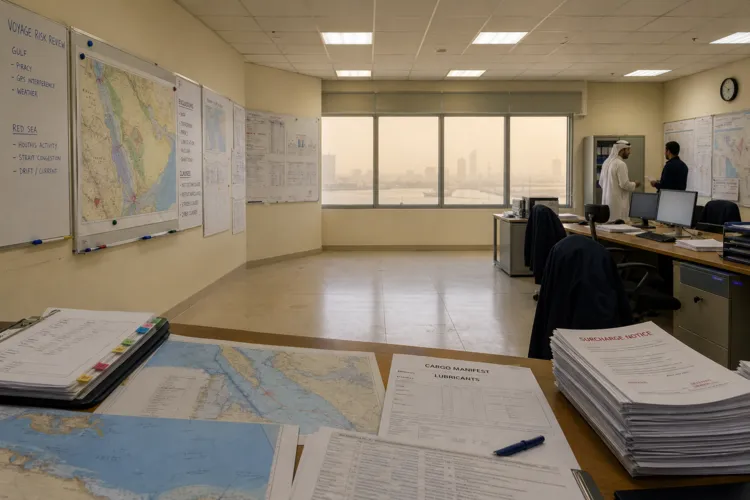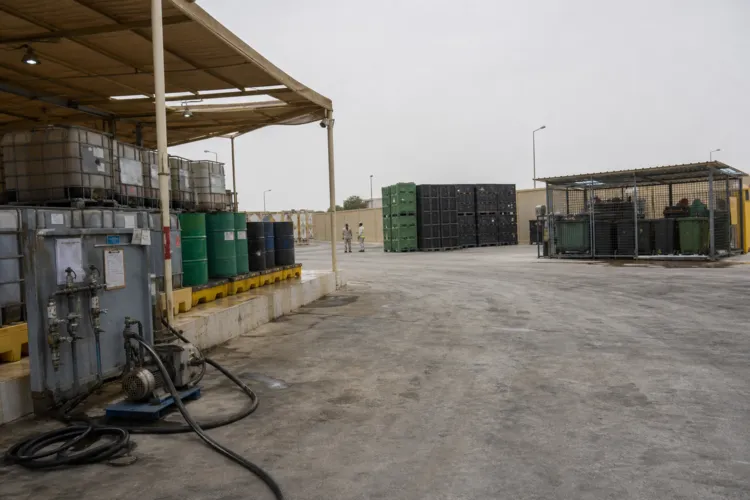

When risk spikes around the Strait of Hormuz and nearby maritime routes, Gulf logistics does not flip overnight from sea to road. It diversifies. A regional logistics report described the shift from one optimal route to a “portfolio of corridors,” spreading exposure across ports outside chokepoints and multimodal links that include road. In practice, that means containers can be discharged at ports that are not trapped behind Hormuz, then moved across the GCC by truck under bonded-transit regimes. For lubricant shippers, this pattern matters because it preserves predictable lead times even when Hormuz, Bab al-Mandeb, the Red Sea, the Suez Canal, or the Eastern Mediterranean face threats.
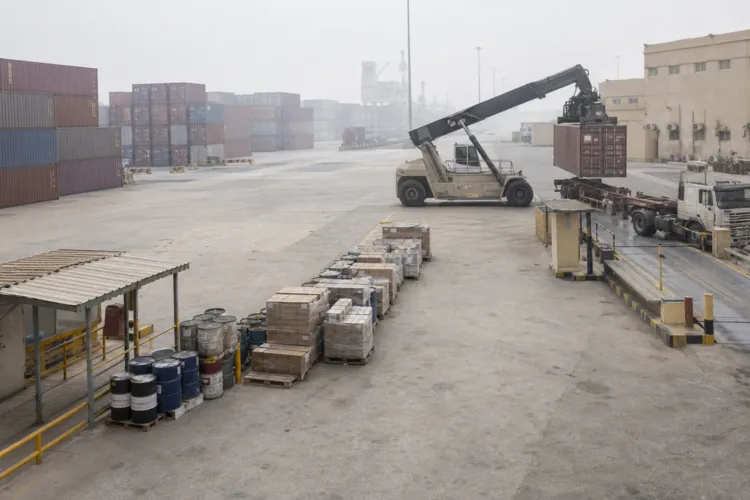
Oman becomes relevant to this strategy because it has ports outside the Strait of Hormuz, and flows can be rerouted toward them. EnterpriseAM reported that as Hormuz access tightened, Oman’s Sohar and Salalah increasingly absorbed flows previously routed through hubs such as Jebel Ali. fDi Intelligence also noted that more containers have moved across the UAE border to Oman, explicitly pointing to Oman’s ports outside Hormuz. For GCC lubricants, that translates into a practical “Oman overland route lubricant supply Hormuz bypass” approach: shift boxes onto alternative Oman gateways, then rely on cross-border trucking to reach end markets.
What the Numbers Say About Bypass Scale—and Its Limits
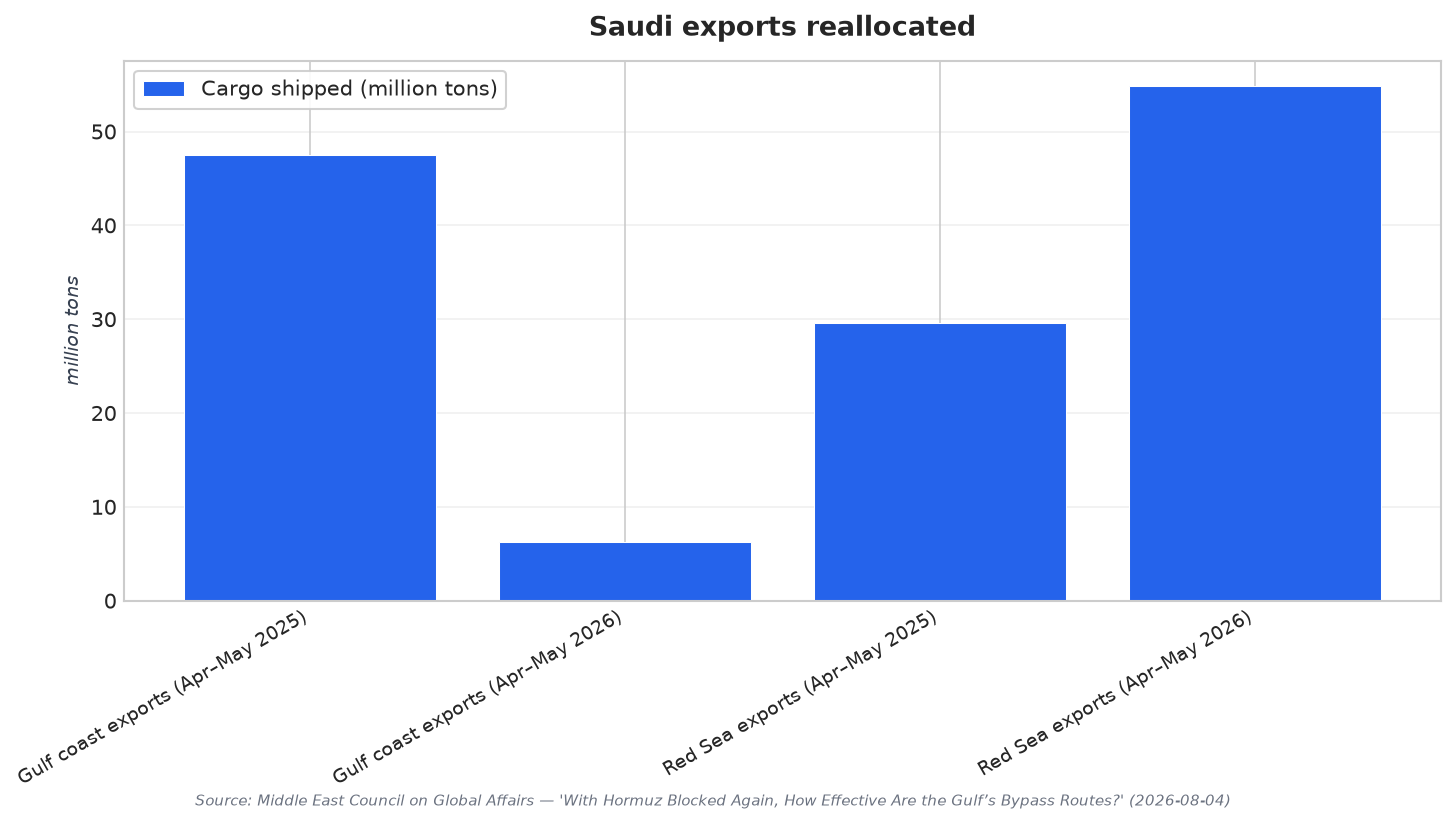
Not every bypass route performs equally when measured at scale. The Middle East Council on Global Affairs used satellite port data to compare April and May against the same months of 2025 and found that Saudi Arabia’s Red Sea outlet recovered the majority of what its own Gulf coast terminals lost. Saudi Arabia’s Gulf coast shipped 41.2 million tons less year over year across April and May, dropping from 47.5 million tons in 2025 to 6.3 million, while its Red Sea exports rose from 29.6 million tons to 54.8 million, a 25.3 million-ton gain that recovered 61% of its Gulf-side loss. In that same analysis, Oman’s corridor to the Arabian Sea was described as too small to register in its effect, a reminder that Oman’s value for lubricants may be reliability and optionality rather than sheer volume.
Overland execution capacity is what turns rerouted containers into delivered product. AGBI reported that Saudi Arabia has more than 600,000 trucks, even though the largest single fleet is 3,000, showing a fragmented market that can still surge when demand spikes. BusinessToday reported that Maaden scaled logistics to “3,500 trucks running from the Gulf to the Red Sea,” with vehicles operating almost round the clock and using two drivers each. EnterpriseAM also reported that ocean carriers started acting more like overland operators, with Hapag-Lloyd establishing trucking corridors across Saudi Arabia, Oman, and the UAE to connect Bahrain, Kuwait, and Qatar, while Maersk and MSC rolled out similar land-based cargo solutions.
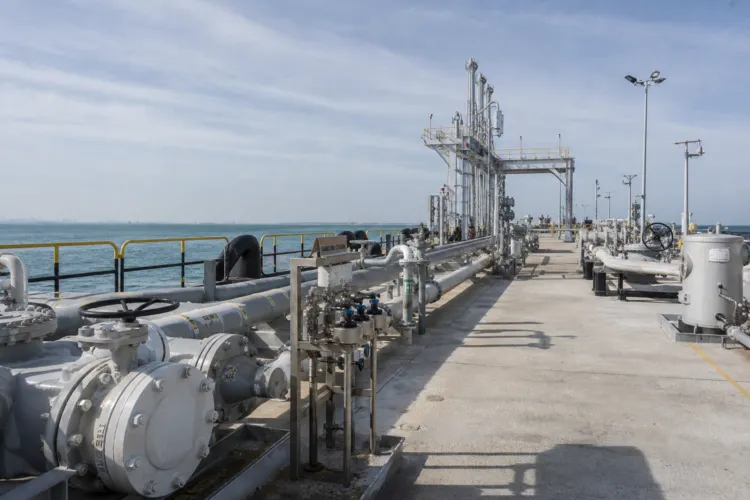
Even when direct Hormuz transits fall, the region adapts with workarounds outside the chokepoint that influence planning for lubricants and other packaged cargo. Gulf News reported that TankerTrackers observed at least 15 simultaneous ship-to-ship transfer operations underway in the Gulf of Oman involving roughly 25 million barrels of crude oil plus refined products, while Kpler recorded just two commodity vessels transiting the Strait of Hormuz on a referenced Monday. Separately, the BBC cited Kpler saying about 40% of the total oil exported from the region in September bypassed the strait and exited via overland pipelines to ports on the Red Sea or the Gulf of Oman, up from 17% before the war. For lubricant shippers, the lesson is operational: build routing playbooks that can pivot among Oman ports, bonded trucking links, and carrier-led land corridors as conditions change.
How can an Oman-focused overland routing plan help keep GCC lubricant supply moving during a Hormuz disruption?
Which Oman ports were reported as absorbing flows when Hormuz access tightened?
What did satellite port data show about the relative scale of bypass routes?
What evidence is there that overland trucking can surge when maritime options are disrupted?