
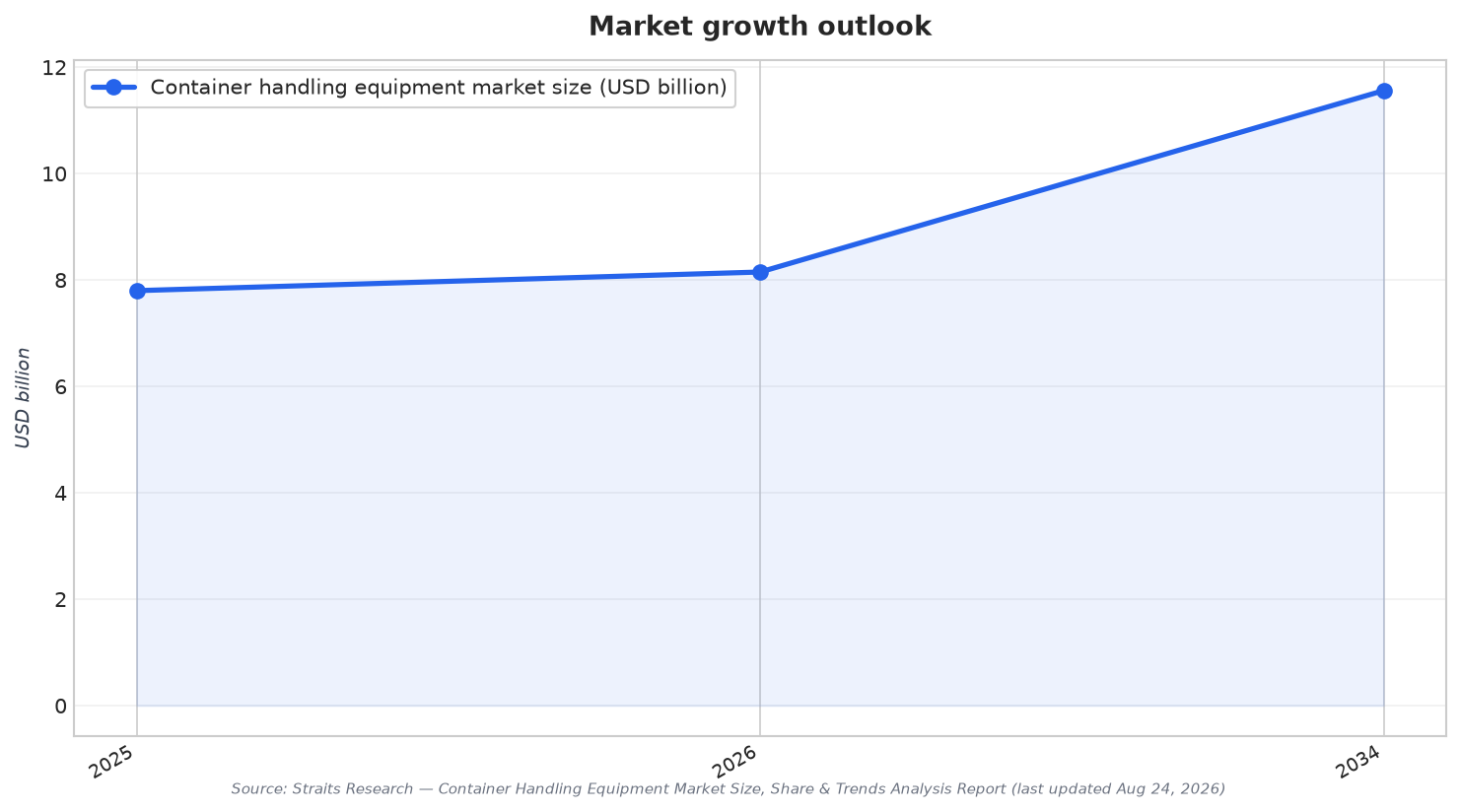
Container terminals in the Gulf are scaling modern yard operations while balancing cost, downtime, and environmental pressure. In parallel, global equipment investment keeps rising. Straits Research values the global container handling equipment market at USD 7.8 billion in 2025, projecting growth to USD 11.56 billion by 2034 at a 4.47% CAGR. Mordor Intelligence estimates a similar base, valuing the market at USD 7.95 billion in 2025 and forecasting USD 10.26 billion by 2031 at a 4.35% CAGR. For maintenance teams, these trends matter because cranes, forklifts, and stacking systems rely on lubrication discipline to keep availability high as fleets become more sophisticated and capital intensive.
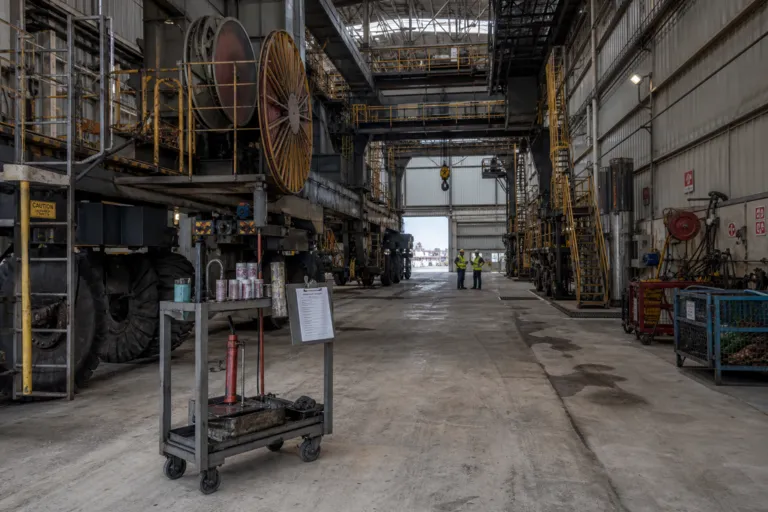
Within yards, rubber-tired gantry (RTG) cranes remain a core stacking tool because they can efficiently manage container stacking and offer operational flexibility, as noted by Grand View Research. Fortune Business Insights adds that RTGs account for nearly 21% of the container handling equipment market and are widely used for stacking and moving containers, supporting both automated and manual operations. At the same time, diesel still dominates many fleets globally. Mordor Intelligence reports diesel-powered units held 58.04% of the container handling equipment market size in 2025. That combination means Gulf terminals may operate mixed fleets, so lubrication programs must cover diverse duty cycles across RTGs, forklifts, and other cargo-handling assets without assuming a single propulsion profile.
Electrification and Automation Change the Maintenance Baseline
Electrification is a defining direction for terminals seeking to reduce emissions and manage operating costs. Straits Research describes a growing emphasis on electrifying container handling equipment, highlighting a trend toward RTGs and electric-powered rail-mounted stacking cranes for stacking operations. Mordor Intelligence quantifies that shift: battery-electric units are advancing at a 17.31% CAGR through 2031, and fully automated configurations are expected to expand at a 20.14% CAGR through 2031. Market.us also cites SAE Mobilus findings that battery-electric port cargo handling equipment achieved NOx reductions of 76% to 99% versus conventional equipment, and CO₂ reductions of 76% to 95% for BE forklifts and eRTG cranes. For lubricant planning, electrification and automation increase the value of predictable service intervals and uptime assurances as maintenance becomes more integrated with lifecycle service models.
Port operators are also reacting to larger ships and tighter berth windows. Technavio notes mega-vessels can increase cargo capacity by over 30%, pushing terminals toward advanced quay cranes and AGVs to maintain efficiency. Grand View Research links the deployment of ultra-large container vessels to investments in high-capacity automated crane systems and notes that the > 100 tons segment accounted for the largest revenue share in 2025, supported by demand for STS cranes, heavy reach stackers, and high-capacity RTG cranes. In a Gulf context, this modernization reinforces why a port terminal RTG crane lubricants Middle East strategy should be built around availability and wear control, because higher stacking density and faster cycles can compress maintenance windows even when fleets are expanding.
Finally, lubrication strategy has to match how terminals buy and operate equipment. Mordor Intelligence reports seaports and river terminals contributed 73.25% of the container handling equipment market size in 2025, while inland depots and rail yards are projected to rise at an 8.96% CAGR through 2031. Technavio also reports the ports and terminal operations market is expected to grow by USD 41,254.5 million from 2026 to 2030 at a 7.7% CAGR, with operators investing in automated stacking cranes and software to improve turnaround performance, including a cited 15% reduction in cargo spoilage through improved resource allocation. In practice, that means lubrication teams must align with terminal-wide reliability goals and the push toward service contracts, predictive maintenance, and uptime assurances as equipment complexity rises.
Why are RTG cranes central to container-yard operations?
What do the sources say about electrification benefits for port equipment?
How fast are electric and automated container-handling segments growing?
How should Gulf terminals think about port terminal RTG crane lubricants in the Middle East?
What market signals show continued investment in cargo and container handling equipment?