
Gulf leisure boating is gaining momentum, but the most useful market signals often come from global marine lubricant trend data rather than local snapshots. Multiple forecasts point to steady expansion in overall marine lubricants, even as operators aim to reduce consumption per voyage through specialized formulations. One global view projects the marine lubricant market increasing from USD 3.52 billion in 2024 to USD 5.73 billion by 2035 at a 4.53% CAGR. Another forecast projects growth from $7.59 billion in 2026 to $11.04 billion by 2034 at a 4.8% CAGR. These figures are global context, but they indicate why suppliers keep investing in higher-performance product lines that can also serve yacht and marina needs.
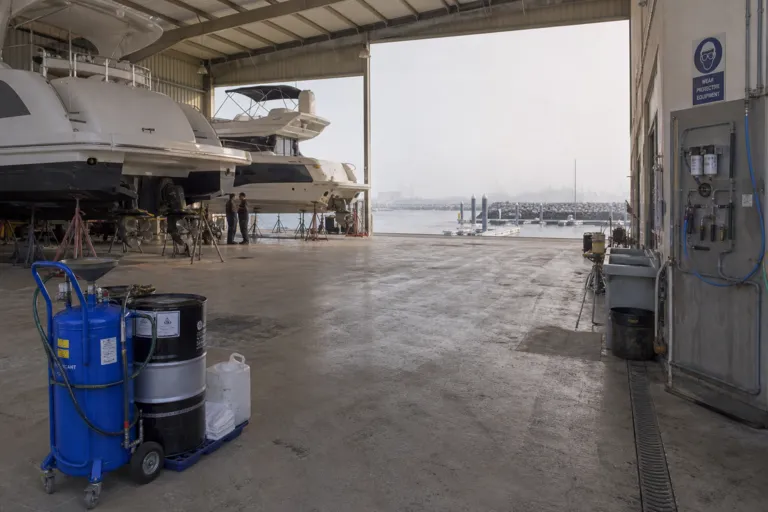
For yacht operators, marina managers, and recreational boating service networks, the key is mapping global segment trends to small-vessel realities. Market research notes that recreational vessels are a smaller share today, but have seen rapidly increasing demand driven by the rising trend of leisure boating and water sports activities worldwide. That demand connects directly to common onboard needs: engine oils, gear oils, hydraulic oils, and greases. In the same global forecast set, engine oils are projected to reach USD 1.9 billion by 2035, underscoring how strongly engine-related maintenance continues to shape lubricant purchasing. For marinas, that translates into stocking strategies that support frequent service intervals and varied vessel profiles, from day boats to large yachts with more complex propulsion and auxiliary systems.
What Global Compliance and Formulation Shifts Mean for Gulf Yachts
Regulation-driven formulation shifts matter even in leisure segments, because they change what distributors carry and how OEM-aligned service packages are built. One report highlights that regulations concerning discharge in environmentally sensitive areas have spurred widespread adoption of Environmentally Acceptable Lubricants (EALs), particularly for stern tubes and other oil-to-sea interfaces. Another global dataset shows mineral oil still commanded 71.96% of 2025 volume, while bio-based lubricants were the fastest-growing subsegment at a 2.18% CAGR through 2031. Even when a yacht is not operating like a liner fleet, these trends influence availability and pricing structures at marinas, because suppliers standardize around compliant, premium-grade portfolios across customer types.
Premiumization is also being shaped by fuel and engine technology trends. As IMO-2020 enforcement continues, demand is increasingly shifting toward premium 40-BN cylinder oils, and named products in this category include ExxonMobil’s Mobilgard 540, Shell’s Alexia 40, and Chevron’s Taro Ultra Advanced 40. At the same time, engines running on dual-fuel LNG and methanol are turning to specialized formulations that extend drain intervals and reduce consumption per voyage. This can conceal significant underlying value growth despite modest volume gains. While these examples are tied to broader commercial realities, they signal how supplier R&D priorities cascade into the product choices offered to yacht service yards and marina workshops.
Distribution expectations are changing as well, and that affects how marinas in the Gulf can plan inventory and turnaround times. Globally, direct supply secured 66.22% of 2025 volume, while online platforms posted the fastest growth at a 2.35% CAGR through 2031. That shift supports more transparent lead times and can encourage smaller fleets to bypass conventional distributors. For additional context on how mature markets quantify demand drivers, one US-focused report valued the US marine lubricants market at $776.3 million in 2025 and projected $814.0 million by 2030, at a 0.95% CAGR, with demand drivers including the recreational boating sector. In practice, yacht marine lubricants in Gulf leisure settings benefit from aligning marina procurement with these broader supply-chain and compliance trends.
How do global marine lubricant forecasts relate to Gulf leisure boating demand?
Which lubricant category is highlighted as a leading application in global forecasts?
Why are EALs increasingly discussed for marinas and yachts?
What does market data say about base stocks and growth trends?
What should buyers consider when selecting yacht marine lubricants for Gulf leisure operations?