
Cross-border road freight in the GCC is moving under new pressure. As shipping disruption and security concerns alter routing choices, more cargo is shifting to land corridors and border posts that were already sensitive to documentation and inspection changes. Reuters reported that only seven commodity vessels crossed the Strait of Hormuz on October 6, the lowest daily figure since July 23, according to Kpler, while UAE businesses responded by changing procurement tactics. The National reported that Lulu Group began chartering dedicated ships and aircraft, and some maritime shipments were taking as long as 70 days. When lubricant trucks are redirected into faster land options, the risk is that customs transit rules, border-specific paperwork, and vehicle compliance become the bottleneck instead of the road.
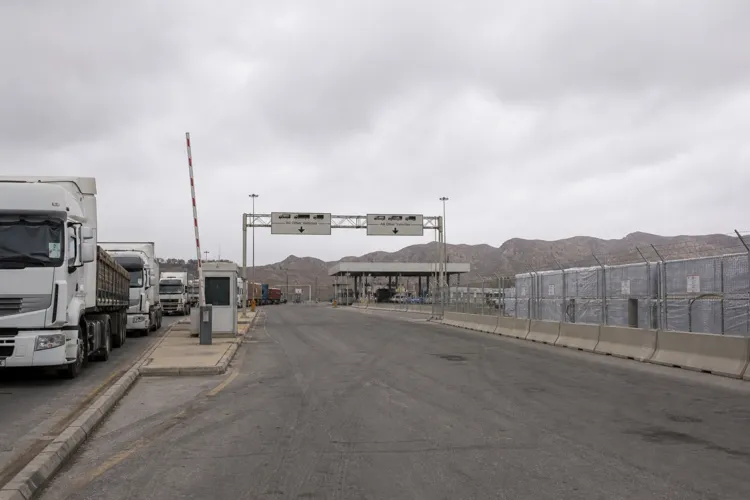
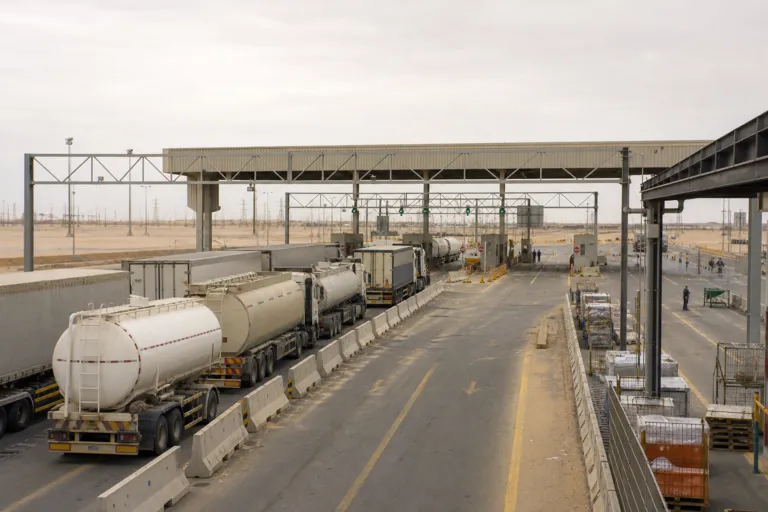
The most visible pitfall is assuming delays must be “your carrier’s problem,” not a process risk you can manage. Semafor reported that trucks at the Saudi–UAE Al Batha crossing have waited from a few hours to several days, with some drivers reportedly sleeping under their trailers for over a week. Bourse & Bazaar separately described extensive delays at the same post from July, with drivers sleeping under trailers while cargo sits in customs limbo. Saudi Arabia’s Zakat, Tax and Customs Authority stated that trade exchange remained within the normal range of customs operations and said authorities were introducing new measures for smoother flow. For lubricant shipments, the practical lesson is that uncertainty itself is a planning variable: customs transit documentation and handoffs must be clean enough to survive unpredictable holds without cascading into missed delivery windows.
Where Customs Transit Breaks: Border-Specific Rules, Weights, and “One-Size” Paperwork
A common error in GCC cross-border lubricant trade customs transit is treating GCC borders as interchangeable. A GCC land freight guide warns that what satisfies customs at one border may not satisfy customs at another, and that businesses managing this themselves often get caught by updates they didn’t know about. The same guide flags a second trap: each GCC country has regulations on maximum vehicle weight and cargo dimensions, and a fully loaded truck that’s legal in the UAE may violate Saudi or Omani regulations. For lubricant trucks, that means even when the product and shipper are unchanged, the customs transit outcome can change based on the crossing, the destination within Oman, and the truck’s loaded configuration.
Newer corridors reduce distance and can remove an entire border step, but they also introduce new execution details that punish sloppy documentation. A Saudi–Oman logistics partnership in August 2026 between Oman’s Arkan Logistics and Saudi Arabia’s SPARK Logistics formalized the “Secure Green Land Corridor” across the Rub’ al Khali Highway, aiming at coordinated border processing and scheduled freight services. The Saudi section runs 564 km to the Empty Quarter border post, and the full cross-border connection measures roughly 725 km with the Omani segment included. Another road-freight guide notes that the direct land connection uses the Al-Rub Al-Khali crossing, and Saudi Arabia’s Zakat, Tax and Customs Authority has described dedicated cargo facilities with a stated capacity of 966 trucks per day. Time savings can be meaningful: one assessment says transit time can fall by 14–18 hours under normal conditions, while Bourse & Bazaar reports a 16-hour cut on a related Saudi-to-Oman trucking movement.
Finally, policy shifts at the border can create compliance gray zones that documentation must anticipate. Oman authorized three duty-free markets at border locations under Decision No. 145/2026, establishing markets at Al Wajajah and Khatmat Malaha on the UAE border and at the Rub’ al Khali crossing with Saudi Arabia. Announcements said eligible products will be exempt from customs duties and taxes under applicable regulations, but opening dates and approved product categories were not disclosed. For lubricant trucks, this kind of change does not automatically simplify customs transit. It can create new questions about eligibility, routing, and declarations, especially when combined with surging truck volumes and depots and weigh stations struggling to handle traffic, as described by Bourse & Bazaar. The safest approach is to treat every crossing as a distinct operating environment and build a border-by-border documentation checklist that matches the actual route used.
What is causing more pressure on land borders between Saudi Arabia, the UAE, and Oman?
How long can trucks be delayed at the Saudi–UAE Al Batha border crossing?
Why is “same paperwork everywhere” a risk in GCC customs transit for lubricant trucks?
What capacity has been stated for the Al-Rub Al-Khali cargo facilities on the direct Saudi–Oman route?
In the GCC cross-border lubricant trade, what are the core customs transit pitfalls to plan for?