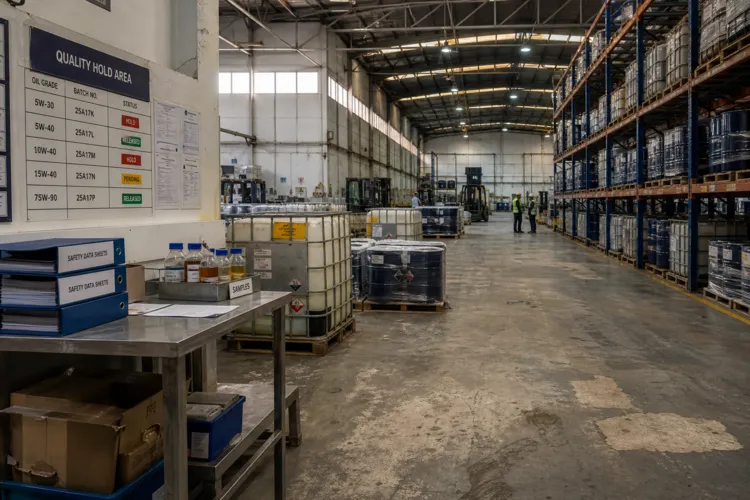
Importing lubricants into Bahrain often starts with one question: what proof of conformity will be accepted at the border and during market checks? A practical approach is to plan your technical file and registration workflow before you ship, because Bahrain is described as a compact demand pocket that is tightly exposed to Gulf logistics and reliability. Sources also note that Bahrain-specific lubricant volumes, segment splits, and market value are not published in the provided materials, so the best planning relies on clear compliance steps and strong supplier documentation rather than guessing demand numbers. That is where BSMD product conformity and structured product registration become central to risk control.
On the conformity side, Trade Compliance Records lists “Bahrain BSMD Product Conformity” as a stored regulation-reference record and flags that importers should confirm current requirements. In practice, this points to a disciplined method: identify the relevant product category, gather product documentation, and validate whether Bahrain-specific or Bahraini-adopted standards apply to your lubricant type and claims. The goal is to avoid shipment delays or rejections by making conformity evidence ready for review. Because the record is a reference snapshot, companies should treat it as a starting point and verify the latest procedural details with the competent authorities and any current implementing guidance.
When Registration Requirements Tighten: Food-Grade and Facility Use Cases
Registration and conformity can become stricter when lubricants are used in regulated environments such as food processing. Ken Research states that Bahrain’s Food Grade Lubricants Market is valued at USD 42 million and links demand to strict hygiene standards and expanding food processing. It also states that the Food Safety Regulations, 2017 issued by the Ministry of Health, Kingdom of Bahrain mandate compliance with NSF International standards, including H1 registration for lubricants used in food processing facilities. The same source describes compliance being verified through regular inspections and certification thresholds. If your lubricant is marketed for incidental food contact, aligning labeling, technical claims, and H1 documentation is part of getting market access right.
It also helps to separate lubricant registration from food import registration concepts, even though the workflow logic is similar. ChemLinked’s Bahrain food regulation guide describes a “Permit to Import Food Products” as a Ministry of Health pre-import assessment service, where the competent food control authority reviews the product to check whether it conforms to applicable specifications and standards. The guide also says product composition and quality are regulated by specific standards that are primarily adoptions of GSO standards, and it highlights market access dependencies such as Arabic labelling, permitted additives and contaminant limits, import documentation, and risk-based border inspection. For lubricant importers serving food factories, these concepts matter because the customer’s compliance environment can influence what documentation they require from you.
Finally, build your import plan around supply reliability, not just price. ICIS commentary cited in a Bahrain market analysis source says global base oils faced a bullish reaction after the Middle East war, with markets braced for a lengthy recovery amid drone attacks, high diesel competition, expensive shipping, and uncertainty over feedstock availability, while noting the Strait of Hormuz as a key pawn that can shift market direction. For context, MarketsandMarkets places the global industrial lubricants market at USD 63.9 billion in 2024, projected to reach USD 74.3 billion by 2029 at a 3.1% CAGR from 2024 to 2029. In a practical Bahrain lubricant import conformity BSMD workflow, that backdrop reinforces why consistent documentation, confirmed conformity steps, and dependable sourcing reduce disruption exposure.
How should I approach BSMD conformity when importing lubricants into Bahrain?
When do lubricants in Bahrain need NSF H1 registration?
What market figure is available for Bahrain’s food-grade lubricants segment?
Why does supply-chain reliability matter for lubricant imports into Bahrain?