
Gulf fleet operators are exploring HVO and renewable diesel because the fuel is described as a drop-in option that can be distributed through conventional fuel logistics and used in approved diesel engines. That “approved” point matters for operations as much as emissions discussions. The same sources that emphasize easy deployment also stress that fleets can transition without replacing vehicles, provided engine manufacturers approve the fuel specification. For maintenance teams, that approval boundary is where questions about oil, filters, and drain practices sit. The published material here does not provide oil-specific drain-interval numbers, so Gulf fleets should treat engine oil compatibility and drain-interval implications as an OEM-led validation task rather than an assumed benefit.
Market signals show why fleets are paying attention. One global renewable diesel market report values the market at USD 25.8 billion in 2025, while another report values the Renewable Diesel (HVO) market at $30.1 billion in 2025 and projects $57.1 billion by 2034, with an 8.4% CAGR. A separate HVO market report sizes the global hydrotreated vegetable oil market at USD 8.25 billion in 2025, projecting USD 15.82 billion by 2034, with a 7.5% CAGR, and notes Europe’s 42% share in 2025. These are global figures, but they frame a practical point for Gulf fleets: availability is improving, and procurement conversations increasingly include HVO grades, blends, and documentation needed for OEM acceptance.
What “Drop-In” Means for Maintenance and Oil-Related Decisions
Technical studies and summaries in the sources consistently describe HVO as a technically viable renewable alternative to fossil diesel that can be utilized in existing engines without hardware modifications. Another experimental paper reports that as the HVO share increases, combustion occurs slightly earlier and, over certain intervals, proceeds marginally faster. Those statements speak to combustion behavior and operability, not to oil drains. For Gulf fleets, the key maintenance implication is procedural: treat HVO adoption like any fuel-spec change that needs OEM confirmation, especially if the fleet intends to use high blends or HVO100. Without oil analysis data or manufacturer service bulletins in these sources, it is not supported to claim longer drains or different oil requirements based solely on HVO use.
Regional context also matters for how quickly fleets may face these questions. One source estimates the Middle East and Africa account for about 4% of the global HVO market, and highlights that Gulf countries have advanced refining infrastructure that can potentially support renewable feedstock processing. On the supply side, one report states Neste produced 3.313 million tons of renewable diesel in 2025, and another positions Neste as the market leader with a 13.5% share and production footprint across Singapore, Rotterdam (Netherlands), and Martinez, California (a co-venture with Marathon Petroleum). These figures do not describe Gulf production directly, but they indicate scale and the likelihood that Gulf fleets will increasingly encounter HVO supply offers tied to international producers and their fuel specifications.
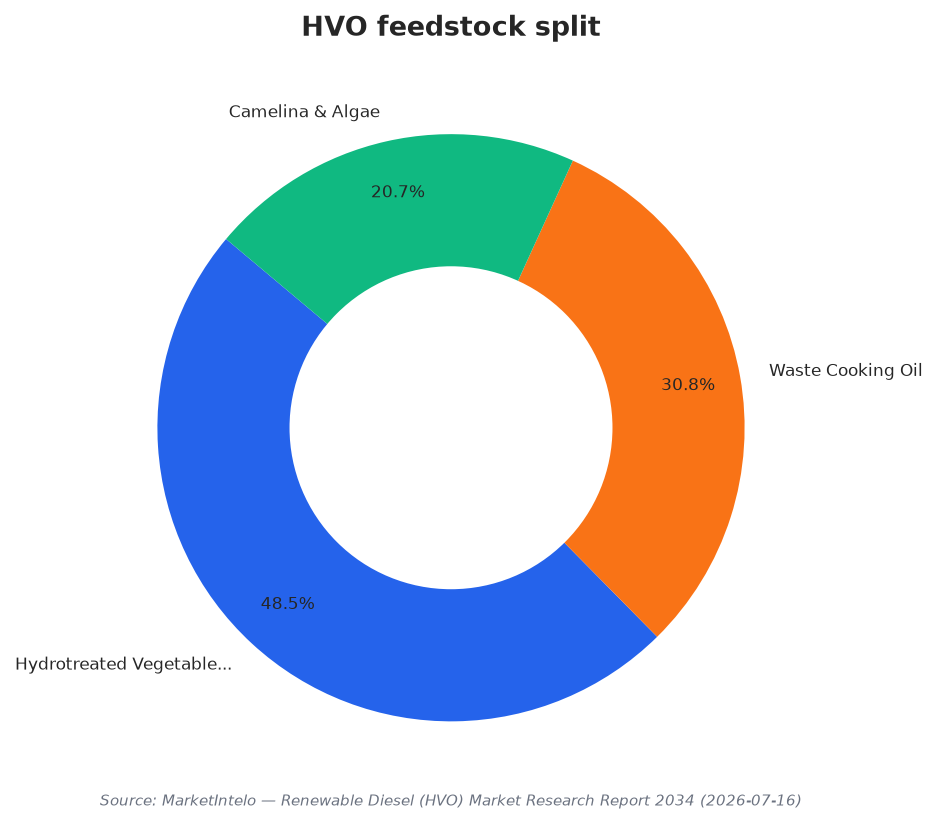
Procurement and compliance dynamics can also shape fleet maintenance planning. A renewable diesel market report describes how the LCFS 2025 amendments’ 20% crop-seed-oil credit cap altered economics in California, described as the United States’ largest and most policy-active renewable diesel demand center. Separately, an HVO market segmentation report states waste and residue oils held a 45% share in 2025, while another report assigns hydrotreated vegetable oil from dedicated crop-derived vegetable oils about 48.5% of feedstock supply in 2025, with market shares also listed for waste cooking oil (30.8%) and camelina and algae (20.7%). For Gulf fleets, this reinforces a practical takeaway: fuel documentation and consistency matter, because feedstock pathways and regulatory contexts vary by market, and OEM approval is tied to meeting fuel specifications rather than general “renewable” labels.
What is the key gate for HVO use in Gulf fleets?
Do the sources prove longer oil drain intervals with HVO or renewable diesel?
What do the sources say about HVO renewable diesel engine oil compatibility in practice?
How large is the market context for renewable diesel and HVO globally?
What share of the global HVO market is attributed to the Middle East and Africa in the sources?