
Importing lubricants into Qatar is not only a commercial decision. It is a compliance project. Lubricants placed on the Qatari market are subject to consumer-protection and anti-fraud enforcement led by the Ministry of Commerce and Industry (MOCI). The same regulatory landscape highlights actions against falsely marked or spurious motor oils under Qatar’s consumer protection framework (Law No. 8 of 2008). For importers, that means your product claims, packaging, and documentation must stand up to scrutiny, especially when the market is shifting toward higher-spec products such as low-viscosity synthetic formulations and extended-drain technologies.
Start with product conformity evidence and technical proof. Qatar’s product conformity is supported through national standardization and testing practices aligned with internationally used methods (ASTM/API/ISO), helping buyers and enforcement bodies verify lubricant quality claims. MarkWide Research also notes that the Qatar General Organization for Standardization (QS) enforces lubricant quality benchmarks aligned with API and ACEA classifications, which filters out substandard imports and can raise compliance costs for smaller distributors. In practice, an importer should keep a clear technical dossier showing the intended service category and performance claims, and ensure consistency between labels, product data sheets, and any certificates used in commercial tenders.
Customs Clearance, Labeling, and Shipment Readiness
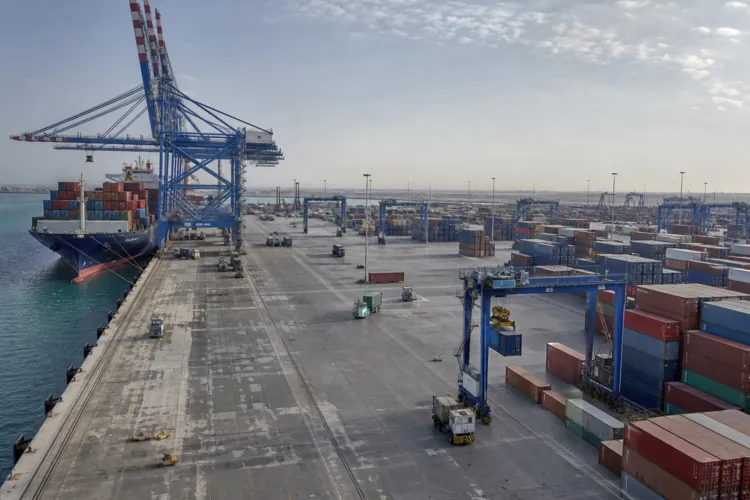
At the border, preparation matters. Marhaba Qatar states that regulations introduced in 2013 were designed to prevent fake products from entering the market, and that all general goods must have non-removable marking of their place of manufacture to be eligible for customs clearance (for both air and sea freight). Marhaba also explains that customs duty and legalisation fees are levied on all commercial shipments, irrespective of value, and that goods are usually subject to customs duties based on a percentage value (usually 5%) or on a per-unit basis. Even where lubricants are not listed alongside tyres, spare parts, and electrical appliances as requiring a certificate of conformity, the same anti-counterfeit logic makes correct origin marking and documentation control essential.
Build your compliance approach around how the market actually buys. Mordor Intelligence estimates Qatar’s lubricants market at 61.04 million liters in 2026, growing from 59.28 million liters in 2025, with a 2031 projection of 70.6 million liters (2.96% CAGR over 2026–2031). In the automotive lubricants segment, Mordor Intelligence expects growth from 22.21 million liters in 2025 to 22.87 million liters in 2026, reaching 26.49 million liters by 2031 (2.98% CAGR over 2026–2031). It also reports that engine oil led with a 62.12% share of the Qatar automotive lubricants market in 2025, and passenger cars held 52.55% share by vehicle type in 2025. For importers, those figures signal where label claims, specifications, and channel controls are most exposed to enforcement and customer disputes.
Finally, align product positioning with operating conditions and environmental enforcement. Mordor Intelligence notes Qatar logs 107 days annually above 40°C, which accelerates oxidation in conventional lubricants and pushes buyers toward fully synthetic 0W-20 and 5W-30 grades; it also states low-viscosity penetration is boosting by 15% year on year. Separately, Nexdigm (via Middle East Lubricants Consulting) notes Qatar is enforcing stringent environmental compliance standards more rigorously as of 2024, compelling manufacturers to invest in R&D for low-emission lubricants. A Qatar conformity mark lubricants strategy, in real terms, is a documentation-and-claims discipline: keep your technical proof current, avoid exaggerated performance statements, and ensure shipment markings and paperwork match what regulators and customers can verify.
Which Qatari bodies are linked to lubricant compliance and enforcement?
What labeling rule can affect customs clearance for imported goods?
What market figures help prioritize compliance focus for lubricant importers?
How do climate conditions influence product claims and specification choices?
How should importers think about the Qatar conformity mark approach for lubricants?