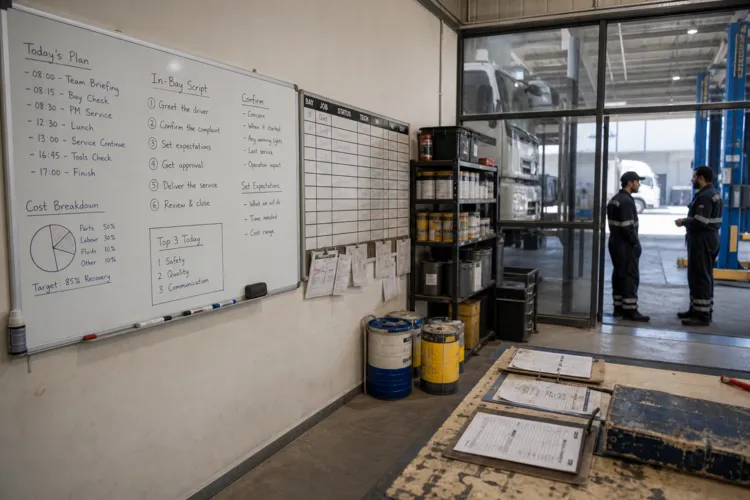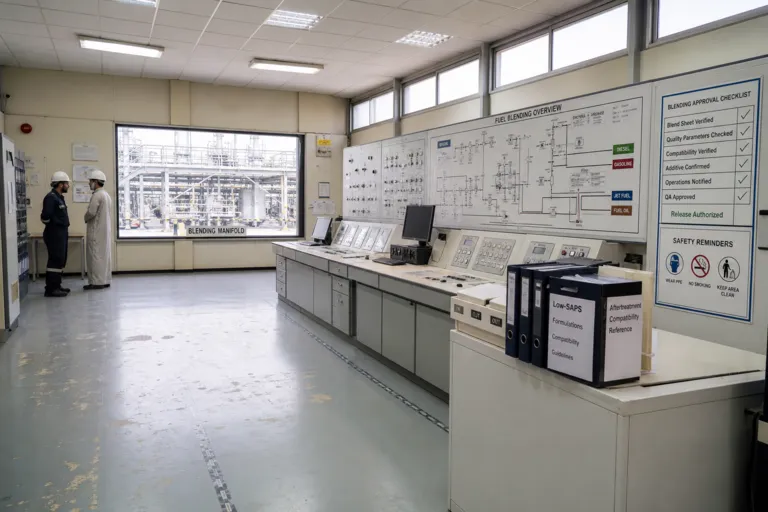
On 27 February 2024, the Saudi Ministry of Energy announced the successful introduction of Euro 5 standard diesel fuel and gasoline across the Kingdom of Saudi Arabia. That matters because lower-sulfur fuel is linked to the “application of advanced emissions” technologies, which depend on exhaust aftertreatment hardware that must stay clean and functional. For workshops and fleet maintainers, the fuel change is not isolated. It pushes attention onto oil selection, because oils influence deposits, ash, and long-term compatibility with aftertreatment systems. In practice, the move encourages more consistent use of premium formulations that match the expectations of newer engines and their emissions controls.
Market signals in Saudi Arabia show that engine oil is already the dominant lubricant product, which amplifies the impact of any specification shift. In 2025, passenger vehicles held 93.17% of Saudi Arabian automotive lubricants market share, while automotive engine oils accounted for 91.88% of 2025 volume. The overall Saudi Arabia Automotive Lubricants Market was valued at 402.79 million liters in 2025, and it is estimated to grow from 420.56 million liters in 2026 to 521.83 million liters by 2031. With such a large engine-oil base, even incremental movement toward newer service-fill requirements and aftertreatment-safe formulations can reshape what distributors stock and what workshops recommend at the counter.
What Euro 5 Means for Oil Specs and Aftertreatment Compatibility
Multiple sources describe a regulatory and OEM-driven pull toward low-ash oils alongside Euro 5-era expectations. One Saudi market analysis states that “with Euro 5 regulations in play, OEMs are mandated to use low-SAPS API SP or ILSAC GF-6A oils,” steering buyers toward premium products from the first change. Another report urges stakeholders to monitor “SASO adoption of updated API SP and ILSAC GF-6 performance categories” to keep portfolios aligned with regulatory and technical demand shifts. This is the practical takeaway for a Saudi Euro 5 fuel standard engine oil decision: fuel quality and emissions hardware can raise the cost of getting the wrong oil, because oil chemistry and durability targets increasingly sit inside warranty and service-fill rules.
Service behavior and segment growth also shape how quickly the market absorbs Euro 5-era oil expectations. The same Saudi lubricants analysis cites “persistent 10,000-kilometer service-interval enforcement” and notes ride-hailing fleets may shorten drain cycles “as frequently as 30 days,” increasing per-unit consumption versus average private cars. Commercial vehicles are forecast to register a 6.89% CAGR through 2031, the fastest among vehicle types in that dataset. These patterns create both volume pressure and quality pressure: fleets that change oil more often still want oils that meet current performance categories, while workshops need to standardize on products that protect engines and maintain aftertreatment compatibility under high-use conditions.
The business stakes are large, which is why specification alignment becomes a competitive tool. IMARC values the Saudi Arabia automotive engine oils market at USD 311.0 million in 2025, projecting 3.50% CAGR during 2026–2034. A separate release cites an approximate value of USD 666.25 million for the Saudi Arabia automotive engine oils market in 2024, illustrating how methodology and scope can differ by publisher. Another market report describes competition centered on brand trust, distribution reach, and performance credentials, and points to demand shifts toward synthetic and low-ash formulations. For buyers, the practical step is simple: follow OEM and SASO-linked requirements such as API SP or ILSAC GF-6 categories where applicable, because Euro 5 fuel adoption increases the importance of oil choices that support modern emissions systems.
When did Saudi Arabia introduce Euro 5 diesel and gasoline across the Kingdom?
How does Euro 5 influence engine oil specifications in Saudi Arabia?
How big is the Saudi automotive lubricants market, and how much of it is engine oil?
What does the shift to a Saudi Euro 5 fuel standard engine oil strategy mean for workshops and fleets?