
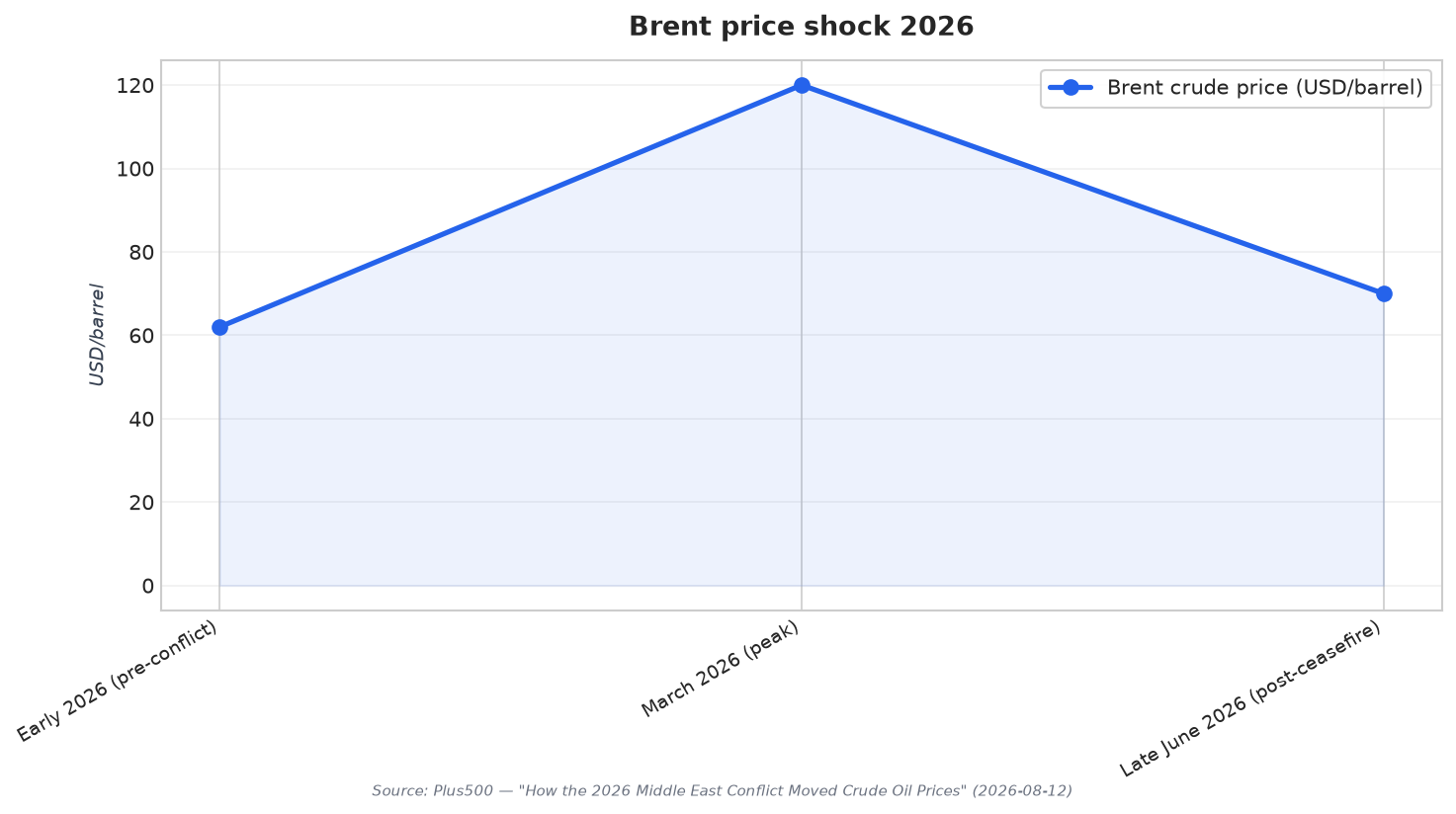
Base oil price volatility tied to Gulf war-risk premiums became a defining margin problem for Middle East lubricant blenders in 2026. Conflict that began on February 28, 2026, led to repeated disruptions around the Strait of Hormuz, a chokepoint that normally carries about 20% of the world’s seaborne oil trade. Market narratives emphasized that physical shortages were not always the only driver: the 2026 escalation showed how a “geopolitical risk premium” can move prices faster than fundamentals. Brent crude was cited at roughly $62 per barrel early in 2026, surged to around $120 per barrel during the March peak, and later retreated into the low $70s by late June as tanker traffic resumed and coordinated strategic releases took effect.
For blenders, the bigger issue was not just crude’s headline move, but how quickly base oil supply and replacement costs shifted after the Strait’s disruptions. A detailed market account said the Strait of Hormuz disruption cut Middle Eastern Group III exports to global markets by more than 70% between March and May 2026. South Korean exports partially offset the loss, but shortages in premium approved grades were described as unresolved. Against that backdrop, Group III transaction prices were reported to have risen roughly $8 per gallon from pre-conflict levels, with the 4 cSt grade up more than 230%. The same source noted increases across every API base oil group, ranging from roughly 120% to more than 250% depending on group and grade.
Why Blender Margins Get Squeezed When Risk Premiums Spike
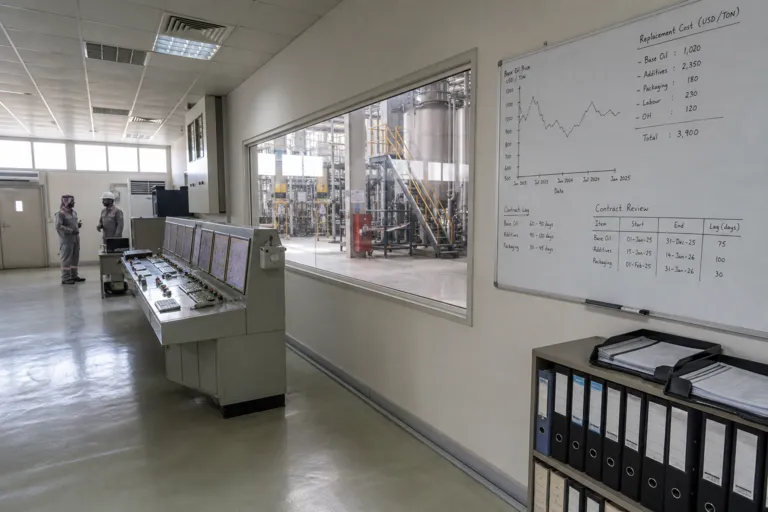
Risk premiums created a time-lag trap for margins. Base oil refining and supply chains do not reset instantly: one industry explainer noted crude must be refined into base oils over a process that can take two to six months, while many lubricant manufacturers use long-term contracts that can lock in base oil and additive pricing for 3–12 months. At the same time, base oil can represent roughly 50–80% of finished lubricant cost, depending on the product, which raises the stakes when replacement costs jump. Another conflict-focused article framed the lubricant cost stack differently but still highlighted dilution and lag, stating only 50–70% of a lubricant is petroleum-derived base oil, with imported additives at 20–40% plus packaging and margins.
By mid-2026, pricing actions in finished lubes showed how blenders and suppliers struggled to catch up. Industry tracking cited at least 17 to 22 separate price increase announcements from major lubricant suppliers between March and May 2026 alone. Individual increases ranged from 12% up to 35%, and some synthetic products saw flat-rate jumps of $5.00 per gallon or more. Yet a separate analysis of government price data warned that during supply disruptions, input costs have historically risen faster than finished-product prices, pressuring blender economics. It also noted many blenders entered the 2026 crisis without fully restored margins from the prior cycle, limiting their capacity to absorb another sharp cost wave.
Even when crude eased, base oil tightness and shipping risks kept the margin squeeze alive. One market update said indications for high-performance Group III approached $13 per gallon, illustrating extreme replacement-cost exposure when open-market availability largely disappears. The same analysis added that Brent crossing $100 per barrel on July 23 followed the collapse of an Iran ceasefire and a declared naval blockade targeting Saudi Red Sea exports, and while crude later retreated after a pause in U.S.–Iran strikes, the Group III shortage remained unresolved. Separately, European base oil pricing was reported to rise from about 0.84 EUR/kg (FD NWE) in January to about 1.21 EUR/kg in March, a ~42% increase, citing disrupted Gulf exports and higher freight and insurance premiums due to shipping risks.
How did Gulf war-risk premiums drive base oil price volatility in 2026?
How much did Middle Eastern Group III exports fall during the Strait of Hormuz disruption?
What happened to Group III base oil prices during the 2026 disruption?
Why didn’t finished lubricant prices move in lockstep with crude?
How intense were lubricant price increase actions in spring 2026?