
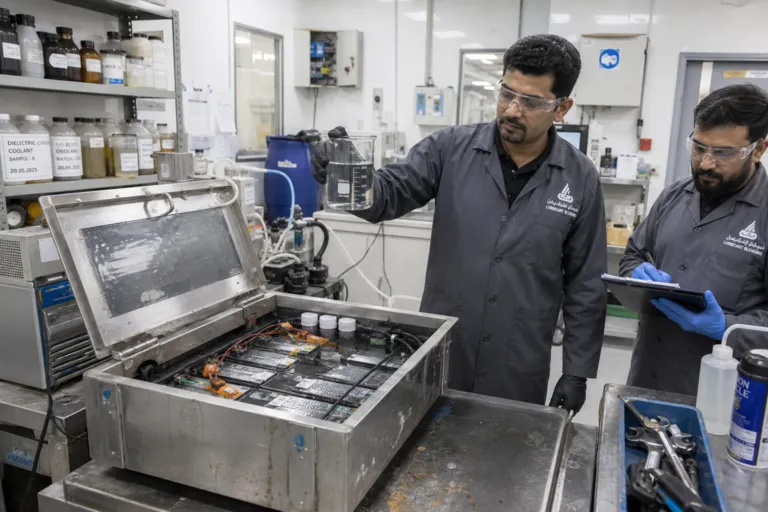
Battery thermal management fluids are moving from “supporting role” to “core design variable” as immersion cooling expands in EV packs and battery energy storage systems (BESS). In immersion designs, cells are submerged in a dielectric liquid and the dielectric flows through a heat exchanger to extract heat. This puts the coolant in direct contact with cells and busbars, minimizing thermal barriers and enabling low cell-to-cell temperature deltas. It also raises scrutiny on the fundamental materials used inside the system, not only hardware like enclosures and HVAC.
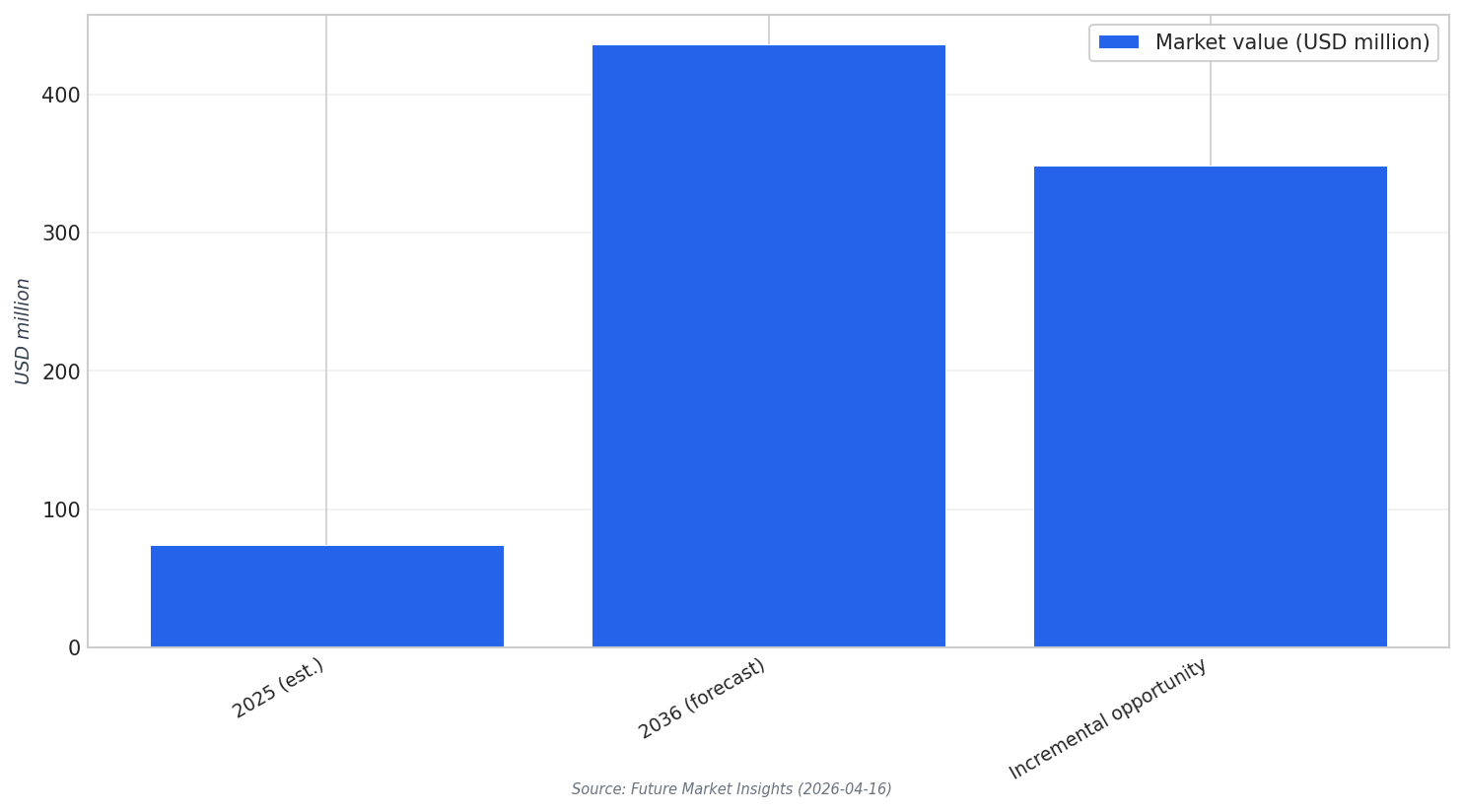
The commercial pull is also visible in market forecasts for automotive immersion cooling dielectric fluids. The market was estimated at USD 74.4 million in 2025 and is forecast to reach USD 435.9 million by 2036. Over 2026 to 2036, it is expected to grow at a CAGR of 17.4%, with an incremental opportunity of USD 348.5 million. For GCC blenders, these numbers signal a value-led niche where formulation, validation, and supply reliability matter as much as volume.
Why Dielectric Fluids Raise the Bar for Blenders
Immersion cooling is described as “perhaps the ultimate method” of controlling cell temperatures, but it is not simple. Dielectric fluids can have lower heat capacity and conductivity than water-glycol, so flow path and flow rate become key design parameters to avoid local static boundary conditions on the cell surface. There are also practical downsides: high cost of dielectric, heavier systems, more maintenance, and the need for material compatibility tests. Battery Design also flags that a cell failure into the dielectric could degrade coolant properties, and structural damage could release oil into the environment.
For EVs, fast charging is tightening thermal limits. eMobility Engineering notes immersion cooling using dielectric oils provides superior thermal performance via direct contact with battery cells and can simplify pack design by eliminating separate cooling plates or channels. It also highlights higher peak thermal loads during rapid charging and the trend to larger cells with reduced surface-area-to-volume ratios, which makes heat rejection more difficult. These realities increase demand for specialised dielectric and low-conductivity coolants that can safely interact with electrical components.
In stationary storage, EticaAG frames immersion liquid choice as one of the most important safety and performance decisions in a modern BESS. It links rising safety expectations to thermal runaway, fire propagation, and siting limitations, especially as systems scale and move closer to buildings and critical infrastructure. It argues immersion cooling removes heat directly from the cell surface and can stop fires at the cell level. Synthetic ester fluids are presented as purpose-built materials aimed at fire prevention and battery longevity, with engineered chemistry that supports cell-level thermal control and stability over long operating lifetimes.
For GCC blenders, the opportunity sits at the intersection of formulation and qualification. Future Market Insights stresses a trade-off between stronger thermal conductivity and stable electrical resistance, plus greater dependence on uninterrupted internal circulation. It also says adoption is delayed more by qualification time for submerged electrical parts than by fluid capability alone, since seals, conductors, coatings, and existing EV battery pack thermal interface materials must be requalified. Kline adds that reliability and fire risk elimination can open opportunities for dielectric cooling fluids that comply with strict safety parameters, while noting no clear winner yet between water-glycol and dielectric oils.
What are battery thermal management fluids in immersion cooling?
How big is the automotive immersion dielectric fluid market opportunity?
Why do dielectric coolants matter for safety in BESS?
What slows adoption and creates barriers for new blenders?
What are key pros and cons of dielectric immersion cooling fluids?