
In GCC oil and gas and petrochemical plants, grease selection is a reliability decision, not a commodity purchase. High-temperature grease is designed for elevated temperatures, heavy loads, and harsh environments, with an emphasis on thermal stability, oxidation resistance, and extreme-pressure behavior. One market outlook describes these products as engineered to maintain lubricating properties under harsh operating conditions to reduce wear, friction, and equipment failure. That framing aligns with how maintenance teams evaluate lubricant performance: not only by consistency and viscosity, but also by thickener chemistry, base oil type, and additives intended to mitigate wear, corrosion, and high-temperature deposit formation.
Selection should start with the temperature and load envelope you need to survive. A high-temperature extreme-pressure grease market outlook notes that heavy industries require lubricants that can withstand temperatures exceeding 300°F, and it adds that current formulations “perform well up to 400°F,” while applications exceeding 500°F can still require frequent reapplication. Another grease-market report also points to synthetic base fluids being used for higher temperature resilience, describing “up to 500 °F continuous service” in the context of synthetic fluids replacing mineral oils to achieve longer relubrication intervals. For GCC operators, these published thresholds help frame when conventional options may be stretched and when more robust formulations, tighter relubrication discipline, or both, become necessary.
What to Prioritize in Formulation: Base Oil, Thickener, and Compatibility
Once operating conditions are defined, formulation levers become the practical checklist. One global forecast highlights how selection goes beyond viscosity and consistency to thickener chemistry, base oil composition, and additive packages. In market commentary on extreme-pressure high-temperature greases, synthetic base oil formulations are a major theme: polyalphaolefin (PAO) and silicone-based formulations are described as dominating 65% of that market segment, positioned for superior oxidation resistance versus mineral oil alternatives. Thickener type is also a key decision factor. A separate high-temperature grease market analysis projects soap thickeners at a 55.3% share, and industrial uses at a 62.1% share in 2025, underscoring how plant-wide industrial demand shapes product availability and standardization options.
Compatibility and program design matter as much as headline performance. A grease industry report warns that end users remain cautious about widespread polyurea adoption due to incompatibility with legacy lithium greases, even while noting that OEM-filled units can accelerate adoption. This is directly relevant for GCC sites where mixed fleets and legacy practices can make changeovers risky without controlled transition plans. Market signals also show shifting thickener dynamics: calcium-based greases are described as leading growth with a 9.10% CAGR and challenging lithium’s 66% share of the overall grease market in 2024. The same report cites field evidence in China showing a 30% extension in relubrication intervals on wind turbine main bearings for calcium-sulfonate, alongside benchmark testing indicating lower oil separation and better drop-point performance versus lithium-complex rivals.
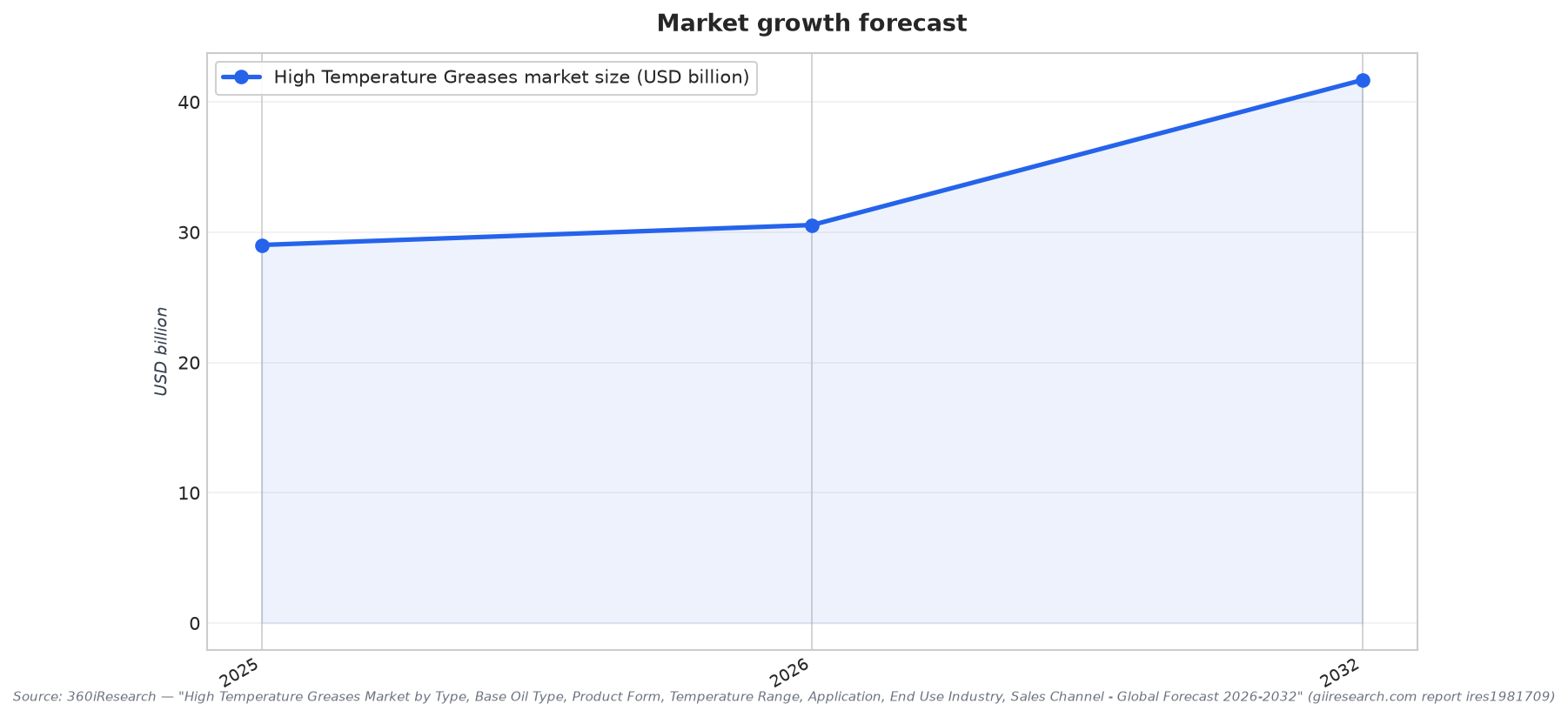
Procurement teams should also plan for cost volatility and service continuity. One high-temperature extreme-pressure grease outlook notes that fluctuating prices of lithium hydroxide and other thickening agents are a challenge, stating prices increased by 22% in the past year alone. For buyers specifying high temperature grease for GCC oil and gas operations, that volatility supports dual-sourcing and qualification of multiple thickener and base oil pathways, as long as compatibility and performance requirements stay intact. Finally, market growth suggests sustained product innovation and vendor focus. For context, one report values the global high-temperature grease market at US$ 27.48 billion in 2025 with a forecast of US$ 47.01 billion by 2034 (6.15% CAGR), while another estimates the high-temperature greases market at USD 29.02 billion in 2025, rising to USD 41.68 billion by 2032 (5.30% CAGR).
What temperature cues help decide when a high-temperature extreme-pressure grease is needed?
Which base oil types are most prominent in high-temperature extreme-pressure grease formulations?
How large is the industrial share in the high-temperature grease market?
What is a key risk when switching thickener types across an existing plant grease program?
How should teams think about selecting high temperature grease for GCC oil and gas and petrochemical plants?