
Pressure on lubricant brands in the GCC is rising because the broader packaging system is changing fast. Mordor Intelligence forecasts the GCC packaging market to increase from USD 15.99 billion in 2025 to USD 16.68 billion in 2026 and reach USD 20.45 billion by 2031, at a 4.16% CAGR over 2026–2031. Within that market, plastic is central, capturing 66.04% share in 2025. Brand owners are also responding to single-use plastic bans and are demanding lighter, smarter, and easier-to-recycle formats, which directly affects lubricant packs that depend on rigid plastic containers.
The plastic packaging supply base in the GCC is expanding, and that matters for lubricant packaging decisions. Mordor Intelligence estimates the GCC plastic packaging market at 2.99 million tons in 2026, up from 2.89 million tons in 2025, with projections of 3.54 million tons by 2031 (3.45% CAGR over 2026–2031). It also highlights new recycling mandates reshaping value-addition opportunities, and it cites export-oriented capacity additions such as Borouge’s USD 6.2 billion fourth complex in Abu Dhabi. For lubricant marketers, this combination can tighten expectations for packaging specifications, including designs that can support recycled-content ambitions without losing performance.
Why “Closed-Loop” Packaging Is Becoming a Commercial Requirement
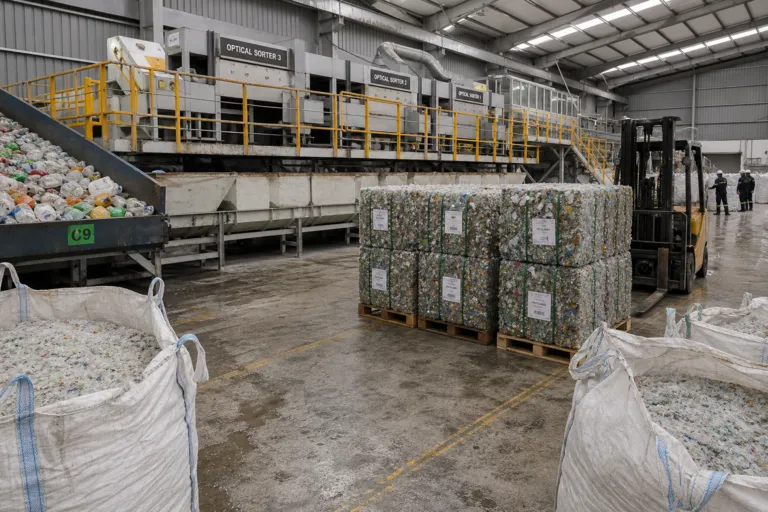
In the GCC, the economics and compliance logic for recycled-content packs is becoming harder to ignore. Mordor Intelligence notes that rising utilities tariffs and the adoption of Extended Producer Responsibility in the United Arab Emirates are nudging converters to invest in recycled-content capability, automation, and design-for-circularity, narrowing the cost gap between virgin plastic and alternative substrates over time. That trend aligns with the recycled plastics outlook from IMARC Group, which values the GCC recycled plastics market at USD 899.5 million in 2025 and expects it to reach USD 1,656.5 million at a 7.00% CAGR during 2026–2034. It also describes partnerships with recycling businesses to develop closed-loop supply chains and stable supplies of recycled plastic.
Regional context also shows how quickly policy and corporate commitments can accelerate adoption. MarketsandMarkets reports that in the “Rest of the GCC Countries” post-consumer recycled plastics market, increasing regulatory pressures are accelerating adoption in packaging, supported by sustainability mandates and circular economy frameworks. It values that market at $323.6 million in 2024 and projects $532.0 million by 2029, representing 10.5% CAGR growth, and it points to extended producer responsibility schemes and rising costs of virgin plastic materials as drivers that make recycled alternatives more cost-competitive. For lubricant brands, this reinforces that recycled plastic lubricant packaging in the GCC is increasingly tied to compliance planning, not only marketing claims.
Global lubricant packaging trends add another layer of competitive pressure. Towards Packaging forecasts the global lubricant packaging market to expand from USD 15.90 billion in 2026 to USD 25.97 billion by 2035, at a 5.6% CAGR. IndexBox frames the sustainability push as a driver for recyclable and reusable packaging and also highlights intense price competition and margin pressure, especially from large retail and lubricant blenders. Taken together, these forces mean GCC lubricant brands face a dual mandate: keep packaging costs controlled while aligning with circular-economy requirements that are already reshaping the wider GCC packaging market.
Why are GCC lubricant brands under pressure to adopt recycled-content plastic packaging?
How big is the GCC packaging market, according to Mordor Intelligence?
What does the GCC recycled plastics market outlook suggest about supply for recycled packaging?
What is one clear signal that plastic still dominates GCC packaging today?