
Lubricant packaging is in a transition where sustainability pressure meets cost-sensitive demand. Multiple market sources describe a shift toward lightweight plastics, recyclable materials, and refillable systems, alongside steady demand from automotive and industrial users. One global report sizes the lubricant packaging market at USD 7.75 billion in 2025, projecting USD 8.56 billion in 2026, USD 9.46 billion in 2027, and USD 21.00 billion by 2035, with a 10.48% CAGR over 2026–2035. A separate forecast places the market at USD 15.90 billion in 2026 and USD 25.97 billion by 2035, growing at a 5.6% CAGR. These figures are global context, but they matter for GCC lubricant retail because supplier roadmaps increasingly assume bulk, reusable, and refill-ready options.
For the GCC, the opportunity is to apply proven bulk logistics habits to retail and service-bay realities. A global growth report lists bulk packaging adoption as a key driver at 49%, while noting that nearly 62% of lubricant distributors prioritize durable packaging systems for long-distance shipping and around 54% prefer designs that improve storage efficiency and reduce product waste. It also states that approximately 42% of industrial lubricant suppliers are exploring refillable container systems that reduce packaging waste and improve supply chain sustainability, and around 44% of packaging developers are investing in designs that support refillable lubricant distribution systems. Read as direction rather than a local GCC measurement, it supports a practical conclusion: retail-ready bulk and refill formats need durability, tight controls against contamination and leakage, and operational simplicity.
Designing Bulk-and-refill Retail Systems That Actually Work
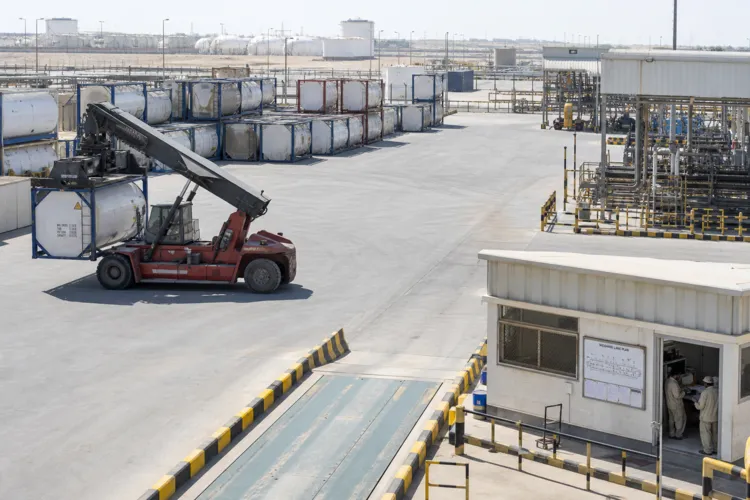
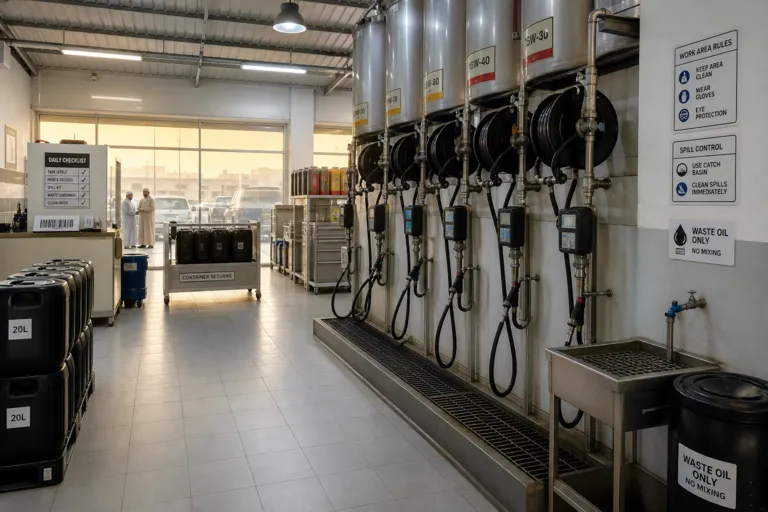
Bulk and reusable systems already have established hardware patterns that can be adapted to lubricant retail in the GCC. One research brief describes “bulk and reusable packaging systems” ranging from intermediate bulk containers (IBCs) to metal drums equipped with returnable cores, deployed by large-scale industrial users to decrease single-use waste and improve refill efficiencies. It also highlights closure and dispensing systems engineered for different environments: automatic pumps for fast filling in service bays, flip spouts for controlled drip dosing, and camlock valves for precise bulk dispensing. These design choices matter in refill operations because they reduce spills and leaks, and they support the core packaging job described in market overviews: shielding lubricants from contamination, environmental factors, and moisture.
Retail refill also depends on infrastructure and hygiene, not just containers. An IndexBox analysis of refill packaging describes scaling refill systems beyond niche channels as requiring investments in hygienic, easy-to-use gravity bins or sealed dispensers. While that discussion is cross-category, it directly includes refillable containers for lubricants as part of a B2B refill segment. The same source frames demand as “fundamentally economic and operational,” driven by cost savings from reusable IBCs and drum systems, coupled with improved safety and inventory management. In lubricant retail and service locations, that points to sealed dispensing, controlled metering, and clear procedures as the enablers that turn reuse into a consistent customer experience.
Positioning matters because lubricant packaging competes on convenience as well as sustainability. Market sources note innovations such as precision dispensers, easy-pour spouts, and no-drip closures designed to minimize spills and leaks and improve user experience. At the same time, broader packaging trends include ergonomic packaging adoption (55%) and a shift toward lightweight designs, with nearly 47% of lubricant brands adopting lightweight packaging that reduces material usage and transportation emissions. For a refillable bulk lubricant packaging approach in the GCC, the practical takeaway is to combine industrial-grade returnable containers upstream with user-friendly dispensing downstream, then align labeling and operating controls to protect product quality and brand image while keeping refill operations simple.
What is driving interest in bulk and refill lubricant packaging?
Which bulk formats are mentioned for reducing single-use waste?
What dispensing features help refill programs reduce spills and leakage?
How should GCC retailers think about hygiene in refill systems?
How can refillable bulk lubricant packaging work in GCC retail without hurting the customer experience?