
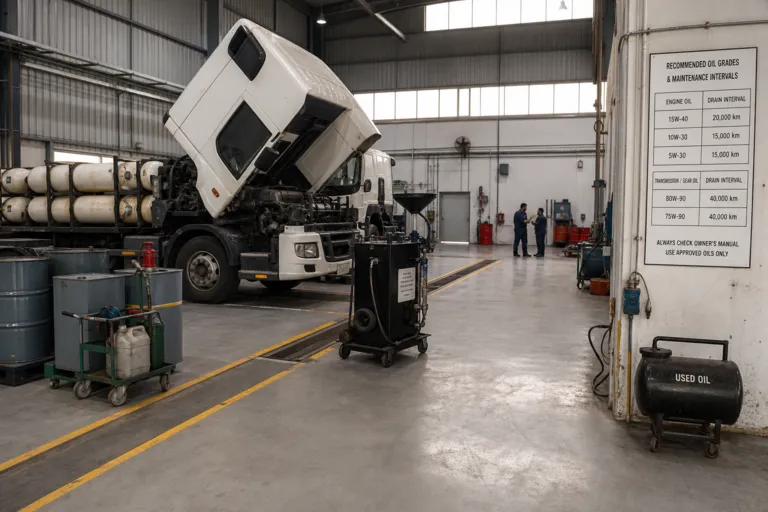
Natural gas vehicles are moving from pilot status to fleet reality across the Middle East, especially where governments push fuel diversification and municipal procurement. IndexBox projects the Middle East CNG and LPG vehicles market will grow from an estimated 180,000–210,000 unit sales in 2026 (new OEM plus aftermarket conversions) to 380,000–450,000 units by 2035. Demand is concentrated: Iran, Pakistan (within regional trade corridors), and the GCC states—particularly the UAE, Saudi Arabia, and Oman—account for over 80% of regional demand, with Iran alone representing roughly 40–45% of the installed base. As heavy-duty trucks and buses enter the mix, fleets face an emerging maintenance question: how to keep engine oil specifications consistent across factory-built platforms and varied conversion quality.
One reason the oil specification question is becoming more urgent is the structure of adoption. Aftermarket conversion kits still dominate volumes, representing 65–70% of the market in 2026, even as OEM factory-built platforms gain share in heavy-duty trucks and municipal bus fleets across the Gulf. Conversions increasingly include digital fuel-management systems and telematics-integrated ECUs that track real-time fuel consumption, cylinder pressure, and maintenance intervals, and IndexBox estimates these systems can lower total cost of ownership by 8–12% over a five-year operating cycle. But telematics does not standardize the physical realities of engines, duty cycles, and maintenance practices. That gap is where engine oil specification discipline becomes a fleet-level issue, not just a workshop choice.
Why Fleet Expansion Is Colliding With Specification and Service Limits
The Middle East is also developing as an emerging share holder in global natural-gas trucking segments, which adds pressure to professionalize maintenance standards. Global Growth Insights describes the Middle East & Africa CNG heavy-duty truck market as holding an emerging market share of around 10%, driven by government policies aiming to diversify energy sources and reduce emissions. On LNG, DataIntelo reports emerging markets in Latin America and Middle East & Africa collectively hold 14.4% share, and it ties growth drivers to rising fuel costs in oil-dependent economies and Saudi Arabia’s Vision 2030 initiative promoting domestic fuel diversification. For operators managing both CNG and LNG assets, the practical challenge becomes: standardize engine oil specifications across mixed fleets while keeping uptime high and avoiding incompatible maintenance habits between vehicle types and routes.
Operational constraints in the region magnify this challenge. IndexBox flags inconsistent regulatory frameworks across Middle Eastern countries—particularly regarding aftermarket conversion certification, tank re-inspection intervals, and fuel-quality standards—which creates fragmentation and raises compliance costs. It also notes limited availability of trained service technicians and certified conversion workshops outside major urban centers such as Riyadh, Dubai, Tehran, and Doha, with wait times for certified installations in secondary cities often exceeding 4–6 weeks. At the same time, new hardware is evolving: Type IV high-pressure composite cylinders are displacing Type I steel tanks in new OEM platforms, reducing vehicle weight by 30–40% and enabling longer driving ranges, although supply is constrained by limited global production capacity. Fleet managers dealing with these moving parts increasingly need explicit oil specifications that match their engine and maintenance realities and that can be executed reliably across the service network.
LNG’s rise in heavy-duty use adds another layer. MRFR notes CNG holds the largest share due to established infrastructure and lower initial investment, while LNG is rapidly gaining traction among heavy-duty fleets for long-haul applications because of higher energy density and efficiency. DataIntelo adds that modern LNG engines achieve 38 to 42 percent brake thermal efficiency compared to 35 to 39 percent for CNG powerplants, but LNG requires specialized cryogenic fuel storage systems, insulated fuel tanks, and more sophisticated refueling infrastructure, creating capital cost barriers for smaller operators and emerging markets. In this context, the CNG LNG engine oil Middle East fleets discussion is less about branding and more about execution: aligning oil selection, drains, and service practices to a fleet that is diversifying faster than local standardization and technician capacity can keep up.
How fast is the Middle East CNG and LPG vehicle market expected to grow?
Which countries account for most regional demand for CNG and LPG vehicles?
Why do mixed CNG and LNG fleets intensify the engine oil specification challenge?
What service and installation bottlenecks affect fleet rollout outside major cities?
How does LNG’s efficiency compare with CNG in the source material?