
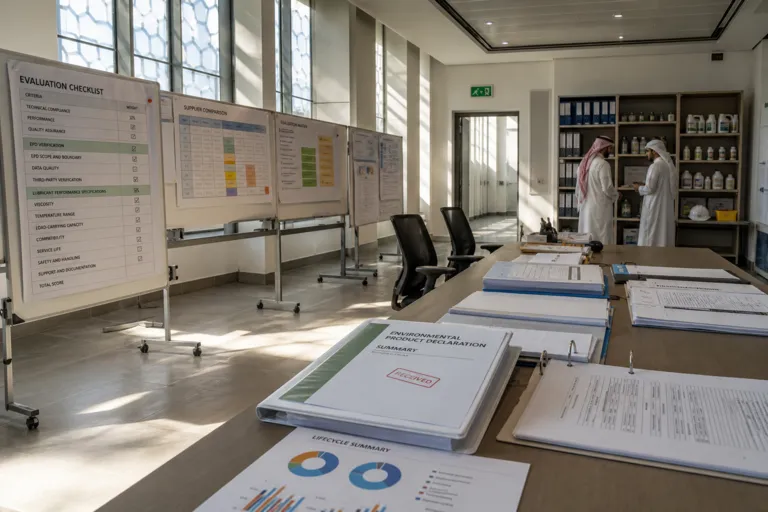
In 2026, GCC buyers are under pressure to prove sustainability claims with real documentation, not marketing labels. A GCC buyer’s guide on Environmental Product Declarations (EPDs) notes that many products are promoted as “eco-friendly,” “low carbon,” or “non-toxic,” but “usually do not give real proof.” The same guide frames an EPD as a “nutrition label,” because it provides clear facts about a product’s carbon footprint and environmental impact. That simple idea matters in tenders. Buyers can move faster when environmental data is standardized and verified, rather than debated across emails and product brochures.
For lubricants, this shift is arriving at the same time as stricter performance compliance expectations. In the GCC automotive lubrication services space, MarkWide Research describes how GSO technical regulations and UAE-specific Emirates Authority for Standardization and Metrology (ESMA) specifications mandate lubricant performance certifications that filter market access for uncertified providers. It also states that Saudi Standards, Metrology and Quality Organization (SASO) enforcement of API SP and ILSAC GF-6 standards is accelerating equipment upgrades at independent workshops. In parallel, the report flags a procurement angle: stakeholders must monitor how carbon intensity disclosures under evolving Gulf environmental frameworks reshape criteria for state-linked fleet operators. Put together, it is not hard to see why a lubricant environmental product declaration GCC discussion is increasingly relevant in bid qualification.
How EPD Language Is Entering GCC Tender Documents
The EPD buyer’s guide gives a straightforward playbook for procurement teams. Start by asking every supplier on the shortlist for verified EPDs. Then state in tender documents that EPDs are required “right from the start.” This approach helps reduce late-stage surprises, especially when bidders use different “green” labels that do not share a common method of proof. The same guide points to a 2026 context in which GCC construction buyers need to prove materials are truly sustainable, and it references UAE Net Zero 2050 as a reason “guessing is not an option.” While the guide is aimed at materials generally, its tender-writing discipline translates well to lubricants when buyers want consistent disclosure across multiple product lines.
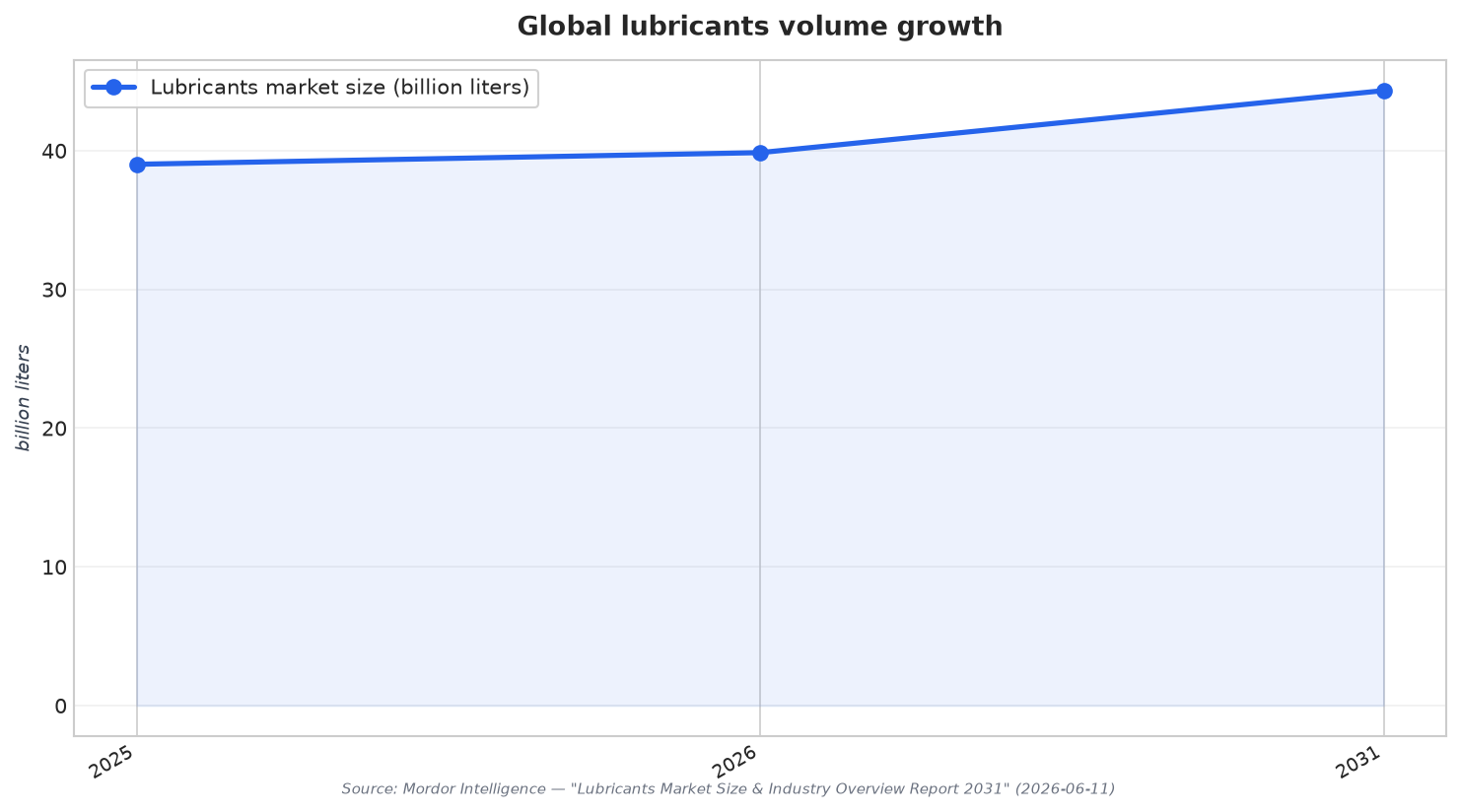
Market direction supports why buyers are adding both performance and environmental disclosure gates. A Mordor Intelligence report estimates the global lubricants market at 39.86 billion liters in 2026, rising from 39.02 billion liters in 2025, with 2031 projections of 44.33 billion liters and 2.15% CAGR over 2026–2031. In that same global view, mineral-oil products accounted for 65.85% of market size in 2025, while bio-based grades are projected to expand at 3.21% CAGR to 2031. These figures are global, not GCC-specific, but they show why procurement teams are dealing with more product types, more claims, and more need for comparable documentation as portfolios shift toward synthetics and other alternatives.
In GCC end-use segments, tender requirements often follow the money and the scrutiny. An IMARC Group press release published on openPR reports the GCC construction lubricants market at USD 90.0 million in 2025, projecting USD 108.2 million in 2034, with a 2.07% growth rate for 2026–2034. It also highlights growing demand for synthetic and bio-based lubricants and rising awareness about equipment maintenance. Separately, MarkWide Research notes that engine oil change has the highest transaction frequency among automotive service types, while fleet maintenance companies capture superior contract value through multi-vehicle lubrication schedules. When high-volume categories meet formal standards (API SP, ILSAC GF-6) and buyers also request verified environmental disclosure, suppliers that can provide both performance certification and EPD-ready documentation are better positioned for GCC tenders.
What is an Environmental Product Declaration (EPD) in GCC procurement terms?
How should buyers ask for EPDs in tender documents?
Which lubricant performance standards are being enforced in Saudi Arabia and referenced for GCC service access?
Why is the lubricant environmental product declaration GCC topic becoming more important for state-linked buyers?