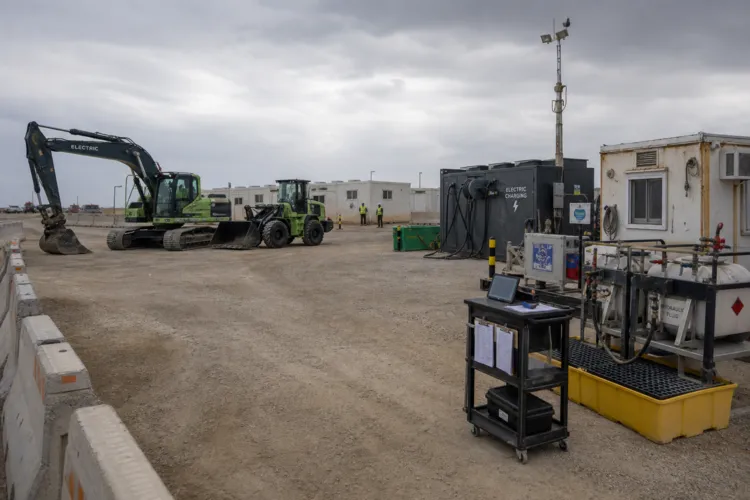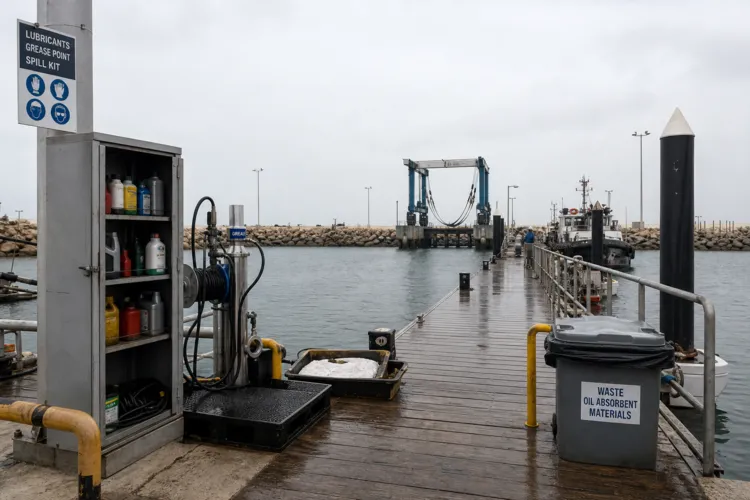

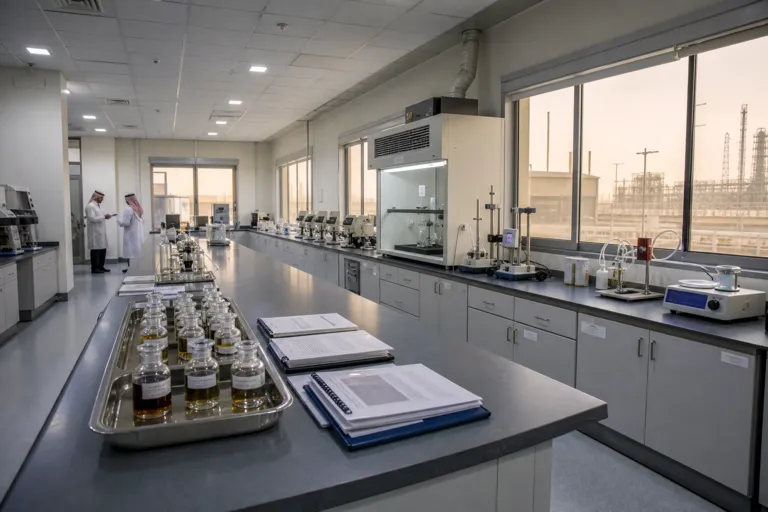
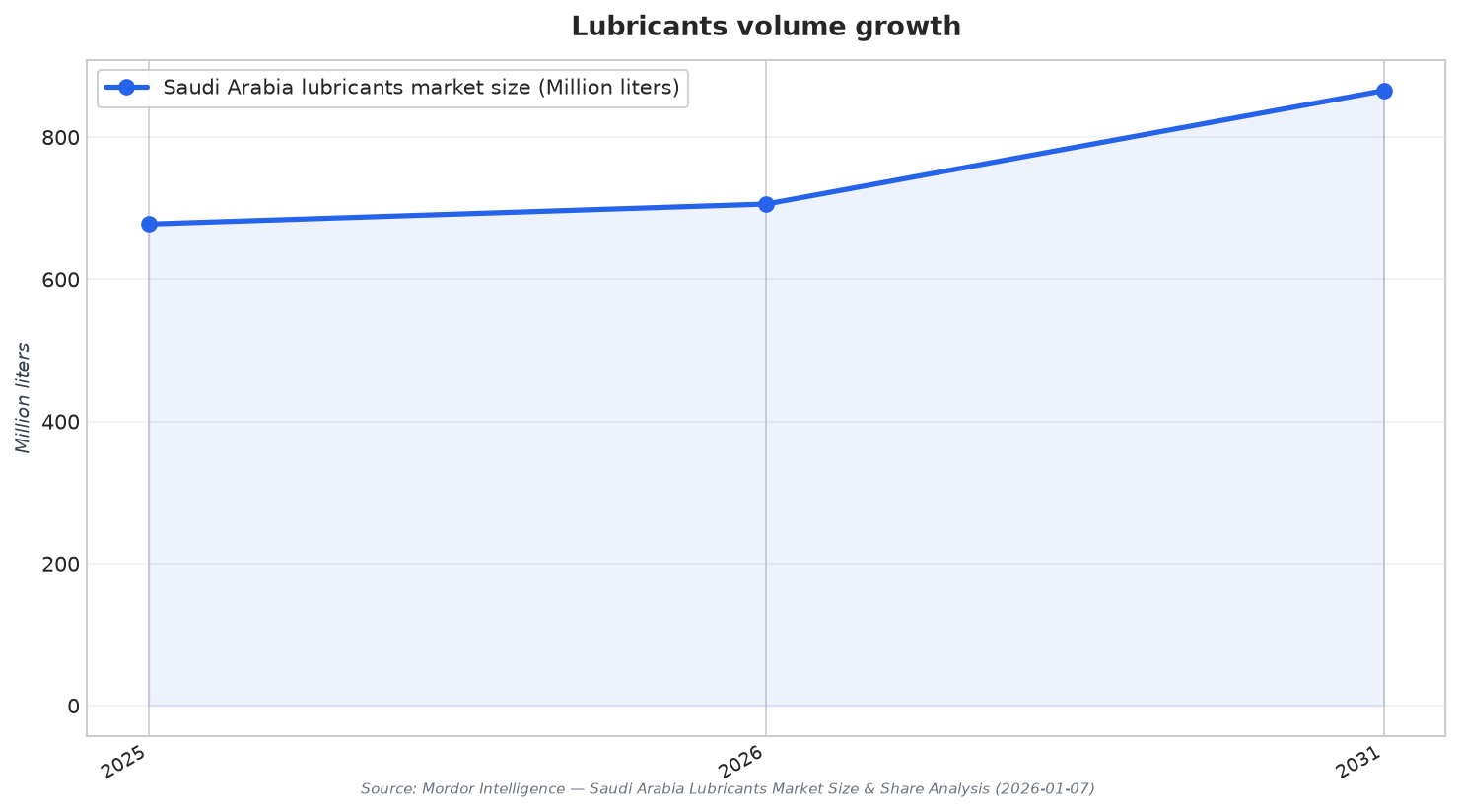
Saudization in the lubricants sector is becoming more operational than symbolic. Saudi Arabia’s lubricants market was valued at 677.67 million liters in 2025, and Mordor Intelligence estimates it will grow from 705.86 million liters in 2026 to 865.41 million liters by 2031 at a 4.16% CAGR (2026–2031). Automotive applications held a 58.64% share of the lubricants market in 2025. That demand profile makes technical roles in blending and quality control central, because engine oils alone led product share at 63.72% in 2025, while product mix is also shifting toward low-SAPS synthetics and OEM-approved formulations.
Automotive lubricants add another layer of specificity. The Saudi Arabia automotive lubricants market was valued at 402.79 million liters in 2025 and is estimated by Mordor Intelligence to reach 521.83 million liters by 2031, growing at a 4.41% CAGR (2026–2031). Passenger vehicles held 93.17% of market share in 2025, and automotive engine oils commanded 91.88% of 2025 volume. For a Saudization lubricant blending workforce, this mix matters. High-volume passenger car oils reward tight batch discipline, while faster-growing segments like automatic transmission fluids, projected to expand at a 6.30% CAGR, require consistent lab verification and documentation to protect warranties and approvals.
Localization Policies Raise the Bar for Plant Skills
Across the Middle East, local content rules are reshaping where blending happens and who staffs it. Mordor Intelligence notes that Saudi Arabia’s iktva program and similar frameworks tie project awards to local spend thresholds, pushing EPC contractors to source domestically blended lubricants wherever technically feasible. The same source states that programs like iktva can require up to 70% domestic procurement, which has led many suppliers to build blending plants inside Saudi Arabia and the UAE. This directly increases the need for local operators, lab technicians, and shift leaders who can run blending, manage additive handling, and execute repeatable QC checks that meet customer and OEM expectations.
Workforce planning also has to match how lubricants are sold and serviced. Distributor/retailers held 62.58% of Saudi Arabia’s lubricants market in 2025, while direct-channel sales are advancing at a 15.35% CAGR to 2031, according to Mordor Intelligence. Direct sales typically come with tighter service-level expectations and more technical scrutiny, including condition-monitoring services and fleet maintenance programs highlighted in the same report. On the manufacturing side, an IMARC press release cited local manufacturers adopting AI-driven production lines in September 2025, reducing lubricant waste by 15% and enhancing quality control. That combination favors local talent that can bridge production and lab workflows, interpret QC trends, and keep processes stable.
Finally, Saudization for blending and QC should be framed against the broader industrial shift. Mordor Intelligence links Saudi lubricants growth to Vision 2030-driven industrial projects, and states that National Industrial Development and Logistics Programme (NIDLP) incentives have supported industrial expansion, with over USD 130 billion invested in new factories since 2016. Regional context also points to continued downstream buildout: Mordor Intelligence’s global overview says the Middle East and Africa leads volumetric expansion at 3.19% through 2031, and notes the UAE and Saudi Arabia are pairing new refining ventures with downstream lube blending. In that environment, a strong local technical workforce is a practical requirement for reliable blending, traceable QC, and customer confidence.
Why does Saudi Arabia’s lubricant growth increase demand for blending and QC talent?
Which product areas matter most for Saudi blending plants staffing plans?
How do local content rules affect in-country lubricant blending and hiring?
What does ‘Saudization’ mean for the lubricant blending workforce in practical terms?