
“Shelf life” is the length of time a lubricant can be stored before service without having to verify performance attributes in advance. Multiple exposure risks can shorten that window. These risks include air, water, dirt, humidity, and extreme or rapidly changing temperatures. For Gulf distributors and customers thinking about lubricant shelf life, heat storage, and the GCC context, the problem is not only high ambient temperatures. It is also how heat and rapid swings trigger container “breathing,” which pulls outside atmosphere into the package. That mechanism makes otherwise sealed inventory more vulnerable to moisture and contamination over time, especially when storage is not stable and controlled.
Recommended “ideal conditions” emphasize stability. One guidance set calls for a storage temperature range of 32–77°F, with large temperature swings minimized because swings cause containers to “breathe” in outside atmosphere. It also stresses keeping lubricants in their original containers (or in containers that block light rays), keeping containers sealed, storing in a dry location (preferably inside), and avoiding areas with high levels of airborne particles, especially for partially used containers. Another practical note on storage failures flags heat exposure from pallets parked near heaters, compressors, or hot ceilings as a reason products degrade faster than in cool, stable storage. In Gulf warehousing, these cautions translate into disciplined placement and segregation away from heat sources and hot ceiling zones.
What Heat Damage Looks Like in Stored Oils, Greases, and Water-Based Fluids
Heat-driven storage issues show up differently by product family, so distributors train teams to spot early warning signs. For oils, risk indicators include a cloudy appearance or strong odor, plus significant sediment buildup. For water-based lubricants such as metal-working or fire-resistant fluids, warning signs include changes in texture, color, or odor, separation of the oil and water phase, and bulging drums. For greases, risk signs include excessive oil separation or “bleeding,” significant change in consistency or texture, and significant change in color or odor. One storage-focused guide also explains why greases are sensitive: grease is a structured lubricant, and under heat cycles it can separate, bleed oil, or change texture because the thickener structure can shift over time even if the base oil is stable.
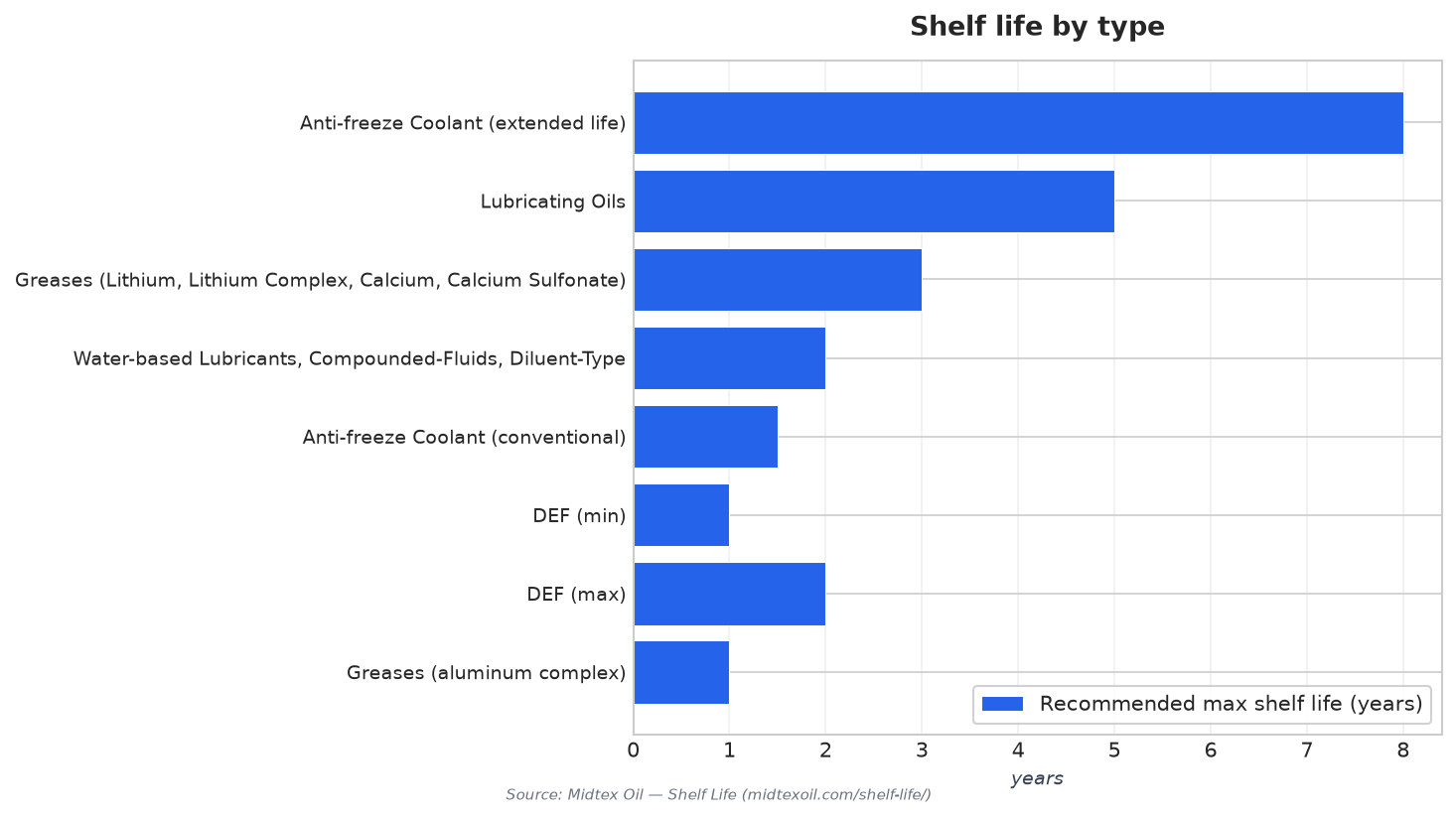
Distributors also manage expectations around typical shelf-life ranges, but they frame them as conditional on good storage. One source notes experts generally agree most lubricants can be stored safely for three to five years if unopened in original containers, but only if kept under optimal climate-controlled conditions. The same source adds that specialty lubricants, including thermally resistant fluids and greases, may have shorter shelf lives ranging from six months to a single year. Another set of “general” recommendations (stated as maximums in ideal conditions, stored properly in original containers) lists aluminum complex greases at 1 year, water-based lubricants/compounded fluids/diluent-type at 2 years, lithium and related greases at 3 years, and lubricating oils at 5 years. These ranges help GCC sellers decide which items need faster turnover when storage temperatures are hard to control.
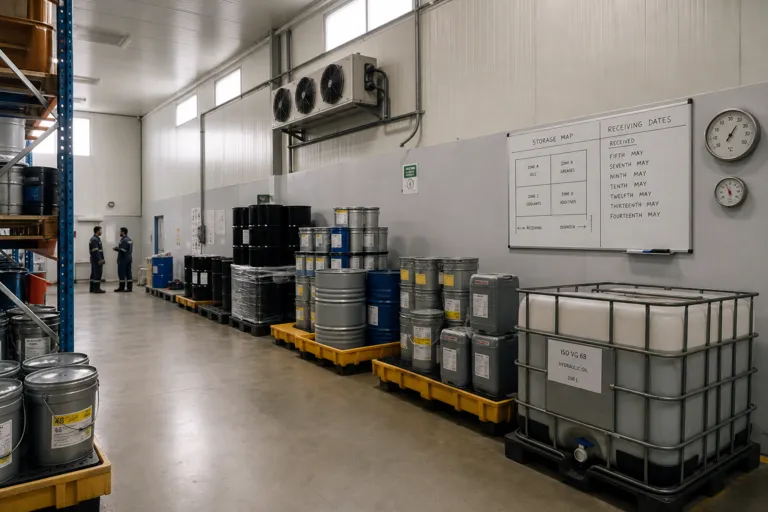
The distributor playbook is heavy on process, not guesswork. Best practices include FIFO (First In, First Out) inventory management and marking containers with a “received date,” since not all packages show a “fill date,” so teams can measure time on the shelf. Another operational target is to set inventory levels so lubricants are used within 12 months, which reduces exposure to long storage periods where humidity, sunlight, dirty dispensing practices, and heat cycles can turn usable product into a liability. Handling details matter too: store grease containers upright to minimize separation, and store grease tubes upright to prevent leakage. Finally, distributors post shelf-life guidelines in storage areas and align with suppliers, confirming specifics in technical documentation (TDS) to match real site conditions.
What storage temperature range is recommended to maximize lubricant shelf life?
What are common signs that stored lubricants are at risk after poor heat exposure?
How do distributors reduce heat-related storage damage in GCC supply chains?
How long can lubricants last in storage if they stay unopened and well stored?
Why does grease often degrade faster under heat cycles than base oil alone?