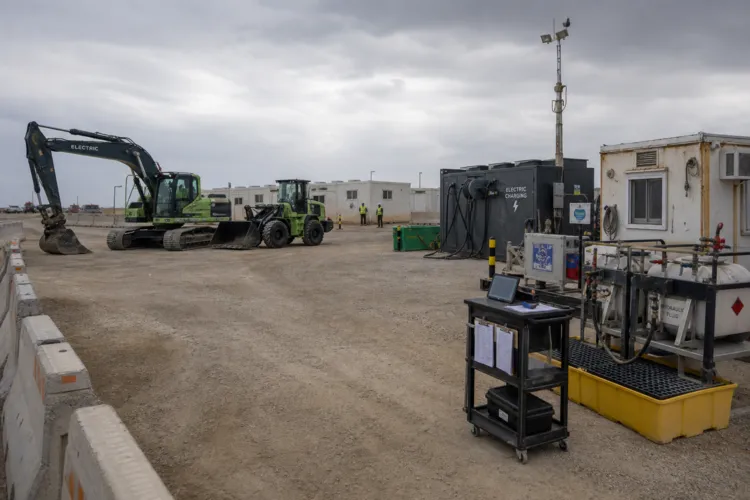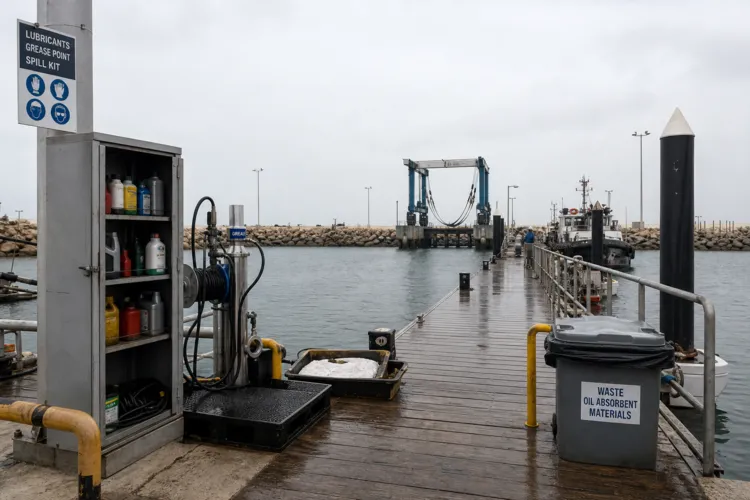

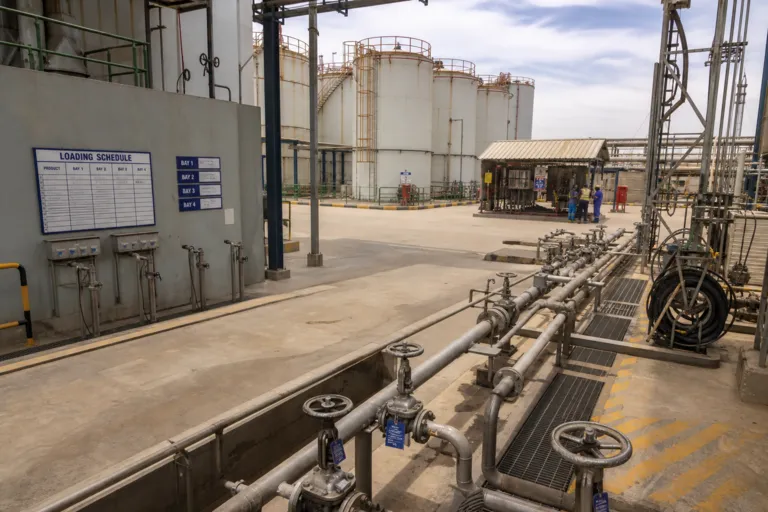
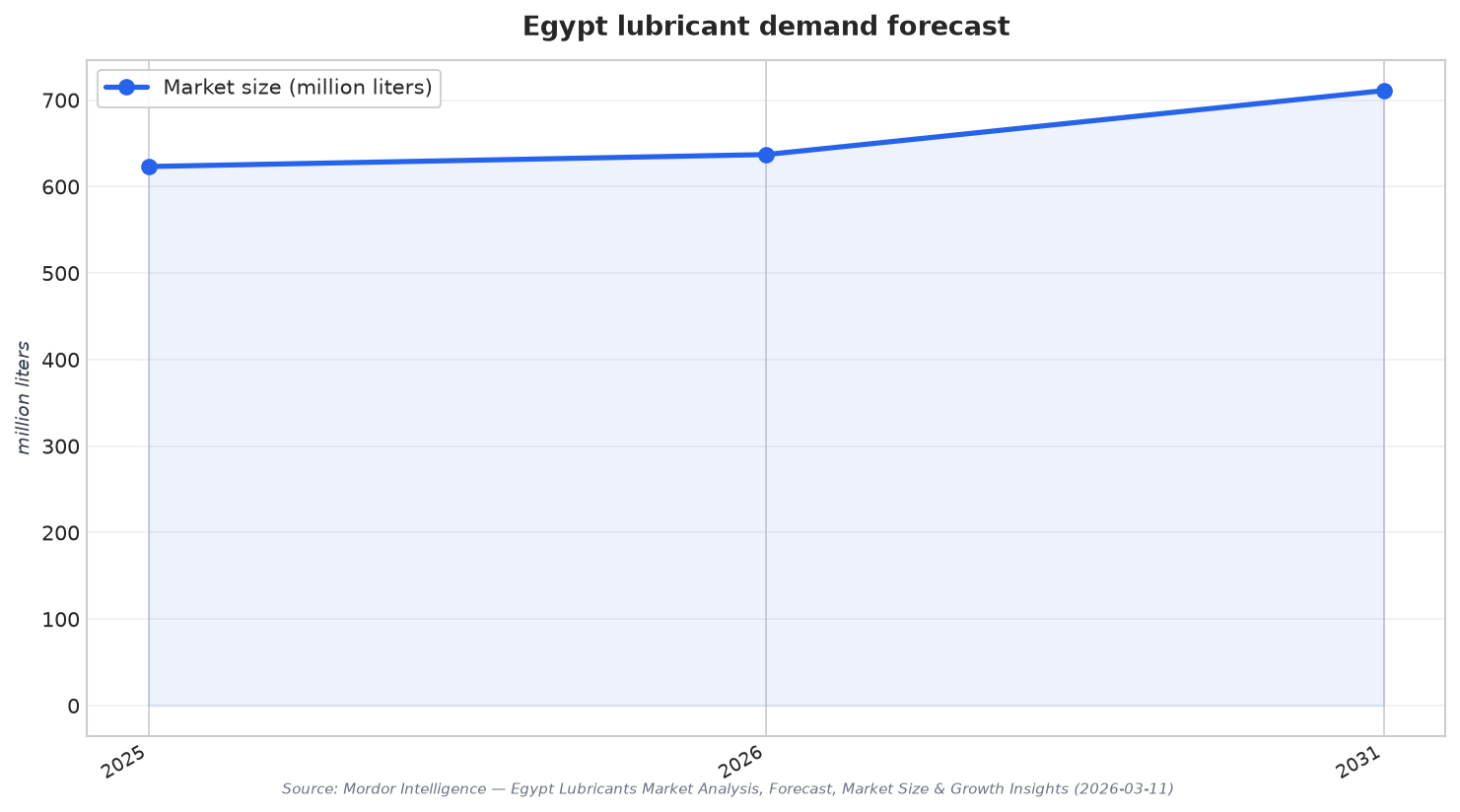
Global lubricant majors are building blending plants in Egypt because the local market is large, still growing, and exposed to cost shocks that local production can hedge. Mordor Intelligence estimates Egypt’s lubricants market at 623.24 million liters in 2025, rising to 637.08 million liters in 2026 and reaching 711 million liters by 2031, with a 2.22% CAGR over 2026–2031. The same analysis flags currency depreciation, import-cost inflation, and counterfeit risk as drivers of price sensitivity. In that context, an Egypt lubricant blending plant investment in the SCZone can be positioned as a way to shorten lead times, manage landed-cost volatility, and protect brand integrity in a price-sensitive environment.
The demand mix also supports onshore blending. In 2025, automotive accounted for 61.12% of Egypt’s lubricants market size, and automotive engine oil alone led with a 47.89% share, according to Mordor Intelligence. That concentration matters for majors with strong retail and fleet brands, because steady, repeat purchase volumes can justify localized packaging and blending. Industrial demand is also advancing, with Mordor projecting the industrial end-user segment at a 3.88% CAGR during 2026–2031. Greases are forecast to be the fastest-growing product, expanding at a 4.93% CAGR over the same period, linked in the report to an infrastructure pipeline valued at USD 169 billion that expands heavy-equipment fleets.
SCZone Advantages: Policy, Ports, and Higher-Spec Demand
SCZone logic is not only about geography. Multiple sources describe how policy and specification shifts are changing what needs to be blended locally. MarkWide Research notes that Egypt’s General Authority for Petroleum (GAP) and the Egyptian Organization for Standardization and Quality (EOS) enforce base oil classification and additive content rules that shape import licensing and local blending requirements. It also states that GAP base oil reclassification rules are phasing out Group I imports, creating pull for Group II and III base stocks through licensed domestic blending facilities, while simultaneously noting Egypt lacks domestic Group II/III base oil production and relies on Gulf Cooperation Council refiners. This combination can reward majors that can secure feedstock reliably and blend to compliant formulations close to demand centers tied to ports and logistics.
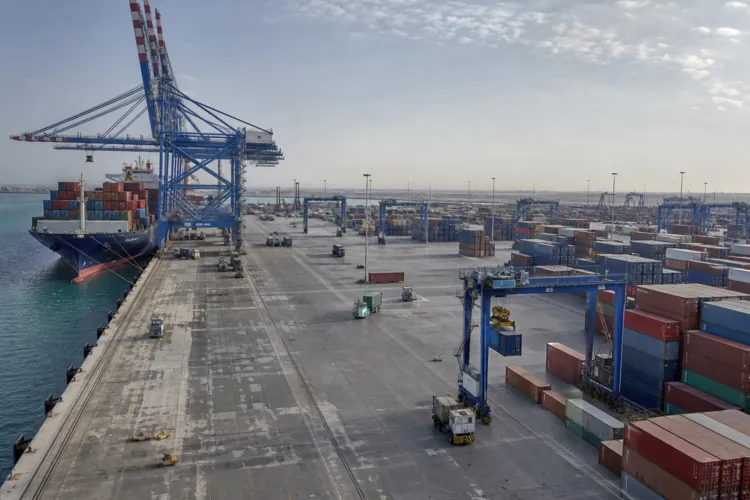
SCZone-linked logistics demand further strengthens the case. Mordor’s Egypt automotive lubricants analysis says the Suez Canal Economic Zone attracts tanker fleets and container traffic that rely on marine and heavy-duty engine oils, adding incremental volumes and geographic diversity. The same source notes Group III base-oil availability from regional import hubs linked to the Suez Canal, and that local blenders have added nitrogen blanketing and in-line viscosity control to meet tighter specifications. Meanwhile, MarkWide highlights concentrated demand for high-performance hydraulic oils and marine cylinder lubricants with extended drain intervals in Suez Canal logistics infrastructure. For global majors, local blending paired with stronger in-line control supports faster delivery of OEM-aligned batches and reduces dependence on importing finished lubricants.
Finally, multinationals are responding to macro risk and a structural shift toward premium grades. A Middle East lubricants consulting note, citing Mordor, says multinational blenders are attracted to hubs like the SCZone and the New Administrative Capital to reduce exposure to tariff and exchange-rate shocks. Mordor also reports mineral oil-based lubricants held 66.28% share, yet synthetics are expected to rise at a 3.12% CAGR over 2026–2031 as stricter OEM warranty terms accelerate adoption. In parallel, Mordor’s global lubricants overview says competitive intensity is rising as global majors expand synthetic capacity to secure higher margins in premium niches. In Egypt, that translates into a practical rationale for local blending plants in the SCZone: defend cost position while scaling higher-spec products as requirements tighten.
Why are lubricant majors choosing Egypt’s SCZone for blending plants?
What do the latest reports say about Egypt’s lubricant market growth?
Which lubricant segments dominate demand in Egypt?
How do GAP and EOS rules affect local blending decisions?
How does an Egypt lubricant blending plant investment in the SCZone connect to premiumization?