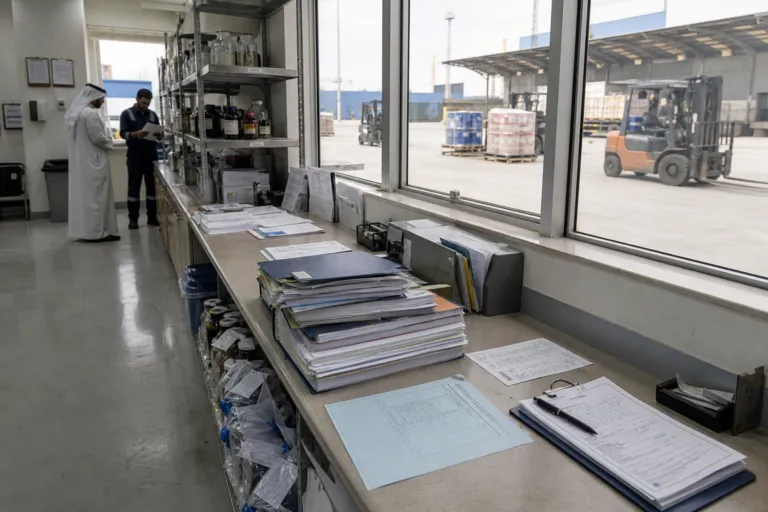
For additive and lubricant importers, “chemical inventory and registration” is not a separate track from commercial execution in the GCC. It connects to whether a product can be sold, serviced, and replenished without delays. One GCC-focused market source notes that GSO technical regulations and UAE-specific ESMA specifications mandate lubricant performance certifications that filter market access for uncertified service providers. It also highlights that SASO enforcement of API SP and ILSAC GF-6 standards is accelerating equipment upgrades at independent workshops. For importers, these downstream requirements can become upstream constraints: even when a shipment clears, customers may still insist on certifications aligned with these frameworks before they will purchase or use the product.
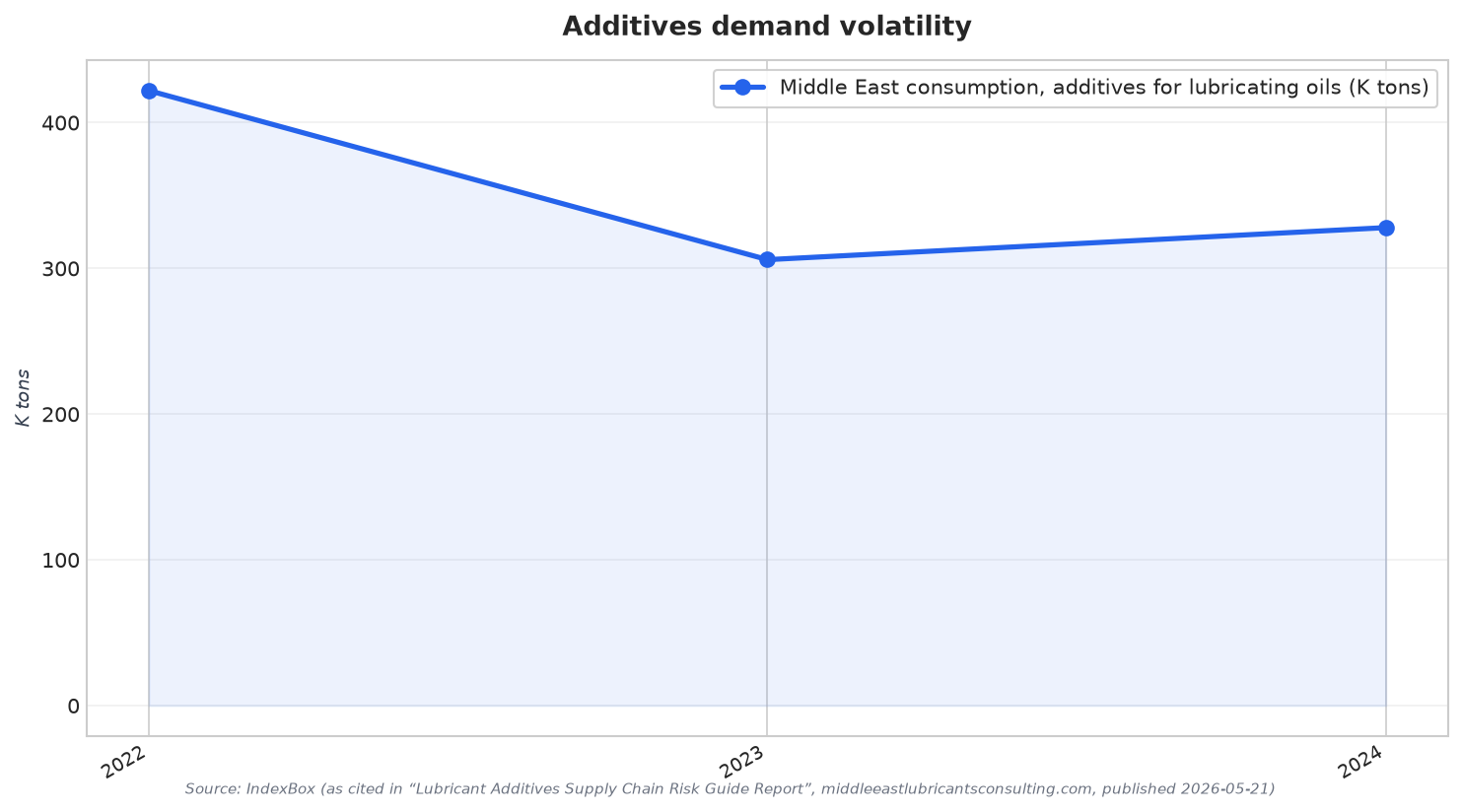
Inventory planning also has to reflect sharp swings in additive demand and trade flows across the Middle East, because these shifts can break “business as usual” reorder points. IndexBox reports that the Middle East market for prepared additives for mineral oils contracted in 2024, with consumption falling to 225K tons valued at USD 862M, after a 2023 volume peak of 306K tons and a 2023 value peak of USD 1.2B. A similar pattern appears in additives for lubricating oils, where Middle East consumption fell by -20.6% in 2024 to 328K tons and market value declined to USD 1.3B, after peaks of 422K tons and USD 1.6B in 2022. When procurement assumptions do not match these shifts, importers can get caught with either excess stock or gaps that cannot be backfilled quickly.
Where Registration Readiness Meets Customs Reality
Customs compliance is another point where registration discipline becomes operational risk control. A GCC customs guide emphasizes that the biggest risk is not only the duty line, but total landed cost and delays triggered by preventable classification and documentation errors. It states that import duties are determined primarily by the Harmonized System (HS) code, a standardized 6–10 digit classification used worldwide across more than 5,000 product categories. For importers of lubricant additives, mismatched descriptions, incomplete documentation, or poor internal inventory controls can turn into clearance delays that cascade into service disruptions, especially when customers are already requiring performance certifications to accept product into their channels.
Supply concentration and import tightening can further raise the cost of any registration or documentation mistake. IndexBox notes that for additives for lubricating oils, the Middle East is a net importer and imports declined sharply in 2024 to 162K tons, while exports are minimal and concentrated in the UAE. In the GCC prepared additives for mineral oils segment, IndexBox reports supplies from abroad decreased by -63.5% in 2024 to 72K tons. Concentration adds another layer: in prepared additives for mineral oils, the largest 2024 consumers were Turkey (63K tons), the UAE (49K tons), and Saudi Arabia (43K tons), together comprising 69% of total consumption. In practice, when availability is tight, buyers and distributors may prioritize suppliers that can prove compliance and keep consistent inventory visibility.
Certain additive chemistries can face additional constraints that make “registration-ready inventory” more than a paperwork goal. In lubricant antioxidants, IndexBox estimates a 2026 Middle East market of approximately USD 180–220 million and states that over 70% of consumption is met through imports, with Saudi Arabia and the UAE as primary import hubs and blending centers. The same report lists bottlenecks that include regulatory certification timelines for new chemistries and notes certification timelines can delay product launches by 12–24 months. For teams managing GCC chemical registration for lubricant additives, the practical takeaway is to align portfolio decisions, customer qualification, and reorder policies with the possibility that a new chemistry may not be commercially usable on the timeline the business expects.
Why do GCC lubricant performance certifications matter to chemical inventory planning?
What trade volatility signals should additive importers watch in the Middle East?
How did imports change for lubricant additives in 2024, and why does it affect availability?
What is the HS code, and why is it a key compliance risk for importers?
What should companies focus on when setting up GCC chemical registration for lubricant additives?