Unusually strong diesel economics are becoming a defining variable for lubricant supply planning going into late 2026. JobbersWorld reported that the lubricant industry is entering the fourth quarter with Group III base-oil supply still under pressure, while exceptionally strong diesel markets add uncertainty around how quickly additional barrels become available as disrupted refining capacity returns. The key nuance is that restoring refinery operations is not the same as restoring availability of a particular base-oil grade. Refinery configurations, operating requirements, and contractual commitments vary widely, so strong diesel margins do not automatically mean base-oil production is being cut. But they do change the decision set that integrated refiners face when allocating streams across fuels and base oils.
The diesel signals behind this shift are visible in multiple datasets, and they point to a market where distillate value is hard to ignore. Reuters data cited by JobbersWorld said U.S. refiners operated at 96.3% of capacity during the third quarter amid tight global fuel markets, record exports, and unusually high crack spreads, with diesel crack spreads averaging about $118 per barrel during the quarter. ADI Analytics likewise noted U.S. refinery utilization ranging between 94% and 98%, with diesel cracks exceeding $100 per barrel in several markets. ADI also reported U.S. diesel prices recently exceeding $6.50 per gallon and U.S. distillate inventories falling to approximately 107 million barrels, the lowest September level since 1982.
Why Diesel Pulls on the Same Refinery Streams as Base Oils
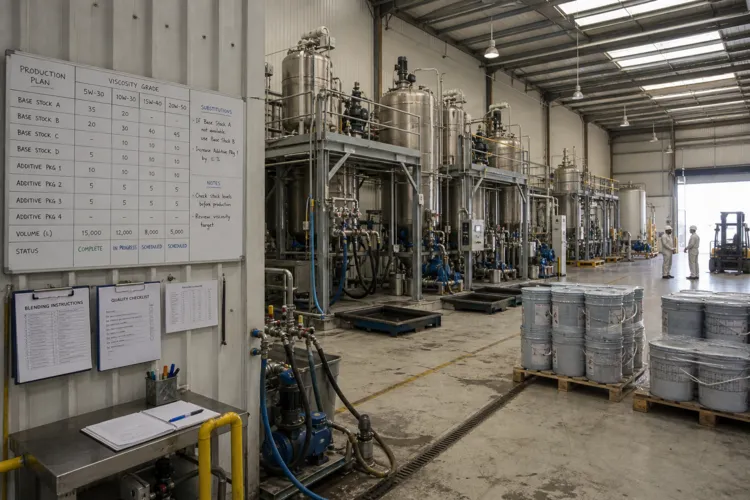
Base oils and diesel can compete for the same intermediate feedstocks, which is why margin signals matter for availability even when demand for lubricants is unchanged. ADI Analytics stated that refiners are directing feedstocks such as vacuum gas oil into diesel production because diesel margins currently exceed returns from premium base oil manufacture, tightening spot availability for Group III base oils. European-focused analysis adds the mechanical explanation: vacuum gasoil is a finite output from each barrel of crude processed, and when middle distillate margins expand sharply, refiners can adjust cut points and processing severity to increase middle distillate yield at the expense of base-oil fractions. In June 2026, European diesel crack spreads reached approximately $46 per barrel, described as more than double what would typically be observed during that period, and the resulting base-oil tightness can emerge over scheduling cycles rather than instantly.
Policy and trade actions are reinforcing the same direction of travel: tighter diesel supply supports higher diesel value, and higher diesel value can pressure base-oil availability. JobbersWorld cited Reuters reporting that Chinese refiners suspended most refined-product exports for October as Beijing sought to protect domestic supplies, potentially tightening supplies to buyers including Singapore, Malaysia, and Australia. Reuters also reported that European governments were considering releases from emergency diesel reserves, while Russia continued restricting diesel exports and indicated a partial relaxation would be considered if domestic production exceeds demand. ADI added that the Trump Administration was evaluating potential restrictions on U.S. diesel exports while also pressing European governments to release emergency diesel inventories, but its scenario analysis suggested continued exports and elevated diesel prices were more likely than a full export restriction.
In practical purchasing terms, the diesel-versus-base-oil tradeoff shows up as tighter premium base stocks, cautious buying, and price signals that lag the diesel move. Procurement Resource summarized that feedstock costs climbed late in the quarter as crude oil rose again and strong diesel margins pulled refinery streams away from base oil output, while lubricant blenders bought cautiously during the summer lull and China’s slow season. It also reported Germany base oil prices declining to about EUR 1.81/kg in April and about EUR 1.67/kg in May, a decrease of roughly 7.5%. In the USA, it said average base oil prices edged down from nearly USD 2,015.00/MT (FOB) in July to roughly USD 2,000.00/MT in August, a dip of about 0.7%, even as Group III supply stayed very tight after Middle East exports fell by more than 70% earlier in the year and producers raised posted prices for premium grades several times. Together, these details frame the core issue in diesel margins base oil production economics: even small shifts in refinery stream allocation can ripple through premium-grade availability and timing.
Are refiners definitely cutting base-oil production to make more diesel?
What diesel crack spreads were reported in 2026, and why do they matter for base oils?
How do diesel margins influence base-oil supply in Europe?
What indicators show diesel tightness in the U.S. market?
What does the diesel-vs-base-oil production economics tradeoff look like in pricing and buying behavior?